







Few Hollywood smiles have attracted as much fascination as Tom Cruise's teeth. Over four decades in film, his smile has shifted from noticeably imperfect to polished and camera-ready - yet it still carries a quirk that fans argue makes it entirely his own. The famous "middle tooth," the adult braces at 40, the suspected porcelain veneers: each chapter of his dental journey tells a story about how far cosmetic dentistry can take someone, and what it means to own your appearance on one of the biggest stages in the world.
Table Of Contents
- Tom Cruise's Early Smile: Misalignment and Noticeable Imperfections
- Childhood Dental Trauma: The Fractured Incisor That Started It All
- The 2002 Braces Moment That Surprised Hollywood
- Porcelain Veneers: The Final Step in His Smile Makeover
- Tom Cruise Teeth Before and After: A Decade-by-Decade Look
- The Midline Question: Corrected or Still Slightly Off?
- What Cosmetic Dentists Say About His Transformation
- How to Achieve a Tom Cruise-Inspired Smile
- Getting That Hollywood Smile in Turkey: A Practical Guide
- Frequently Asked Questions
Tom Cruise's Early Smile: Misalignment and Noticeable Imperfections
Cast your mind back to the early 1980s. Tom Cruise burst onto screens in Endless Love and Risky Business with a raw, unpolished energy that matched his slightly unpolished smile. His teeth were crowded, unevenly sized, and showed the kind of natural asymmetry that many people walk around with every day - the sort of smile that would never appear in a toothpaste advert but felt entirely human.
What set his smile apart from a typical case of misalignment was the dental midline issue. When you look at someone's teeth straight on, the gap between the two upper front teeth should ideally line up with the centre of the face. For Cruise, this midline was shifted, placing one central incisor in a position that looked, to many observers, like a single front tooth sitting directly in the middle of his face rather than two balanced teeth either side of a central gap.
This became known informally as the "middle tooth" phenomenon, and it would follow him through his career for years.
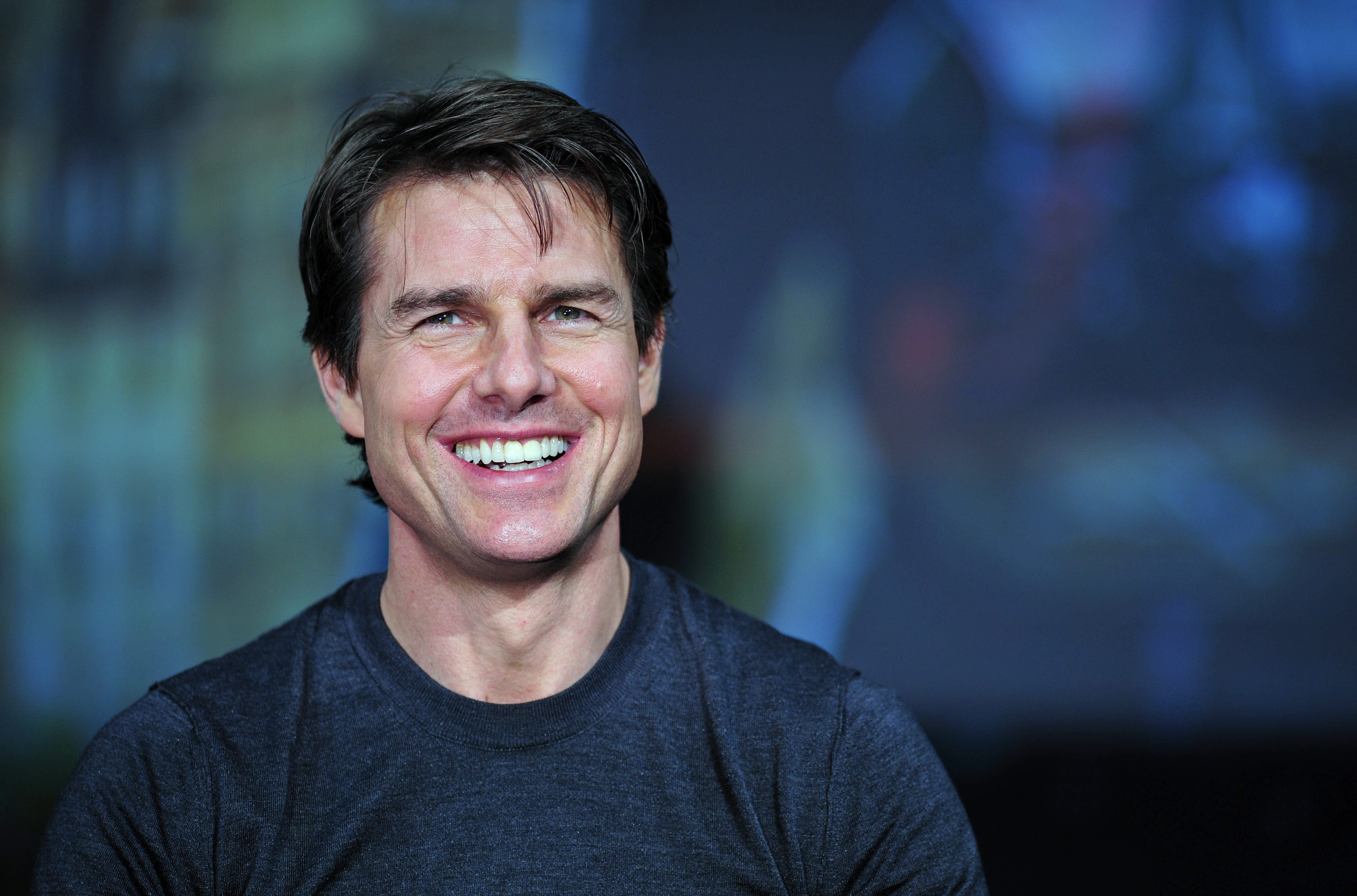
What Exactly Is the "Middle Tooth" Everyone Talks About?
The Tom Cruise middle tooth is not literally a single tooth. What fans noticed was a combination of two overlapping issues: a shifted dental midline (where the centreline of the upper teeth sits off-centre relative to the nose and philtrum) and uneven proportions between the upper front teeth. When both of these factors are present at the same time, the visual effect can make it appear as though there is just one dominant front tooth sitting dead-centre in the smile.
It is a subtlety that most people would never consciously identify in day-to-day life, but under camera lenses, in high-definition photos, and across decades of film stills, it became a talking point. Far from damaging his career, many fans have described it as part of his charm - a signature quirk in an otherwise conventional Hollywood face.
Childhood Dental Trauma: The Fractured Incisor That Started It All
Tom Cruise did not simply develop misalignment through genetics alone. Dental records and biographical accounts point to childhood dental trauma as a significant contributing factor to the issues that would later define his smile.
Photographs from his younger years show that more than half of his upper right central incisor was fractured. Dentists who have studied his before-and-after images publicly note that this level of trauma carries a serious risk: when a tooth fracture exposes the pulp - the living tissue and nerve inside - it creates a pathway for infection. Without treatment, the result can be chronic pain, bone loss, and eventual tooth death.
A root canal treatment would have been the necessary clinical step to address the infection risk, followed by a full ceramic crown to restore both function and aesthetics. This restoration would have altered the proportions of that specific tooth, contributing to the uneven sizing that compounded his midline issue. Understanding this history matters because it shows that his dental journey was not vanity-driven from the start. It began with a clinical need - a damaged tooth that required professional attention.
Sports injuries, developmental influences, and possible childhood tooth loss all likely played a role alongside that fractured incisor. The combination of factors created the distinctive misalignment that became so recognisable in his early film work.
The 2002 Braces Moment That Surprised Hollywood
By 2002, Tom Cruise was one of the most recognisable faces on earth. Mission: Impossible had made him a global action star. He had already collected three Golden Globe Awards. He was 40 years old, at the height of his fame, and he showed up to the premiere of Minority Report wearing braces.
Not the discreet, barely-visible aligners that some celebrities prefer today. Braces. Ceramic ones, admittedly, chosen for their tooth-coloured brackets and reduced visibility compared to traditional metal - but braces nonetheless. The moment was widely photographed and generated significant media discussion at the time.
For many dental professionals, it was actually a refreshing public statement. Here was one of Hollywood's most bankable stars openly undergoing orthodontic treatment in his 40s at a time when adult orthodontics still carried some social stigma. His willingness to be seen in braces helped normalise the idea that teeth correction is not just for teenagers, and that you can pursue a better smile at any stage of life.
Why Ceramic Braces and Not Metal?
Ceramic braces use brackets made from a tooth-coloured ceramic material rather than stainless steel. The wires remain metal, but the brackets blend far more naturally with the enamel. For someone constantly in front of cameras, this was the obvious practical choice - visible enough on close inspection to generate the media discussion it did, but subtle enough to avoid being the focal point of every premiere photograph.
The orthodontic treatment corrected his alignment over time, gradually moving his teeth into improved positions and reducing - though not entirely eliminating - his midline deviation. When the braces came off, his smile was notably more symmetrical and balanced. But orthodontics alone could not address enamel shading, tooth proportions, or the overall polish that a Hollywood smile requires. That is where veneers entered the picture.

Porcelain Veneers: The Final Step in His Smile Makeover
Following his orthodontic treatment, Tom Cruise's smile underwent further refinement through what cosmetic dentists widely believe to be a combination of porcelain veneers and professional teeth whitening. The result was a smile that retained his masculine structure and natural-looking proportions while presenting with uniform colour, improved symmetry, and the kind of surface polish that reads beautifully under studio lighting.
Porcelain veneers are ultra-thin shells, typically around 0.5mm thick, bonded to the front surface of the teeth. They can correct a wide range of cosmetic concerns in a single treatment phase: uneven colour, minor size discrepancies between neighbouring teeth, chips, surface irregularities, and subtle alignment issues that orthodontics alone cannot fully resolve. According to the British Dental Association, properly placed porcelain veneers can last 10 to 15 years with good care and regular professional maintenance.
Professional bleaching would have been applied alongside or after the veneer placement to ensure colour harmony across his full smile. Lightening the natural teeth to match the shade selected for the veneers - or lightening the teeth before veneers are placed to open up the available colour palette - is standard practice in comprehensive smile design work.
Which Treatments Did He Most Likely Have?
Based on the visual evidence across decades of photographs, the Tom Cruise dental work most likely included:
- Root canal treatment and ceramic crown on his upper right central incisor (earliest intervention, possibly in his teens or early 20s)
- Adult ceramic braces from approximately 2002 to correct alignment and reduce midline deviation
- Porcelain veneers on the upper front teeth to achieve uniform size, shape, and surface quality
- Professional teeth whitening for consistent shade across the smile
- Ongoing maintenance including polishing, check-ups, and periodic whitening top-ups
No public confirmation of the exact treatment sequence has ever been made. These are clinical observations drawn from before-and-after comparison by dental professionals who have discussed his case in the media.
Tom Cruise Teeth Before and After: A Decade-by-Decade Look
Tracing Tom Cruise's smile through photographs across four decades gives a clear picture of how dental treatment evolved his appearance without erasing the personality behind it.
1980s: Crowded, misaligned teeth with a fractured and uneven upper front tooth. The midline deviation is apparent in close-up photos. His smile has energy and authenticity but shows obvious cosmetic limitations by Hollywood standards of the era.
Early 1990s: The smile appears slightly more refined, suggesting some early cosmetic work - possibly the crown restoration on the fractured incisor - but the midline issue remains. Photographs from this period still show the characteristic single-tooth optical illusion.
2002 to 2004: Ceramic braces appear at the Minority Report premiere. Over the following two years, the alignment visibly improves in event photographs. His midline begins shifting closer to centre.
Mid-2000s onwards: The smile that audiences now associate with Tom Cruise emerges. Whiter, more symmetrical, with uniform tooth sizing across the upper front teeth. A slight midline deviation persists - just enough to keep the smile feeling individual rather than manufactured.
2020s: A consistent, well-maintained smile that photographs beautifully in 4K film and high-resolution press coverage. The restorations show signs of professional upkeep, with no visible signs of wear, staining, or deterioration despite their likely age.

The Midline Question: Corrected or Still Slightly Off?
One of the more interesting aspects of Tom Cruise's dental transformation is that his midline was never fully corrected. Dental professionals who have commented publicly note that his midline alignment improved substantially through braces but retains a slight deviation to this day.
This is not necessarily a limitation. Some cosmetic dentists argue that a slight midline asymmetry makes a smile look more natural and less clinical - the difference between a smile that feels like a person's and one that feels engineered to specification. Patients in clinical practice often wrestle with this decision: correct everything possible and risk looking overdone, or accept a controlled imperfection that preserves character.
Tom Cruise's smile sits squarely in the "controlled imperfection" category. The deviation that remains is subtle enough that most people only notice it when it is pointed out directly, but it contributes to why his smile reads as distinctively his rather than interchangeable with any other Hollywood veneer result.
There is also a practical element. Fully correcting a midline deviation after adult orthodontics sometimes requires additional procedures such as selective tooth reshaping or asymmetric veneer placement. The clinical and aesthetic trade-offs of pursuing perfection over character are real considerations that patients and their dental teams weigh together during smile design planning.
What Cosmetic Dentists Say About His Transformation
Cosmetic dentists who have discussed Tom Cruise's teeth in the media consistently praise the outcome for striking a balance between clinical improvement and aesthetic restraint. Common observations include:
- The tooth proportions look natural rather than oversized, suggesting veneers were sized carefully relative to his facial structure and lip dynamics
- The shade is bright but not the unnaturally brilliant white that marks obviously overdone Hollywood dental work
- The decision to retain a slight midline deviation shows either clinical wisdom or aesthetic sensitivity - possibly both
- The smile suits his face shape and ages well with him, which becomes increasingly important as patients move through their 40s, 50s, and 60s
At DentPrime, our clinical team regularly uses celebrity smile case studies exactly like this one during consultations - not to replicate the outcome tooth-for-tooth, but to understand what a patient finds attractive about a particular result and why. The Tom Cruise example consistently illustrates the value of proportion, restraint, and individuality in smile design work.
How to Achieve a Tom Cruise-Inspired Smile
If the qualities of Tom Cruise's current smile appeal to you - the balance between natural character and cosmetic polish, the restrained brightness, the symmetry that feels human rather than artificial - there is a clear treatment pathway that can achieve comparable results. The goal is not to copy his exact procedures but to identify which elements of your own smile you would like to improve and plan a staged approach that addresses them in sequence.
A smile design consultation is the natural starting point. This process involves detailed photography, digital imaging, and a clinical assessment of your bite, bone structure, gum health, and existing restorations. Only then can a realistic treatment plan be drawn up that accounts for what your specific anatomy will support and what results your particular starting point can realistically achieve.
Which Treatments Would You Need?
The answer depends entirely on your starting point. A comprehensive smile assessment will identify which of the following apply to your case:
Orthodontic treatment: If you have significant misalignment or a midline deviation, correcting this before any cosmetic work is the logical first step. Clear aligners or ceramic braces can both achieve this, with treatment times varying between 6 and 24 months depending on case complexity.
Porcelain or E-Max veneers: Laminate veneers address colour, proportion, minor chips, and surface texture in a single treatment phase. E-Max ceramic restorations offer additional strength for teeth that carry more functional load. Your clinician will advise on which material suits your bite and aesthetic goals.
Teeth whitening: Professional whitening lifts the baseline shade of your natural teeth before veneers are placed, giving your dental team more flexibility in shade selection and ensuring a consistent result across your full smile.
Maintenance planning: Veneers require ongoing care - not dramatically different from standard dental hygiene, but with additional considerations around abrasive toothpastes and habits like grinding or nail-biting. A maintenance plan agreed at the outset protects your investment and extends the lifespan of the work significantly.
Getting That Hollywood Smile in Turkey: A Practical Guide
Turkey has become one of the most established destinations for cosmetic dental treatment, particularly for patients from the UK, Germany, and across northern Europe. The cost difference is significant - comprehensive veneer treatments in the UK or Western Europe typically run to several thousand pounds per tooth when you factor in consultation fees, preparatory work, and follow-up care. In Turkey, accredited clinics offer treatment using the same materials and comparable clinical expertise at a fraction of that cost.
This is not a compromise on quality. The dental tourism sector in Turkey operates within a heavily regulated environment, with leading clinics holding international accreditations and routinely treating patients who have researched their options carefully. Patients consistently report that the combination of treatment quality, clinical communication, and overall experience meets or exceeds their expectations.
DentPrime in Istanbul works with patients from across Europe and beyond, offering comprehensive Hollywood smile packages that cover consultation, digital smile design, veneer placement, whitening, and accommodation coordination for international visitors. If you have been postponing cosmetic dental work because of cost, a treatment visit to Turkey could make it accessible without sacrificing the standard of care you deserve.
The treatments that transformed Tom Cruise's smile - adult orthodontics, porcelain veneers, professional whitening - are all available here. What makes the difference between a good result and a great one is the planning, the clinical skill, and the willingness to preserve what is already working in your smile rather than erasing it entirely. Get in touch to start with a no-obligation consultation.
Frequently Asked Questions
Does Tom Cruise actually have veneers?
Tom Cruise has never publicly confirmed having porcelain veneers. However, cosmetic dentists who have studied his before-and-after photographs widely believe that veneers were part of his treatment plan, based on the visible changes in tooth shape, size, and colour that emerged after his braces phase. The uniform brightness and sizing of his current upper front teeth are consistent with veneer placement.
What is the Tom Cruise middle tooth?
The middle tooth refers to an optical illusion created by his shifted dental midline and uneven upper front teeth. In early career photographs, one central incisor appears to sit directly in the centre of his face rather than to one side of a symmetrical pair. This effect is caused by a midline deviation combined with unequal tooth proportions, not literally a single central tooth in the middle of his smile.
When did Tom Cruise get braces?
Tom Cruise was photographed wearing ceramic braces at the premiere of Minority Report in 2002, when he was 40 years old. He wore them for approximately two years, with visible alignment improvements appearing in event photographs by 2004. His choice of ceramic brackets reduced their visibility while still being apparent in close-up photography.
Has Tom Cruise's midline been fully corrected?
No. Dental professionals who have commented on his transformation note that his midline deviation was significantly reduced through orthodontic treatment but was never fully corrected. A slight asymmetry remains visible in high-resolution photographs. Many view this as a feature rather than an oversight, as it keeps his smile looking individual rather than over-engineered.
Can I get a similar smile in Turkey?
Yes. The combination of orthodontic treatment, porcelain veneers, and professional whitening that underpins Tom Cruise's smile is available at high-quality clinics in Turkey at a significantly lower cost than equivalent treatment in the UK or Western Europe. Istanbul clinics such as DentPrime offer comprehensive smile makeover packages for international patients covering everything from digital design through to placement and aftercare coordination.
How long do porcelain veneers last?
Porcelain veneers typically last between 10 and 15 years with proper care. Longevity depends on the quality of the original placement, your bite pattern, oral hygiene habits, and whether you wear a night guard if you grind your teeth. Regular professional maintenance including polishing and bite assessment extends their lifespan considerably.
Is adult orthodontic treatment effective?
Adult orthodontic treatment is highly effective. Teeth can be moved at any age, provided gum tissue and bone structure are healthy. The British Dental Association confirms that adult orthodontics has become increasingly common and that outcomes are comparable to treatment undertaken during adolescence. Tom Cruise's visible results following adult braces at age 40 are a widely cited real-world example of this effectiveness.
About the Author