





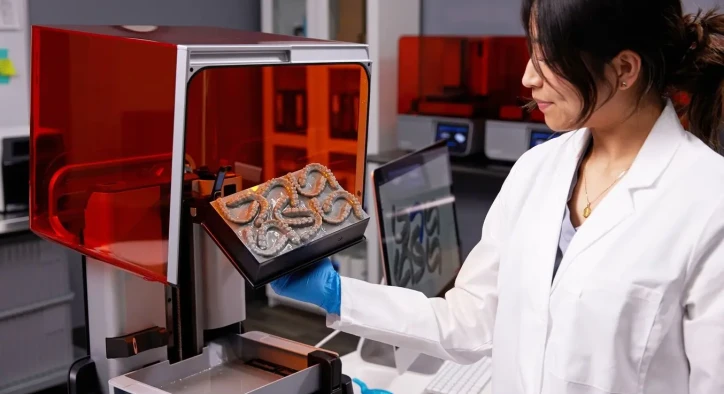

The dental world is changing fast, and 3D Printing in Dental Care is one of the key forces behind this transformation. What once sounded experimental is now a practical, everyday tool in modern clinics and labs. When combined with artificial intelligence, digital scanning, and data driven planning, this technology reshapes how dental solutions are designed, produced, and evaluated. At DentPrime, innovation is not a trend to follow but a language to understand.
From customized restorations to faster production cycles, 3D Printing in Dental Care introduces a new logic into dentistry. Instead of focusing only on manual craftsmanship, dental professionals now collaborate with software, algorithms, and precise manufacturing systems. This shift opens new questions, new expectations, and new possibilities worth exploring in depth.
Table Of Contents
- How 3D Printing in Dental Care Is Redefining Dental Manufacturing
- The Role of AI in Supporting 3D Printing in Dental Care
- Materials Science and 3D Printing in Dental Care
- Workflow Efficiency Through 3D Printing in Dental Care
- Personalization and 3D Printing in Dental Care
- Challenges and Limitations of 3D Printing in Dental Care
- Research, Data, and the Future of 3D Printing in Dental Care
- Understanding the Value of 3D Printing in Dental Care
How 3D Printing in Dental Care Is Redefining Dental Manufacturing
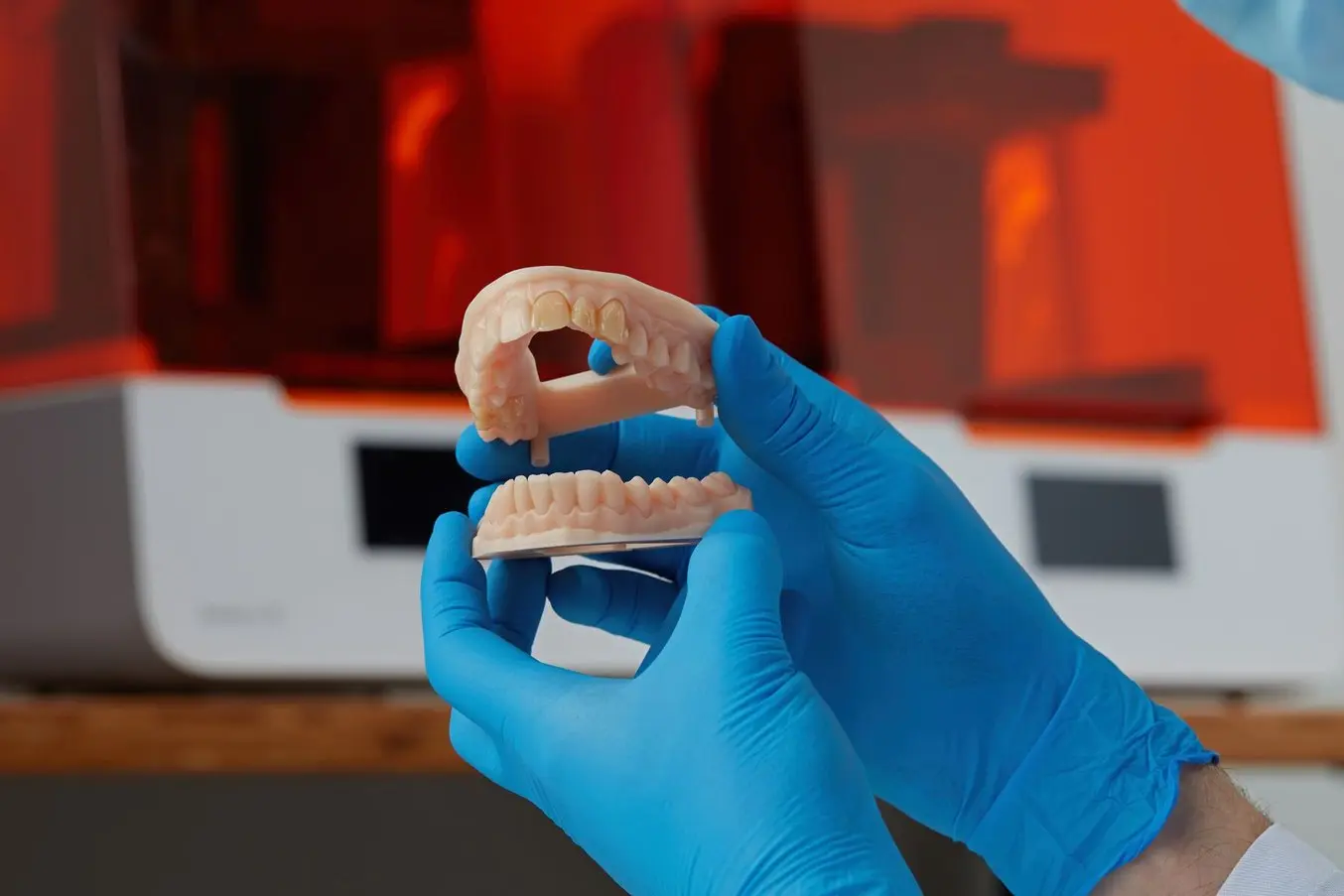
Traditional dental manufacturing relied heavily on analog impressions, molds, and manual adjustments. 3D Printing in Dental Care changes this workflow at its core. Digital impressions are transformed into printable models, allowing laboratories to fabricate dental components layer by layer with high consistency.
One of the most discussed aspects of 3D Printing in Dental Care is precision. Digital files reduce variability that often appears in manual processes. Instead of reworking physical molds, technicians can refine designs virtually before production begins. This digital flexibility leads to predictable outcomes without claiming absolute perfection.
Another important angle is scalability. 3D Printing in Dental Care supports small batch and single unit production equally well. This flexibility allows dental labs to adapt to fluctuating demands without restructuring their entire workflow. As a result, the manufacturing mindset in dentistry becomes more adaptive and responsive.
The Role of AI in Supporting 3D Printing in Dental Care
Artificial intelligence does not replace human expertise, but it amplifies decision making. In 3D Printing in Dental Care, AI driven software assists in analyzing scans, suggesting design optimizations, and detecting potential inconsistencies before printing begins.
This partnership between AI and 3D Printing in Dental Care helps streamline planning stages. Algorithms can compare thousands of design parameters in seconds, highlighting areas that may require attention. These insights are not final judgments but informed suggestions that professionals evaluate critically.
AI also supports learning curves. As systems process more cases, they identify patterns related to materials, geometry, and printing behavior. Over time, 3D Printing in Dental Care becomes not only faster but also smarter in how it adapts to real world usage.
Materials Science and 3D Printing in Dental Care
Materials play a central role in shaping the potential of 3D Printing in Dental Care. Resin based polymers, ceramics, and hybrid materials are continuously evolving to meet functional and aesthetic expectations. The focus is not on claiming superiority but on expanding options.
What makes 3D Printing in Dental Care particularly interesting is material customization. Different formulations can be selected based on flexibility, translucency, or durability requirements. This diversity supports more nuanced design decisions without implying medical guarantees.
Research driven material development adds another layer. Studies explore how printed structures behave under various conditions, providing valuable insights rather than absolute conclusions. In this way, 3D Printing in Dental Care remains an open field shaped by ongoing experimentation.
Workflow Efficiency Through 3D Printing in Dental Care
Efficiency is often mentioned in discussions about 3D Printing in Dental Care, but efficiency does not only mean speed. It also includes clarity, traceability, and coordination between different stages of dental production.
Digital workflows allow teams to track every step, from scan acquisition to final fabrication. In 3D Printing in Dental Care, changes can be documented and revisited without relying on physical storage or repeated impressions. This transparency supports better collaboration between clinics and labs.
Another efficiency factor is iteration. Adjustments that once required restarting the entire process can now be implemented digitally. 3D Printing in Dental Care supports incremental improvements rather than all or nothing decisions, which aligns well with modern design thinking.
Personalization and 3D Printing in Dental Care
Personalization is one of the most compelling narratives around 3D Printing in Dental Care. Digital design tools allow dental solutions to reflect individual anatomical data instead of standardized averages.
This personalized approach does not suggest perfection but relevance. 3D Printing in Dental Care enables designs that consider unique spatial relationships, proportions, and surface details. The result is a more tailored output shaped by data rather than assumptions.
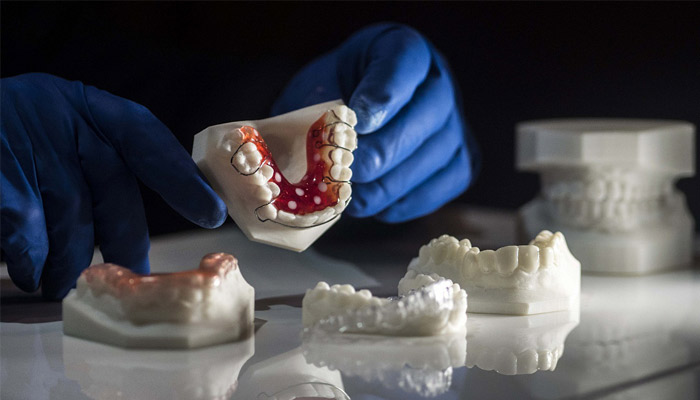
From a broader perspective, personalization also influences communication. Visual models help explain concepts more clearly, supporting informed discussions. In this sense, 3D Printing in Dental Care contributes to understanding, not just production.
Challenges and Limitations of 3D Printing in Dental Care
Despite its promise, 3D Printing in Dental Care is not without challenges. Equipment costs, training requirements, and material constraints are part of the reality. A balanced view acknowledges these factors without overstating obstacles.
Another limitation involves standardization. While 3D Printing in Dental Care offers flexibility, this same flexibility can lead to variability if protocols are not clearly defined. Research and shared best practices help address this issue gradually.
Regulatory and ethical discussions also surround 3D Printing in Dental Care. As technology evolves faster than frameworks, ongoing dialogue becomes essential. These conversations do not slow progress but help guide it responsibly.
Research, Data, and the Future of 3D Printing in Dental Care
Academic research plays a crucial role in shaping the future of 3D Printing in Dental Care. Universities, independent labs, and industry partners contribute data that explores performance, usability, and long term behavior.
Instead of definitive answers, research provides probability based insights. 3D Printing in Dental Care benefits from this approach because it encourages critical thinking rather than blind adoption. Each study adds a piece to a larger puzzle.
Looking forward, integration appears to be a key theme. AI, imaging, materials science, and 3D Printing in Dental Care are converging into unified ecosystems. These systems aim to support professionals with tools that evolve alongside their expertise.
Understanding the Value of 3D Printing in Dental Care
The rise of 3D Printing in Dental Care marks a shift in how dentistry thinks about design, production, and collaboration. It is not a single solution but a platform that supports many approaches and interpretations.
At DentPrime, this technology is viewed through a lens of curiosity and responsibility. 3D Printing in Dental Care invites professionals to ask better questions, explore data driven creativity, and participate in an evolving conversation.
Rather than focusing on final answers, the value lies in exploration. 3D Printing in Dental Care continues to grow as research, experience, and imagination intersect.
About the Author