







Brad Pitt's teeth have been a topic of genuine fascination for decades. From his early appearances in Thelma & Louise to recent red carpet events, his smile has shifted from naturally imperfect to quietly polished - and the story behind that change includes one of the most memorable moments in Hollywood dental history. This article examines Brad Pitt teeth before and after comparisons, the role of Brad Pitt veneers in his transformation, the famous Fight Club tooth incident, and what his journey reveals about cosmetic dentistry done right.
Table Of Contents
- A Career Built on More Than Just Looks
- Brad Pitt's Early Smile: Natural Charm in the 1990s
- The Fight Club Moment: When Brad Pitt Had His Teeth Chipped on Purpose
- Brad Pitt Teeth Before and After: What Actually Changed?
- Did Brad Pitt Get Veneers? What Dental Experts Think
- The Golden Proportion Smile: Why His Teeth Look So Natural
- Maintaining His Smile: Professional Care and Long-Term Upkeep
- How to Achieve a Similar Smile to Brad Pitt
- Brad Pitt's Smile Through the Decades
- What Can You Learn From Brad Pitt's Dental Journey?
A Career Built on More Than Just Looks
Brad Pitt was born on 18 December 1963 in Shawnee, Oklahoma. He moved to Los Angeles in 1986, two credits short of graduating from the University of Missouri with a journalism degree. Small television roles led to a breakout appearance in Thelma & Louise in 1991, and from there his career moved quickly. Films like Se7en, Fight Club, Ocean's Eleven, Troy, Inglourious Basterds, and Once Upon a Time in Hollywood established him as one of the most consistently successful actors of his generation.
He won an Academy Award for Best Supporting Actor for Once Upon a Time in Hollywood and a BAFTA for the same role. His appeal has always combined physical presence with genuine acting ability. His smile is part of that package - but it hasn't always been the polished version audiences recognise today. Like most people in highly visible careers, his approach to dental care evolved considerably over time.
Brad Pitt's Early Smile: Natural Charm in the 1990s
Photographs from the early 1990s show a noticeably different set of teeth to those Brad Pitt carries today. During his early film appearances, his smile showed slight alignment variations, minor enamel irregularities, and a natural off-white colouration. These qualities, if anything, enhanced his rugged, approachable look during that period - giving him a quality of realness that worked particularly well in gritty or emotionally demanding roles.

Fan speculation about whether Brad Pitt had dental work was circulating even before any obvious changes became visible. Looking at interview footage and film stills from this period, his teeth were entirely functional and natural - just not the uniform, carefully maintained result audiences would see from the 2000s onwards.
Was His Early Smile Part of His Charm?
There's a reasonable argument that it was. His slightly imperfect natural teeth made him less untouchable and more human - a quality that served his performances well in films like Legends of the Fall and Seven Years in Tibet, where excessive polish would have worked against the authenticity those roles required. Cosmetic dentistry at its best doesn't erase personality. His early smile had plenty of it.
The Fight Club Moment: When Brad Pitt Had His Teeth Chipped on Purpose
For his role as Tyler Durden in Fight Club (1999), Brad Pitt visited his dentist and had his front teeth intentionally chipped. Yes - deliberately damaged. This was not a prosthetic or a temporary appliance, but actual enamel removal carried out by a dental professional at the actor's request.
His preparation for the role was famously intense. He lost a significant amount of weight, studied the physicality of underground fighters, and decided that Tyler Durden's teeth needed to look battered and worn. The chips were asymmetrical and rough, designed to look like the result of repeated blows rather than any single incident. They also altered the way he spoke slightly, which reportedly helped him find the character's distinctive delivery.
Brad Pitt's commitment to the Fight Club role extended to having a dentist deliberately chip his front teeth - a preparation choice that even experienced film journalists found striking when details emerged during the film's promotion.
After filming wrapped, the chips were repaired by his dental team. That restoration process is widely regarded as the starting point for a broader programme of cosmetic dental improvement that would make Brad Pitt's smile one of the most discussed in Hollywood over the following decade.
Brad Pitt Teeth Before and After: What Actually Changed?
Comparing photographs from the 1990s with images from the 2010s and 2020s reveals several observable differences that go well beyond ordinary ageing:
- Alignment: His teeth appear straighter and more uniformly spaced in recent decades
- Shade: The colouration shifted from a natural off-white to a brighter but still believable white
- Shape: Tooth edges are more even, with less variation in size between adjacent teeth
- Symmetry: The overall composition of his smile became more balanced and consistent left to right
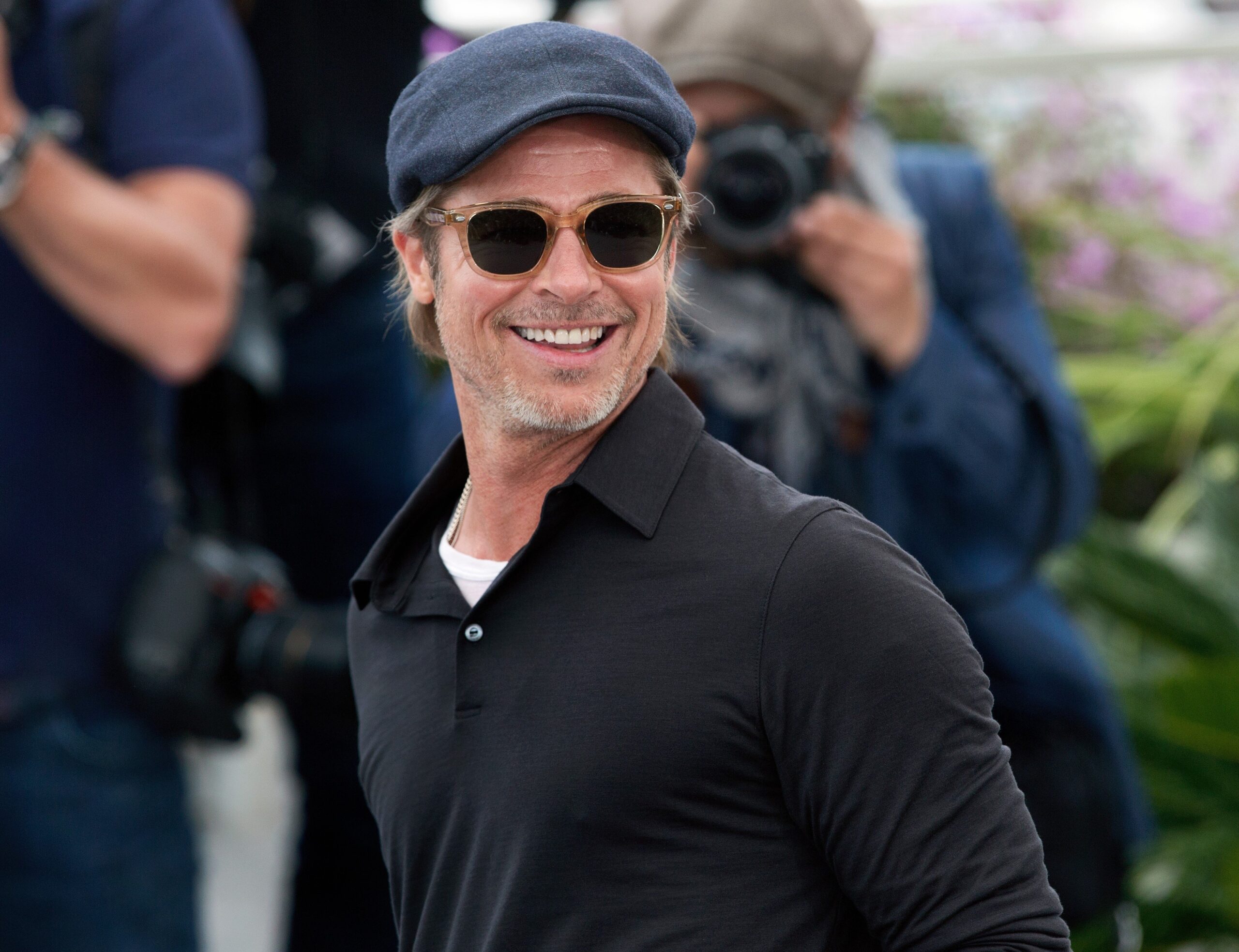
These changes are consistent with what dental professionals describe when discussing porcelain veneer results. The transformation is noticeable but not dramatic - which is precisely what makes it effective. Brad Pitt's smile looks like a very good version of natural teeth, not like an artificial replacement for them.
Did He Get Veneers or Just Whitening?
Professional teeth whitening alone cannot achieve the level of shape, symmetry, and alignment change visible in Brad Pitt's smile evolution. While whitening may well have been part of his routine - it's a standard maintenance tool for anyone with cosmetic dental work - the structural changes point clearly toward porcelain veneers. The uniformity of tooth edges and the slight elongation of certain teeth are not outcomes that whitening produces. They require physical alteration of the tooth surface, which veneers achieve by design.
Some dental commentators have speculated about whether orthodontic treatment was also involved, though there is no confirmed information about this. Minor alignment improvements can actually be achieved through the veneer process itself, by adjusting the thickness and positioning of each individual shell.
Did Brad Pitt Get Veneers? What Dental Experts Think
Brad Pitt has never publicly confirmed receiving porcelain veneers. Despite decades of intense media scrutiny, he has kept his dental treatment history private. However, cosmetic dental professionals analysing his photographic record have drawn fairly consistent conclusions.
According to NHS guidance on dental veneers, porcelain veneers are thin shells of dental-grade porcelain bonded to the front surfaces of teeth to correct colour, shape, size, or minor misalignment. The NHS notes that they are among the most commonly requested cosmetic dental treatments and, when well-executed, produce results that are essentially indistinguishable from natural teeth.
The indicators in Brad Pitt's case are fairly clear:
- Shade consistency across multiple teeth - more reliably achieved with veneers than whitening
- Uniform tooth edges - whitening has no effect whatsoever on tooth shape
- Slight elongation in certain tooth positions - a common veneer technique used to balance the overall smile composition
- Natural-looking enamel texture - high-quality porcelain closely replicates the surface properties of natural enamel
The work is broadly considered an example of first-rate cosmetic dentistry: subtle, well-proportioned, and executed by someone with strong aesthetic judgement. The result enhances without drawing attention to itself, which is exactly what high-quality veneers should do. You don't look at Brad Pitt and think "veneers" - you look at him and think "great smile." That's the point.
The Golden Proportion Smile: Why His Teeth Look So Natural
One reason Brad Pitt's smile is so consistently cited as aspirational rather than artificial is that it adheres closely to what cosmetic dentists call the "golden proportion." This aesthetic principle - rooted in classical geometry - holds that the most visually harmonious smiles follow a specific ratio in tooth width relative to height, and that the apparent width of each tooth decreases by a consistent factor as you move outward from the central incisors.
His post-treatment smile satisfies these proportions well:
| Smile Quality | Brad Pitt's Result |
|---|---|
| Buccal corridor fill | Wide, minimal dark space at the corners |
| Central incisor prominence | Dominant but not exaggerated |
| Left-to-right symmetry | Well balanced |
| Shade consistency | Natural gradient, slightly lighter at the centre |
| Gum line | Even and proportionate to tooth height |
This is why his smile reads as a refined version of natural teeth rather than a cosmetic product. The proportions are right for his specific facial structure - not just cosmetically appealing in isolation. That distinction separates excellent cosmetic dentistry from work that looks visibly artificial. Teeth that are too large, too white, or too uniform for the face they belong to draw attention to themselves. Brad Pitt's don't.
Maintaining His Smile: Professional Care and Long-Term Upkeep
Porcelain veneers are not a permanent solution that requires no further attention. They typically last between 10 and 20 years with proper care, and their longevity depends on consistent professional maintenance alongside good daily habits. Looking at the consistency of Brad Pitt's smile across decades of high-resolution photography, professional upkeep clearly forms part of his routine.
This likely includes regular professional cleaning and polishing, periodic veneer integrity assessments, professional whitening for any adjacent natural teeth to maintain shade consistency, and monitoring for signs of bite changes that could stress the veneers over time. These are standard recommendations for any patient with a high-quality cosmetic dental restoration, regardless of where the work was done.

Patients who invest in well-made veneers and maintain them properly can expect excellent long-term results. The NHS recommends that patients with veneers continue attending regular check-ups every six to twelve months to ensure the underlying teeth and supporting structures remain healthy - and this applies whether you had your treatment done locally or abroad.
How to Achieve a Similar Smile to Brad Pitt
The kind of result Brad Pitt has - proportionate, naturally bright, polished without being artificial - is consistently among the most requested outcomes in cosmetic dentistry. It sits in the sweet spot between natural and refined, and it is achievable for most patients with healthy underlying teeth and a good cosmetic dental team.
At DentPrime in Sofia, Bulgaria, our clinical team works with patients seeking precisely this kind of result. The process typically involves a full smile assessment and digital smile design consultation, shade matching to ensure the outcome complements your natural colouring, custom veneer fabrication in porcelain or E-Max ceramic, a trial fitting before permanent bonding, and a follow-up review to confirm bite alignment and long-term comfort.
For patients considering laminate veneers or a complete Hollywood smile treatment, a consultation is the right starting point. Treatment planning is always personalised - what works for one person's face doesn't automatically work for another, and an experienced cosmetic dentist will assess your specific proportions before recommending a shade, shape, and number of veneers.
The cost difference between dental treatment in Bulgaria and equivalent work in the UK, Ireland, Germany, or Slovakia is considerable. Most patients travelling to DentPrime for cosmetic procedures find the saving is substantial even after accounting for travel and accommodation costs.
Brad Pitt's Smile Through the Decades
| Period | Appearance | Likely Explanation |
|---|---|---|
| Early 1990s | Natural teeth with minor irregularities and natural colouration | No cosmetic dental work |
| 1999 (Fight Club filming) | Visibly chipped front teeth | Intentional chipping for the Tyler Durden role |
| 2000-2005 | Noticeably improved alignment, brighter shade | Post-Fight Club restoration and probable veneer placement |
| 2010s | Consistent, polished, natural-looking result | Mature cosmetic work with professional maintenance |
| 2020s | Stable, well-proportioned, natural appearance | Ongoing professional care and maintenance |
This timeline reflects a gradual, deliberate approach rather than a sudden dramatic change. That is characteristic of high-quality cosmetic dental work: the transformation happens incrementally, with each stage building sensibly on the last, and the final result looks like it was always meant to be there.
What Can You Learn From Brad Pitt's Dental Journey?
Several practical lessons emerge when you examine his transformation from a cosmetic dentistry perspective.
Subtlety is an aesthetic choice, not a compromise. Many patients arrive at consultations wanting the whitest, most uniform smile they can get. Brad Pitt's result is a useful counterpoint to that impulse - his teeth are bright but not unnaturally so, and that proportionality is precisely what gives the result its longevity and credibility. Excessive whiteness and uniformity tend to look artificial, particularly in high-resolution photography and close-up video. Getting the balance right requires genuine skill.
Maintenance is non-negotiable. The quality of his smile across two decades doesn't happen by accident. It reflects consistent professional attention and disciplined daily oral hygiene habits. Patients who invest in quality cosmetic work and then neglect maintenance often find results deteriorate faster than expected.
Celebrity dental transformations are technically accessible. The materials and techniques that produced Brad Pitt's smile are not Hollywood exclusives. Porcelain, E-Max ceramic, and digital smile design tools are all available at modern specialist dental clinics. What differs between countries is cost, not capability.
Good timing and proper investment matter. His most visible dental improvements appear to have happened when he was able to do them properly and take the time for thorough post-treatment care. Rushing cosmetic dental work, or opting for budget materials in permanent procedures, rarely produces results with genuine long-term quality.
Frequently Asked Questions About Brad Pitt's Teeth
Did Brad Pitt get veneers?
Brad Pitt has never publicly confirmed receiving veneers. However, dental professionals consistently conclude that porcelain veneers - possibly combined with enamel contouring - are the most plausible explanation for the changes in his teeth since the early 2000s. The degree of shape and shade uniformity visible in his smile is simply not achievable through whitening alone.
What happened to Brad Pitt's teeth in Fight Club?
For the 1999 film Fight Club, Brad Pitt had his front teeth deliberately chipped by his dentist as part of his preparation for playing Tyler Durden. He wanted the physical reality of damaged teeth to inform his performance. After filming, the chips were repaired - and that restoration process is widely believed to have been the starting point for subsequent cosmetic dental improvements.
Are Brad Pitt's teeth real?
His natural teeth are still present - there is no evidence of full crown replacement or dentures. The front surfaces have almost certainly been treated with porcelain veneers, and he has likely received professional whitening and routine maintenance as part of his dental care over the years. His teeth are real teeth with cosmetic enhancement applied to the visible surfaces.
How much would a similar smile makeover cost?
A full porcelain veneer treatment covering eight to ten front teeth at a London or Dublin practice typically costs between £8,000 and £15,000. The same quality of treatment at DentPrime in Bulgaria is available at significantly lower cost. Many patients combine their dental treatment with a short trip to Sofia, where flights from most European cities take under two hours. A smile design consultation is the best way to get an accurate personalised estimate.
What type of veneers would recreate this kind of result?
Given the natural appearance and durability visible in Brad Pitt's smile over the years, porcelain or E-Max ceramic veneers are the appropriate choice. These materials closely replicate the light-reflective properties of natural enamel and resist staining over time. Composite veneers are a lower-cost alternative but generally don't achieve the same quality of long-term result for patients seeking a durable transformation.
Can I get a similar smile without veneers?
For patients with mild colouration issues and minor alignment concerns, professional whitening combined with composite bonding may produce a satisfying improvement. However, the degree of shape change and symmetry correction visible in Brad Pitt's smile requires porcelain veneers or an equivalent ceramic restoration. Whitening has no effect on tooth shape, and composite bonding generally does not achieve the same surface quality as porcelain over time.
How long do porcelain veneers last?
Porcelain veneers last between 10 and 20 years when properly maintained, according to published clinical guidance. Longevity depends on oral hygiene habits, diet, whether the patient grinds their teeth, and the quality of the original bonding procedure. Well-made veneers placed on healthy underlying teeth by an experienced clinician can realistically last at the upper end of that range.
Brad Pitt's teeth tell a clear story about cosmetic dentistry done right: gradual, proportionate, and carefully maintained over time. His journey from a naturally imperfect 1990s smile to a refined and credible Hollywood result wasn't achieved overnight, and it wasn't achieved through extremes. The Fight Club chipping episode is a curious footnote in the story, but the real lesson is in the long game - quality work, professional maintenance, and an aesthetic approach that prioritises what is right for the face over what looks most obviously transformed. If you're considering a smile makeover with similar goals, a consultation with our clinical team at DentPrime is the right place to start.
About the Author