






You walk out of the dentist's chair, your lip still feels three sizes too big, and the only thing on your mind is a flat white. It is a fair craving, and it raises a fair question: can you drink coffee after a filling, or should you wait?
The short answer is that it depends on two things: the type of filling you had and how numb your mouth still is. Most people can have a drink once the anaesthetic has worn off, but there are a few details that protect both your filling and your soft tissues. Most people can drink again once the anaesthetic has worn off, which usually takes two to four hours.
In this guide we walk through safe timings for each filling material, what coffee can do to a fresh filling, how to deal with sensitivity, which other drinks and foods deserve a little care, and how to enjoy your morning cup without undoing your dentist's work.
Table Of Contents
- Why Does Numbness Matter After a Filling?
- What Happens to Your Tooth After a Filling?
- Filling Types: Composite, Amalgam and Glass Ionomer
- Does Coffee Stain a New White Filling?
- Tooth Sensitivity After a Filling: Hot and Cold Coffee
- What Other Drinks Are Safe After a Filling?
- What Can You Eat After a Filling?
- How to Drink Coffee Safely After a Filling
- How to Care for a New Filling
- When to See a Dentist After a Filling
- Frequently Asked Questions
- Can I drink coffee right after a filling?
- Can I have iced coffee after a filling?
- Will coffee ruin a composite filling?
- How long should I avoid hot drinks after a filling?
- Is there anything I should avoid eating or drinking after a filling?
- How long does a filling take to fully settle?
- Can I drink coffee with milk after a filling?
- Does decaf coffee stain teeth too?
Why Does Numbness Matter After a Filling?
Most modern fillings are hardened straight away, so the filling is rarely the limiting factor. Numbness is.
Here is what can go wrong if you drink coffee too early:
- Burns: you may not feel a drink that is too hot until the damage is done.
- Biting injuries: sipping and swallowing while numb makes you more likely to catch your cheek or tongue.
- Dribbling and spills: harmless, but unpleasant in public.
- Missing a high filling: while you are numb you cannot judge whether your bite feels even, so any adjustment has to wait until the feeling returns.
A simple test: if you can feel your lip and cheek normally and can close your mouth without effort, the numbness has most likely passed.
What Happens to Your Tooth After a Filling?

It helps to understand what your tooth is going through. During a filling, your dentist removes decay, cleans the cavity and replaces the missing structure with a restorative material. The tooth has been drilled, dried and sometimes etched, so the nerve inside is a little irritated even when everything went perfectly.
In the first hours, the anaesthetic wears off gradually, usually starting with the teeth and then the lip and tongue. In the first days, the tooth may react to heat, cold, sweet foods and pressure. In the first weeks, that reaction should fade as the nerve settles. This is why a sensible approach to hot and cold drinks matters more than a rigid waiting time.
Filling Types: Composite, Amalgam and Glass Ionomer
The material changes the advice a little. The table below gives the general picture; your dentist's own instructions always come first.
| Filling type | How it sets | Eating and drinking | Coffee notes |
|---|---|---|---|
| Composite (tooth-coloured) | Hardened with a curing light during the visit | Usually fine once numbness fades | Can pick up stains over time; avoid very dark drinks for the first day if you can |
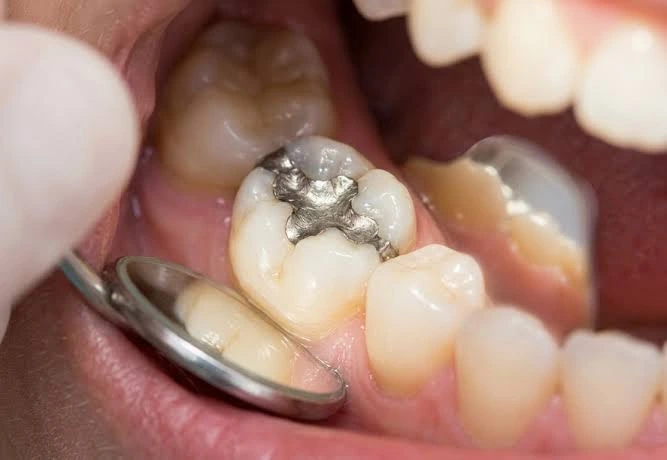
| Amalgam (silver) | Gains most of its strength over about 24 hours | Chew gently on the other side for a day | Lukewarm drinks are kinder to a fresh filling |
| Glass ionomer | Sets chemically and is a little softer at first | Be gentler for the first hours | Avoid hot drinks at first; the surface is more delicate |
| Temporary filling | Meant to be short term | Avoid sticky and hard food | Avoid very hot drinks; the seal is less strong |
If you are not sure which material you have, ask at reception. It is worth knowing for the future, especially if you ever need the filling replaced or repaired.
Composite fillings
Composite is hardened with a blue curing light, so it is solid when you leave the chair. The main long-term issue is staining rather than strength. Coffee and tea can slowly tint the surface, particularly if the filling sits on a front tooth or has a rough edge that traps pigment.
Amalgam fillings
Amalgam sets more slowly and reaches most of its strength over roughly a day. For the first 24 hours it is sensible to chew on the other side and avoid very hard foods. Hot and cold drinks can feel sharper on amalgam because metal conducts temperature well, so lukewarm drinks are more comfortable at first.
Glass ionomer and temporary fillings
Glass ionomer releases fluoride and bonds well to the tooth, but it is softer in the first hours. Temporary fillings are designed to be replaced, so the seal is weaker. With either material, be gentle and avoid hot drinks until your dentist confirms the next step.
Does Coffee Stain a New White Filling?
This is the question people really want answered. Composite fillings are polished smooth, but like natural enamel they are not completely stain-proof. Coffee, tea and red wine are the usual suspects.
There is a common belief that a fresh filling is especially vulnerable in the first 24 to 48 hours. Dentists differ on how much this matters, and a single cup is unlikely to ruin the colour. If the filling is on a visible front tooth, though, it is sensible to:
- limit very dark drinks for the first day or two
- drink in a way that keeps the liquid away from the new filling where you can
- rinse with water afterwards
- ask your dentist about a final polish at your check-up
Over the long term, regular coffee drinking will tint composite fillings and natural teeth alike. A professional clean every six to twelve months keeps both looking fresher.
Tooth Sensitivity After a Filling: Hot and Cold Coffee
It is normal for a newly filled tooth to feel sensitive to hot and cold for a few days, sometimes a couple of weeks. The tooth has just been worked on, and the nerve inside needs time to settle.
During that time:
- Choose warm or lukewarm coffee rather than scalding hot or ice-cold.
- Avoid switching quickly between hot and cold, such as a hot coffee followed by iced water.
- Skip very sugary drinks. Sugar can aggravate sensitive teeth and feeds the bacteria that cause decay.
- Consider a toothpaste made for sensitive teeth if your dentist agrees.
If sensitivity is getting worse after a week, or you have sharp pain when biting, let your dentist know. A filling that is slightly too high is easy to adjust and is a common cause of discomfort.
What Other Drinks Are Safe After a Filling?
Coffee is rarely the only thing you will want to drink, so here is how other common drinks compare.
- Water: always fine once you are not numb. Lukewarm or room temperature is kindest if the tooth is sensitive.
- Tea: similar to coffee. Black tea stains as readily, and very hot tea carries the same burn risk while you are numb.
- Fizzy drinks and juice: acidic and often sugary, which can irritate a sensitive tooth and soften enamel. Rinse with water afterwards.
- Alcohol: best left for later, since it can interact with pain relief and often comes with sugar and acid.
- Milk and plant milks: gentle on teeth and a good way to soften the effect of coffee on sensitivity.
What Can You Eat After a Filling?
Once the numbness has gone, you can usually go back to a normal diet, but a few choices make the first day easier:
- Start with soft foods such as yoghurt, eggs, pasta or soup, served warm rather than hot.
- Chew on the opposite side if the filling is large or is made of amalgam.
- Avoid very sticky foods such as toffee, which can pull on a fresh filling.
- Avoid very hard foods such as nuts, ice and hard crusts until the tooth feels comfortable.
How to Drink Coffee Safely After a Filling
Once your mouth is back to normal, these habits help protect your new filling:
- Wait until the numbness is gone before you take your first sip.
- Let your coffee cool a little. Warm is fine; scalding is not.
- Go easy on sugar. If you can, drink it without or with less.
- Rinse with water after your cup to wash away pigments and acids.
- Wait about 30 minutes before brushing. Coffee is mildly acidic, and brushing straight away can scrub softened enamel.
- Keep up with your check-ups. Fillings are checked at routine visits and can be polished or repaired early.
How to Care for a New Filling
A filling can last many years with a little care. Brush twice a day with fluoride toothpaste, clean between your teeth daily, and limit sugary snacks that feed decay around the edges of the filling. If you grind your teeth at night, ask your dentist about a night guard, because grinding can chip or loosen fillings. Regular check-ups let your dentist spot small problems such as a worn edge or a new area of decay before they become bigger.
When to See a Dentist After a Filling
Contact your dentist if you notice any of the following after your filling:
- pain when you bite or close your teeth together
- sensitivity that is getting worse rather than better after a week or two
- a rough edge or a feeling that the filling is too high
- a piece of the filling coming loose
- swelling, a bad taste or pain that wakes you at night
These are usually simple to fix when caught early.
Frequently Asked Questions
Can I drink coffee right after a filling?
It is best to wait until the anaesthetic has worn off, normally two to four hours. Drinking while numb risks burns and accidental biting.
Can I have iced coffee after a filling?
Yes, once the numbness has gone. If your tooth is sensitive, a very cold drink may sting. Try letting it warm up slightly, or sip it in a way that keeps it away from the treated tooth.
Will coffee ruin a composite filling?
A single coffee will not. Over months and years, coffee can darken composite and natural teeth alike. Rinsing with water and regular professional cleans help.
How long should I avoid hot drinks after a filling?
Avoid very hot drinks until the numbness has gone, then choose warm rather than scalding while the tooth is sensitive. For most people that settles within a few days.
Is there anything I should avoid eating or drinking after a filling?
For the first few hours, avoid anything hot while you are numb, and anything very hard or sticky on the new filling. If you had an amalgam filling, chew on the other side for about a day.
How long does a filling take to fully settle?
Most people feel normal within a few days. Mild sensitivity can last up to a couple of weeks. If it lasts longer, see your dentist.
Can I drink coffee with milk after a filling?
Yes, once you are no longer numb. Milk can soften the temperature and acidity of coffee, but it does not stop staining, so rinsing with water afterwards is still a good idea.
Does decaf coffee stain teeth too?
Yes. Staining comes mainly from the dark pigments in coffee, not the caffeine, so decaf can tint fillings and teeth in the same way.
Об авторе