




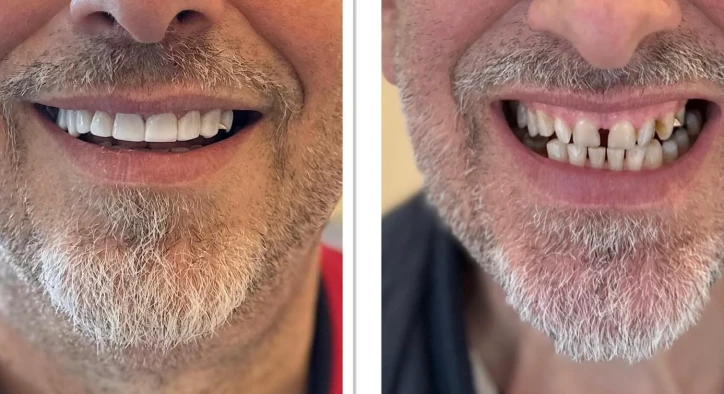

A smile is often described as a person’s greatest social asset. However, minor imperfections like small gaps, chipped edges, or stubborn stains can prevent many from sharing their smile with confidence. This is where modern cosmetic dentistry offers a fast and effective solution. Looking at composite bonding before and after galleries, it is easy to see why this treatment has become a global favorite for those seeking an instant "mini" smile makeover without the need for surgery or long waiting times.
Composite bonding is as much an art as it is a science. By using high-grade resins and advanced layering techniques, we can sculpt a new look that blends seamlessly with your natural anatomy. Whether you are curious about what is composite bonding before and after treatment or you are specifically looking to fix a single tooth, this guide will provide a comprehensive look at the transformation process.
Table Of Contents
- What Can You Expect Before and After Composite Bonding?
- Solving Common Dental Issues: A Visual Guide
- The Science of the "After": How We Mimic Natural Enamel?
- Composite Bonding vs. Veneers: Comparing the Results
- How Long Do the Results Last? Maintaining Your New Smile
- Why Your "Before" Matters: Is Everyone a Candidate?
- Frequently Asked Questions (FAQ)
What Can You Expect Before and After Composite Bonding?
Before the procedure begins, the "before" state usually involves teeth that may have uneven lengths, small chips from wear and tear, or a visible gap closure teeth bonding requirement. Patients often feel hesitant about their smile in photos or social situations. The "after" state, conversely, is characterized by a symmetrical, polished, and youthful appearance.
One of the most appealing aspects of this transition is that it typically happens in just one appointment. There is no need for temporary covers or laboratory wait times. You walk into the clinic with your "before" smile and leave a few hours later with your "after" results. Because the resin is cured instantly using a specialized light, the transformation is functional and aesthetic from the moment you leave the chair.
Solving Common Dental Issues: A Visual Guide

The versatility of the resin material allows it to solve a wide array of problems. When viewing before and after composite bonding photos, you will notice that the material can be used for both small touch-ups and more extensive changes.
Closing Gaps (Diastema) Without Braces
Many people have a small space between their two front teeth, known as a diastema. While some embrace this as a unique trait, others prefer a more uniform look. Composite bonding before and after gaps are filled shows how the resin can be added to the sides of the teeth to close the space perfectly. This provides a straighter appearance without the need for years of orthodontic treatment.
Repairing Chipped and Worn Edges
General wear or accidental injury can leave the edges of your teeth looking jagged or short. Edge bonding before and after results highlight how a dentist can "add back" the lost tooth structure. By lengthening the teeth slightly and smoothing out the edges, the smile regains its youthful vitality. This is particularly effective for those who have slightly shortened teeth due to grinding.
Correcting Discoloration That Whitening Can’t Fix
Sometimes, deep internal stains do not respond to chemical whitening. Composite bonding before and after yellow teeth restorations demonstrate how a thin layer of high-opacity resin can mask these stains. This creates a bright, white finish that looks much more natural than a flat, opaque cover.
The Science of the "After": How We Mimic Natural Enamel?
If you have ever wondered why some composite bonding teeth before and after results look better than others, the answer lies in the "layering" technique. Natural teeth are not just one solid color; they are translucent at the edges and more opaque toward the center.
To achieve a lifelike "after," we do not just use one shade of resin. We use a combination of different tones and translucencies.
- Dentin Layer: A more opaque layer is used to create the core of the restoration.
- Enamel Layer: A translucent layer is placed over the top to allow light to travel through the tooth, just like real enamel.
- Polishing: The final step involves a multi-stage polishing protocol. This gives the resin the same high-gloss finish as natural teeth, ensuring it reflects light in the same way.
Composite Bonding vs. Veneers: Comparing the Results
Patients frequently ask: "Which provides a better result, bonding or veneers?" While both can produce stunning composite bonding before and after effects, the choice depends on your long-term goals and your "before" condition.
Feature | Composite Bonding | Porcelain Veneers |
Enamel Removal | Little to none | Moderate |
Timeframe | Single visit (Same day) | 2–3 visits (Laboratory time) |
Reversibility | Reversible | Usually permanent |
Stain Resistance | Moderate | High |
Longevity | 5–7 years | 10–15 years |
For those looking for a non-permanent and conservative entry into cosmetic dentistry, bonding is often the preferred route. However, if you are looking for a permanent change that is highly resistant to coffee or tobacco stains, veneers might be the better "after" for you.
How Long Do the Results Last? Maintaining Your New Smile
When viewing composite bonding after 5 years, you can see that the results are durable, but they do require maintenance. A common question is: "How long does composite bonding last on your teeth?" On average, you can expect the bonding to look its best for 5 to 7 years.
Tips to keep your "After" looking fresh:
- Avoid Staining Foods: Composite resin is slightly more porous than porcelain. To prevent composite bonding before and after yellow teeth from returning to a stained state, limit your intake of red wine, turmeric, and black coffee.
- Professional Polishing: Just like your natural teeth, bonding can lose its luster over time. A quick professional polish every 6 months can restore the high-gloss finish.
- Don't Use Teeth as Tools: Avoid biting your nails or opening packages with your teeth. While the resin is strong, it can chip under extreme pressure.
Why Your "Before" Matters: Is Everyone a Candidate?
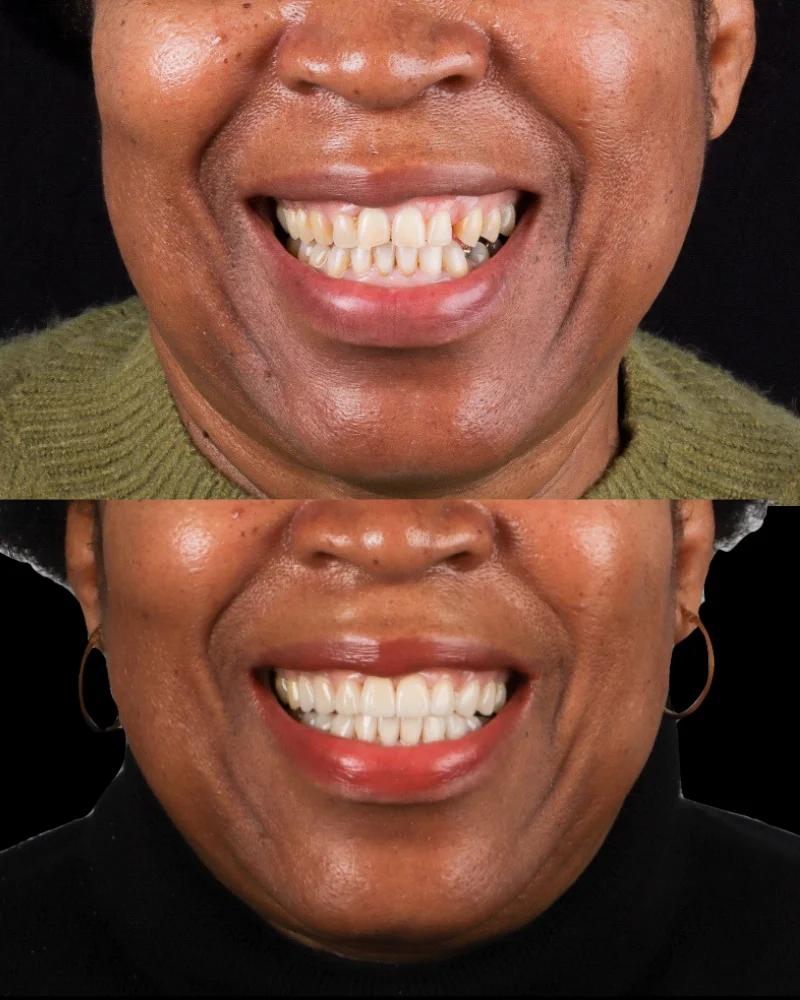
While bonding is a "miracle" for many, it is important to consider what teeth are not suitable for composite bonding? Your "before" state must be healthy for the "after" to be successful.
You might not be a candidate if:
- Severe Crowding: Composite bonding before and after crooked teeth can show minor improvements, but if teeth are severely overlapped, orthodontics (like Invisalign) is usually required first.
- Poor Gum Health: Bonding requires a dry, healthy environment to stick. If you have active gum disease, we must treat that first.
- Heavy Grinders: If you grind your teeth heavily at night, you may chip the bonding quickly. A night guard is a mandatory requirement for grinders who want to protect their investment.
Frequently Asked Questions (FAQ)
Does composite bonding look natural after treatment?
Yes, when performed by a skilled aesthetic dentist. By using a "layering" technique with different shades of resin, we can mimic the light-reflecting properties of your natural enamel. Most people will not be able to tell which part is the tooth and which is the resin.
Can you see the difference before and after composite bonding?
The difference is usually very significant. Whether it is gap closure teeth bonding or fixing a chipped edge, the improvement in symmetry and color is immediate and noticeable. Most patients feel they look younger and more approachable after the procedure.
Is composite bonding worth it for a smile makeover?
For many, the answer is a resounding yes. It is one of the most cost-effective ways to change your appearance. If you are wondering how much would composite bonding be for 2 teeth, it is often a fraction of the price of porcelain crowns or veneers, making it an accessible option for many.
Do teeth look thicker after composite bonding?
If done correctly, they should not. A skilled dentist removes a microscopic layer of enamel or carefully contours the resin so that the final tooth thickness remains within natural limits. The goal is to enhance the shape, not to add bulk.
What are the negatives of composite bonding?
While the benefits are many, the negatives of composite bonding include its tendency to stain over time and its lower durability compared to porcelain. It is also not a permanent solution, as the resin will eventually need to be replaced or refreshed.
About the Author