





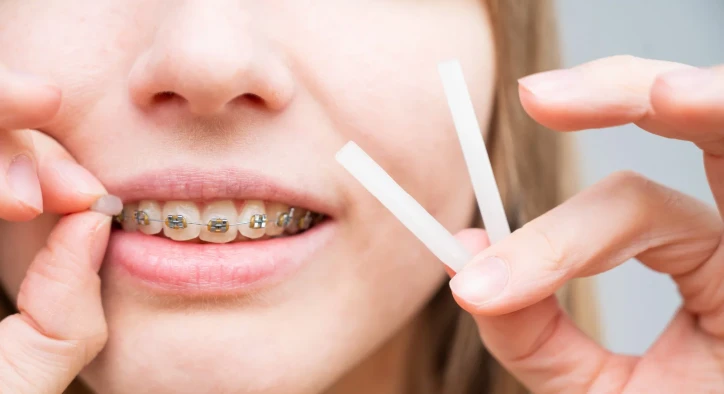

Anyone who has worn braces knows the feeling. A wire works loose, a bracket digs into the inside of your cheek, and within hours you have a small sore that aches every time you talk or chew. Orthodontic wax is the small, simple fix that most patients reach for first, and when it is used correctly it can stop a bracket sore from getting worse overnight.
This guide walks you through what braces wax actually is, when you should use it, exactly how to apply it, and what to do in awkward situations like eating, sleeping or accidentally swallowing a piece. The information here is general orthodontic education. For your own treatment, always check with the orthodontist who fitted your braces.
Table Of Contents
- What Is Orthodontic Wax?
- Why Your Braces Cause Mouth Sores
- When You Should Use Braces Wax
- How to Apply Braces Wax Step by Step
- Common Mistakes to Avoid
- Can You Eat With Braces Wax in Your Mouth?
- Can You Sleep With Braces Wax in Your Mouth?
- How Long Should You Keep the Wax On?
- What If You Swallow Braces Wax?
- Alternatives to Braces Wax
- When to Contact Your Orthodontist?
- Frequently Asked Questions
What Is Orthodontic Wax?
Orthodontic wax is a soft, pliable barrier you press over a bracket or wire end to stop it rubbing against the soft tissue of your mouth. It comes in small strips or pellets, usually inside a plastic flip-top case the orthodontist hands you on the day your braces go on. Most modern versions are made from medical-grade paraffin, beeswax, carnauba wax or, increasingly, medical silicone.
The wax is non-toxic and food-safe, which matters because some of it will inevitably end up swallowed during normal wear. Most brands are also flavour-free, though mint, bubblegum and unflavoured options all exist.
Why Your Braces Cause Mouth Sores
Fixed braces are built from metal or ceramic brackets glued to each tooth, with an archwire threaded across them. The system works by applying small, steady pressure to move teeth, but the components themselves have edges. The inside of your cheek, your lower lip and your tongue are soft, moist tissue that has never before encountered metal at close range.
Three things create the irritation: the corners of a bracket pressing into the cheek when you smile, a wire that has shifted along the arch and now pokes out behind the last bracket, and the friction of speech or chewing rubbing tissue against the bracket all day. The mouth eventually toughens up, often within two to four weeks, but the first month and any week after a tightening appointment can be uncomfortable.
When You Should Use Braces Wax?
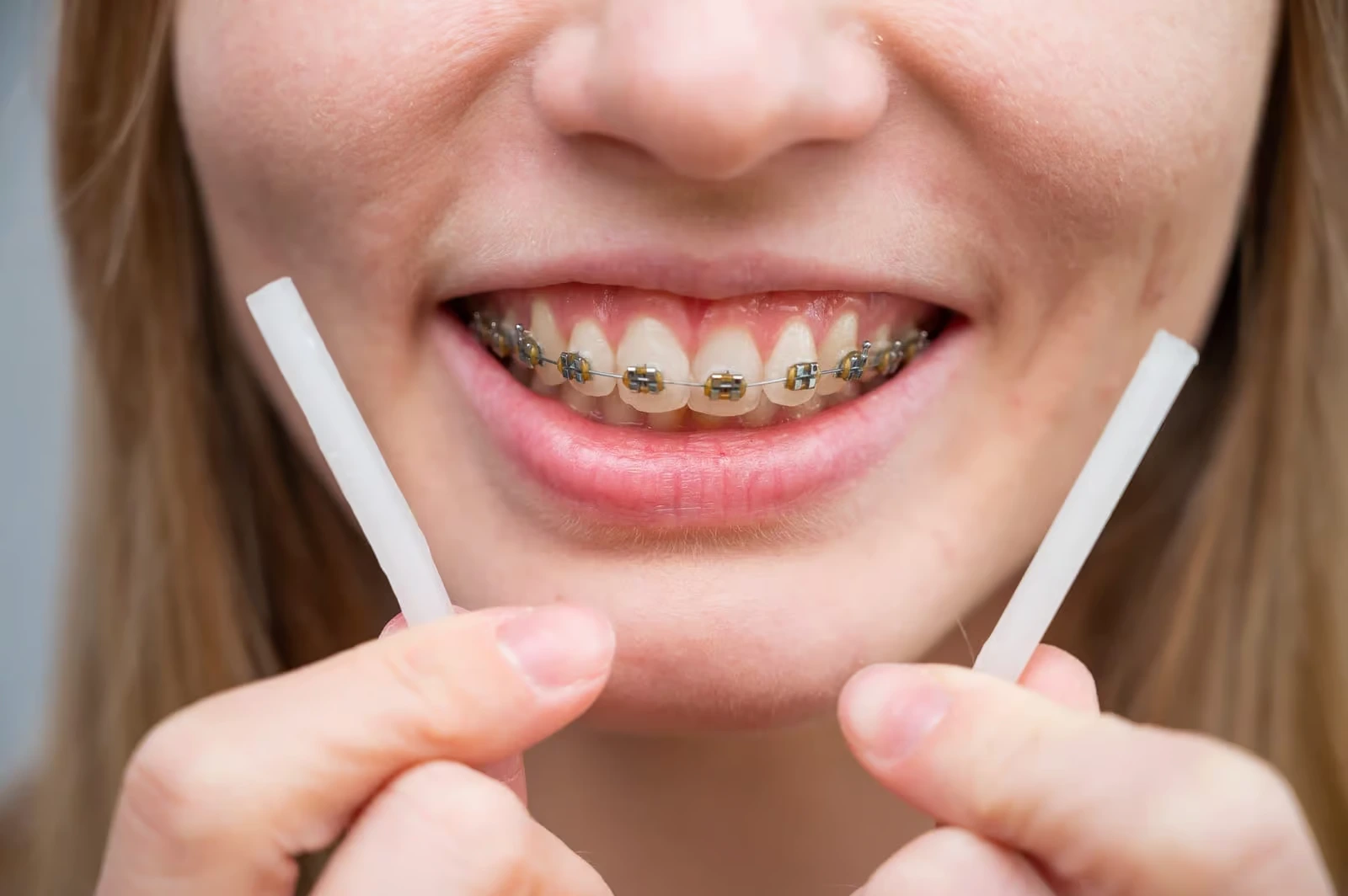
Wax is a temporary buffer, not a permanent fix. You use it for the same reason you would put a plaster on a blister: to protect the skin while it heals, or to protect it long enough to see a professional.
Sharp Wire Ends
If a wire has worked its way out from behind the back molar and is poking your cheek, wax is your first response. Cover the end of the wire so it stops cutting tissue, then book an appointment with your orthodontist to have the wire trimmed properly. Do not try to cut the wire yourself with household scissors.
New Brackets or Adjustments
The first week with new braces and the first two days after a tightening visit are usually the most sore. Apply wax preventively over any bracket that already feels like it is starting to rub, especially the canines and lateral incisors, which sit right where the cheek folds when you smile.
Canker Sores and Cheek Irritation
Once a sore has already formed, wax keeps the bracket off the wound long enough for it to start healing. Combine it with a warm salt water rinse two or three times a day. If the same spot keeps developing sores, that bracket needs to be checked, not just covered.
How to Apply Braces Wax Step by Step
The whole process takes under a minute once you have done it a few times.
- Wash your hands with soap and water for at least twenty seconds.
- Brush your teeth and braces gently so the area you are about to wax is clean. Wax does not stick well to plaque or food debris.
- Dry the bracket or wire end with a clean tissue or cotton bud. Saliva stops the wax adhering.
- Pinch off a piece of wax about the size of a small pea.
- Roll the piece between your finger and thumb for five to ten seconds until it softens and becomes pliable.
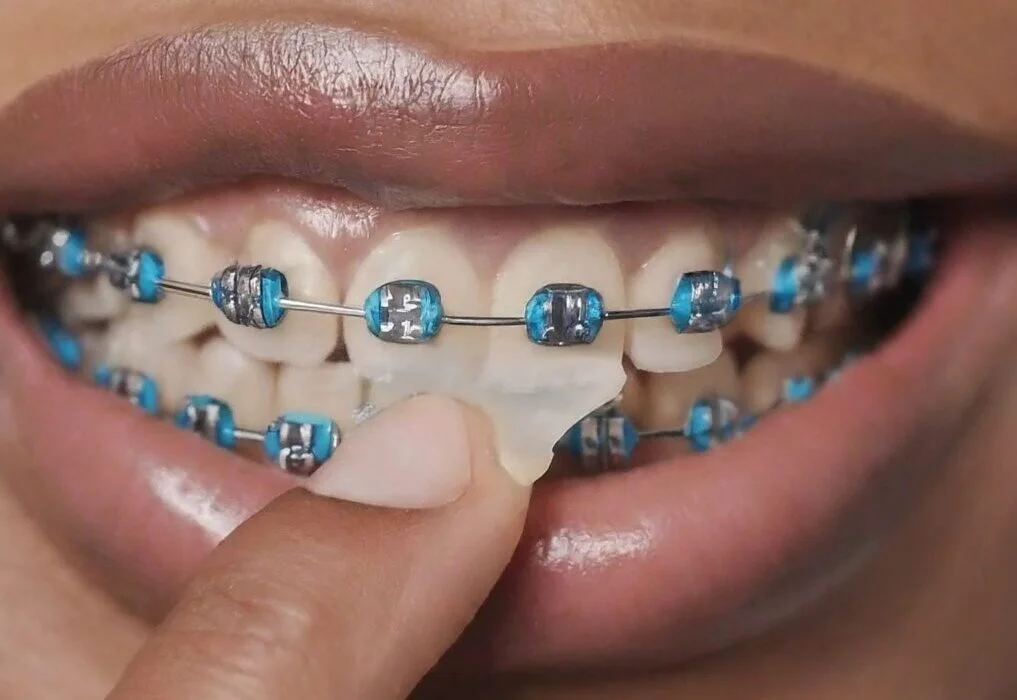
- Press the wax over the bracket or wire end, then smooth the edges so nothing catches your cheek.
- Hold gentle finger pressure for ten seconds to help it bond.
- Check with your tongue that the surface feels rounded, not lumpy.
Common Mistakes to Avoid
A few habits make wax less effective and more frustrating.
- Using too much wax. A piece bigger than a pea will not stick well and tends to fall off during meals.
- Applying it to wet braces. Always dry the area first.
- Leaving the same piece on for days. Old wax traps food and bacteria and starts to smell. Replace it at least once every day, and immediately after eating.
- Using candle wax, crayon, or chewing gum as a substitute. None of these are made for the mouth and some contain dyes or sugar that are bad for your teeth.
- Ignoring a wire that keeps poking. Wax buys you time, but a wire end that needs trimming needs an orthodontist appointment, not endless reapplications.
Can You Eat With Braces Wax in Your Mouth?
Technically yes, but most orthodontists recommend removing wax before eating. The wax tends to come off during chewing anyway, and small pieces can end up mixed with food. If you choose to leave it on for a soft meal like soup or yoghurt, that is generally fine. For anything you have to bite or chew, peel the wax off first, eat your meal, brush your teeth, and apply a fresh piece afterwards.
Swallowing a small amount of medical-grade orthodontic wax is not harmful, but it adds nothing to your diet and is wasteful. The Canadian Association of Orthodontists has noted that accidental swallowing of wax during normal wear is common and not a cause for concern.
Can You Sleep With Braces Wax in Your Mouth?
Yes, sleeping with braces wax in place is safe and is one of the situations where wax helps most. The cheek is pressed against the brackets for six to nine continuous hours at night, which is when sores often form. A fresh piece of wax applied before bed protects the tissue while you sleep.
The wax may loosen or fall off during the night. If it ends up in your mouth and you swallow it without noticing, it is not dangerous. In the morning, remove any remaining wax, brush as usual, and apply a fresh piece if the area still feels tender.
How Long Should You Keep the Wax On?
Replace your wax at least every twenty-four hours, and any time it comes off during the day or gets contaminated by food. There is no benefit to leaving an old piece in place. Once the underlying sore has healed and the bracket no longer irritates the cheek, you can stop using wax on that spot entirely. Most patients find they need wax heavily in the first month and then only occasionally after tightening visits.
What If You Swallow Braces Wax?
Medical-grade orthodontic wax is classified as non-toxic and food-safe by the manufacturers who supply orthodontic clinics. A swallowed piece will pass through your digestive system without being absorbed. According to general guidance from the American Association of Orthodontists, accidental swallowing during normal use is not a medical emergency.
If a child or adult swallows a very large piece and feels chest discomfort, difficulty breathing or persistent coughing, that is different and warrants a call to a doctor, because the issue is physical obstruction, not toxicity. For ordinary small amounts, there is nothing to do.
Alternatives to Braces Wax
A few options exist when you run out of wax or want something that lasts longer.
- Orthodontic silicone strips. These are reusable, last longer than wax and tend to stay on better during meals.
- Orthodontic relief gel. A tube of soothing gel rubbed onto the sore spot numbs the area for around twenty minutes. It does not cover the bracket, so combine it with wax for the best result.
- Sugar-free dental gum, in a genuine emergency only. A small piece of sugar-free gum can act as a temporary buffer for an hour or two, but never gum with sugar and never as a regular substitute.
- Dental tape over a single bracket. Some patients use a thin strip of dental tape as a stop-gap when wax is unavailable.
Candle wax, crayons, modelling clay and chewing gum with sugar are not suitable substitutes and can cause separate dental problems.
When to Contact Your Orthodontist?
Wax solves cheek irritation. It does not solve a broken bracket, a wire that has slipped out of position, or a sore that keeps coming back in the same place. Call your orthodontist when you notice any of the following.
- A bracket has come away from the tooth.
- The archwire has slipped out of a bracket slot.
- A wire end is so sharp that wax keeps falling off and the area keeps bleeding.
- A sore has lasted more than ten days despite wax and salt water rinses.
- You have severe, sudden pain rather than the usual ache after a tightening.
- There is visible swelling of the cheek or gum that gets worse, not better.
Frequently Asked Questions
Can I eat with braces wax in my mouth?
You can, but it is better to remove wax before meals. The wax often comes off during chewing and may mix with your food. Swallowing a small piece is harmless. The cleaner option is to peel the wax off, eat, brush your teeth, and apply a fresh piece.
Can I sleep with braces wax in my mouth?
Yes. Overnight is one of the most useful times to wear wax, because that is when the cheek rests against the brackets for hours. The wax may loosen during sleep, and swallowing a small amount is not dangerous.
How often should I change braces wax?
Replace it at least once every twenty-four hours, and any time it falls off, gets dirty during a meal, or starts to smell. Old wax traps bacteria, so fresh pieces are always better than stretched-out wear.
Does wax stop braces hurting completely?
No. Wax protects soft tissue from sharp edges, but the underlying tooth pressure from the braces themselves is what produces the deep ache after a tightening. Over-the-counter pain relief, used as directed, handles that side. Speak to your orthodontist before combining treatments.
Is braces wax safe for children?
Standard orthodontic wax is considered safe for children old enough to wear braces, typically from about age eight upward. An adult should supervise the first few applications. If a child accidentally swallows a small piece, there is no need to worry.
Can I use the wax for clear aligners or retainers?
Clear aligners and retainers rarely cause the same edge irritation as fixed braces. If an aligner has a sharp ridge, your orthodontist can usually smooth it with a fine file or replace the tray. Wax is occasionally used as a short-term fix, but it is not the standard solution.
Need Orthodontic Care in Antalya?
If you are wearing braces and the irritation is recurring in the same place every week, the underlying issue is usually a wire or bracket that needs adjusting, not a shortage of wax. At our Antalya clinic we see both Turkish residents and international patients who started orthodontic treatment elsewhere and want a check-up while they are visiting.
Send us recent photos of the area through our contact page or WhatsApp, and we will tell you whether wax is enough or whether the bracket needs attention. The initial consultation is free of charge. Whatever you decide, please discuss your specific orthodontic case with a qualified dentist before changing anything in your treatment.
About the Author