





Severe tooth loss compromises masticatory function, alters facial proportions, and reduces nutritional health. Over the last two decades, modern implantology has advanced from localized single-tooth replacements to sophisticated full-arch restorations. Choosing dental implants in Turkey has become one of the most reliable options for global patients seeking first-class oral rehabilitation without extended domestic waiting lists. Backed by internationally accredited dental clinics, high surgical volume, and modern three-dimensional imaging technology, the country provides comprehensive implant care meeting strict European standards.
International patients planning treatment often ask how much are dental implants in Turkey and evaluate the broader dental implants in Turkey cost drivers to understand the financial value. Equally important is patient reassurance regarding procedural integrity: is it safe to have dental implants in Turkey when choosing accredited surgical teams? Prospective candidates actively evaluate authentic dental implants in Turkey reviews, seek clarity on all on 4 dental implants in Turkey step by step protocols, and compare these with advanced all on 6 dental implants in Turkey solutions. This clinical guide delivers transparent medical facts to help patients make informed restorative decisions.
Table Of Contents
- Biological Foundations: What Makes Dental Implants the Gold Standard?
- Safety Standards: Is It Safe to Have Dental Implants in Turkey?
- Financial Dynamics: What Influences Dental Implants in Turkey Cost?
- Step-by-Step Clinical Protocols: All-on-4 and All-on-6 Systems
- Comprehensive Comparison: All-on-4 vs. All-on-6 Dental Implants
- Frequently Asked Questions
- How much are dental implants in Turkey compared to the UK or Europe?
- Is it safe to have dental implants in Turkey for foreign patients?
- How long does the entire treatment take from start to finish?
- What is the main difference between All-on-4 and All-on-6 implants?
- What should I look for in authentic dental implants in Turkey reviews?
Biological Foundations: What Makes Dental Implants the Gold Standard?
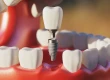
To understand why dental implants surpass conventional removable dentures, one must examine the biological principle of osseointegration. A dental implant is an artificial root crafted from medical-grade pure titanium or zirconia that is surgically placed into the alveolar bone.
- [ ATRAUMATIC SURGICAL PLACEMENT ]: Precision osteotomy into native cortical bone
- [ OSSEOINTEGRATION COMPLETED ]: Living bone cells fuse directly to the titanium surface
When natural teeth are lost, the surrounding jawbone loses mechanical stimulation, triggering progressive bone resorption. Dental implants transfer masticatory forces directly into the deep bone architecture, arresting bone loss and preserving facial fullness. Within eight to twelve weeks following placement, osteoblasts migrate across the micro-textured titanium surface, locking the implant into the jawbone. This rigid biological anchorage provides the structural strength needed to support single crowns, extended dental bridges, or full-arch hybrid prosthetics.
Safety Standards: Is It Safe to Have Dental Implants in Turkey?
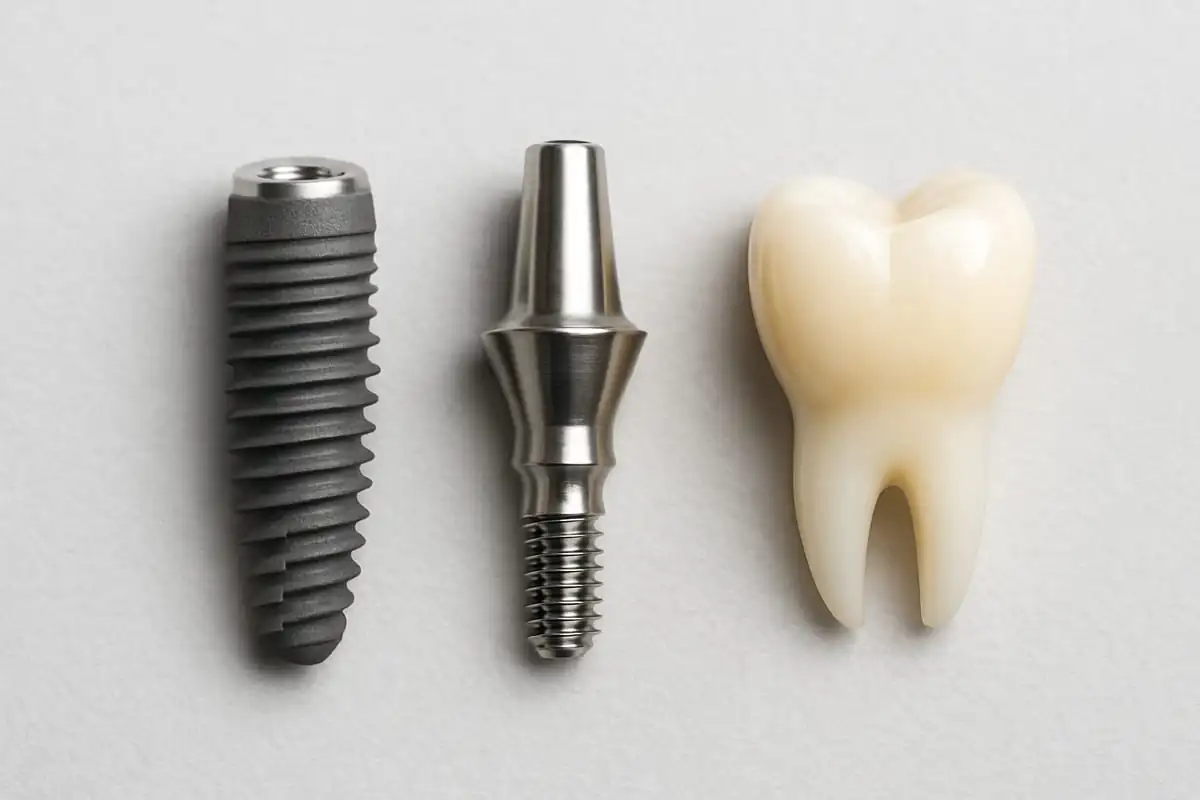
A central concern for anyone considering cross-border dental treatment is: is it safe to have dental implants in Turkey? From a clinical perspective, dental care in Turkey is governed by the Turkish Ministry of Health under strict regulatory frameworks aligned with European Union health directives.
- Surgical Specialization: Legitimate implant surgeries are performed exclusively by oral and maxillofacial surgeons or prosthodontists who have completed five years of general dental training followed by four to six years of formal surgical hospital residency.
- Three-Dimensional Diagnostic Navigation: Leading clinics utilize in-house Cone Beam Computed Tomography (CBCT) scans and intraoral digital scanners. This technology allows surgeons to visualize the inferior alveolar nerve, maxillary sinuses, and bone volume in sub-millimeter detail, preventing iatrogenic complications.
- Internationally Certified Implant Brands: Reputable Turkish clinics partner with globally established Swiss, German, and American implant manufacturers that supply worldwide traceability passports and lifetime international warranties.
- Sterile Surgical Infrastructure: Advanced clinics feature dedicated surgical suites equipped with hospital-grade positive-pressure ventilation and Class B autoclaves, minimizing the risk of surgical site infections.
Reading verified dental implants in Turkey reviews confirms that traveling for dental treatment is predictable and safe when choosing certified clinics over non-regulated budget providers.
Financial Dynamics: What Influences Dental Implants in Turkey Cost?
Patients planning dental treatment routinely research how much are dental implants in Turkey and what creates the favorable pricing structure. The dental implants in Turkey cost equation is shaped by favorable operational economics rather than a compromise in clinical quality.
Lower clinic operational costs, accessible laboratory overheads, favorable exchange rates, and high procedural volumes allow Turkish clinics to provide high-tier care at accessible rates compared to the UK, Western Europe, and North America. Pricing depends on several clinical variables:
- Choice of Implant System: Standard approved titanium brands provide cost-effective reliability, whereas premium brands offering active chemical surfaces accelerate osseointegration in medically compromised patients.
- Number of Implants Needed: Single-tooth restorations require one fixture and one custom abutment, whereas complete edentulism demands multiple fixtures per arch.
- Ancillary Surgical Interventions: Patients with long-standing tooth loss often require preparatory procedures such as sinus lift surgery or synthetic bone grafting to rebuild depleted alveolar ridges.
- Permanent Prosthetic Material: Final fixed teeth can be fabricated from metal-reinforced acrylic, composite resins, or computer-milled solid monolithic zirconia bridges.
Step-by-Step Clinical Protocols: All-on-4 and All-on-6 Systems
For fully edentulous individuals or those with broken-down dentition, full-arch restorations provide immediate function and aesthetics. Understanding the sequence of all on 4 dental implants in Turkey step by step brings clarity to the clinical journey.
[ VISIT 1: 5 TO 7 DAYS ]: 3D Planning, extractions, implant placement & immediate temporary bridge
[ VISIT 2: 5 TO 7 DAYS ]: Digital scanning, precision frame milling & final zirconia bridge delivery
- Step One - Digital Assessment: Upon arrival, the surgical team conducts CBCT scans, dental photography, and digital bite registration to design the surgical template.
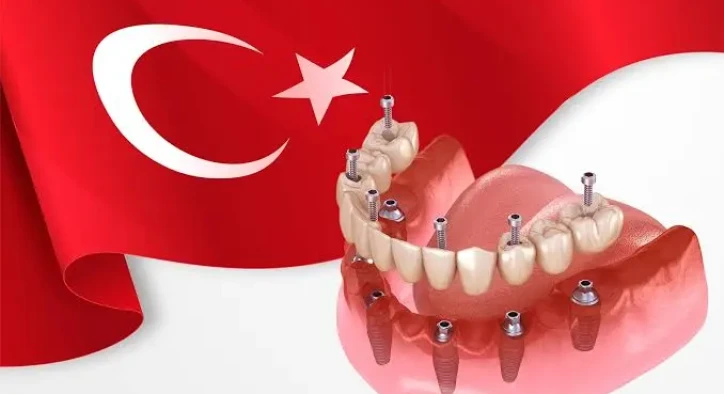
- Step Two - Surgical Placement: Under local anesthesia or intravenous sedation, remaining non-restorable teeth are removed. Four implants are placed strategically; the front two are inserted vertically into dense bone, while the back two are angled up to forty-five degrees to bypass the sinus cavities or nerve canals.
- Step Three - Immediate Loading: Digital scan bodies record the exact implant coordinates. Within twenty-four hours, the in-house laboratory mills a reinforced provisional screw-retained bridge, allowing the patient to speak and eat soft foods immediately.
- Step Four - Deep Osseointegration: The patient returns home for three to six months while the titanium integrates naturally with living bone tissue.
- Step Five - Definitive Restoration: The patient returns for a final visit. The provisional bridge is replaced with a custom-milled monolithic zirconia bridge anchored onto the fully integrated fixtures.
When anatomical bone density allows, surgeons often recommend all on 6 dental implants in Turkey. Utilizing six implants per arch provides broader force distribution and added biomechanical stability, particularly for patients with strong bite forces or wider jaw structures.
Comprehensive Comparison: All-on-4 vs. All-on-6 Dental Implants
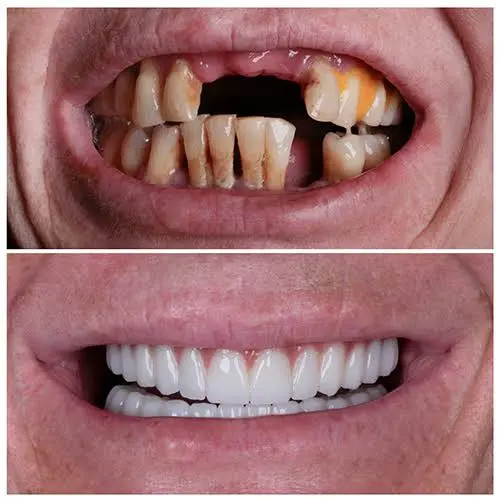
Evaluating the biomechanical differences between full-arch configurations helps clarify which treatment plan fits specific anatomical conditions.
Clinical Parameter | All-on-4 Full-Arch Protocol | All-on-6 Full-Arch Protocol |
Number of Fixtures | Four implants per arch | Six implants per arch |
Posterior Angulation | Back implants angled up to 45 degrees | Implants placed more vertically |
Bone Volume Requirement | Suitable for moderate to severe bone resorption | Requires moderate to abundant bone volume |
Sinus Lift Avoidance | High success bypassing maxillary sinuses | May require sinus elevation in upper jaw |
Force Distribution | Even distribution over four primary pillars | Enhanced distribution across six pillars |
Ideal Candidate Profile | Patients seeking to avoid extensive grafting | Patients with broader jaws or high bite forces |
Frequently Asked Questions
How much are dental implants in Turkey compared to the UK or Europe?
Dental implant treatment in Turkey is significantly more accessible than in the UK, Western Europe, or North America. Due to lower clinic running costs, accessible laboratory fees, and currency advantages, patients routinely save between fifty and seventy percent on their overall restorative treatment while receiving the exact same premium European and American implant brands.
Is it safe to have dental implants in Turkey for foreign patients?
Yes, having dental implants in Turkey is safe when performed at fully licensed clinics registered with the Turkish Ministry of Health. Established clinics follow strict sterilization protocols, employ specialized oral and maxillofacial surgeons, utilize 3D CBCT guided surgery, and provide official international warranty cards for every placed implant.
How long does the entire treatment take from start to finish?
The entire process is typically completed over two visits. The first visit lasts five to seven days, during which extractions, implant placement, and fitting of a fixed temporary bridge occur. After an osseointegration period of three to six months at home, the patient returns for a second five to seven day visit to receive their permanent monolithic zirconia bridge.
What is the main difference between All-on-4 and All-on-6 implants?
The primary difference lies in the number of supporting pillars and bone requirements. All-on-4 uses four implants with the rear two angled to maximize available bone without grafting, making it ideal for patients with bone loss. All-on-6 uses six implants, offering greater load distribution for patients with adequate bone density or higher chewing forces.
What should I look for in authentic dental implants in Turkey reviews?
When reviewing patient feedback, look for detailed accounts that discuss the surgical consultation, verify that treatment was carried out by a specialist oral surgeon, mention three-dimensional CBCT planning, and show long-term post-operative results rather than just immediate cosmetic photos.
About the Author