





Many people who want a better smile share the same worry: what will it actually look like when it is finished? Words like "natural" or "bright" mean different things to different people, and a few sample photos of other patients do not show how a change will suit your own face. Digital smile design, often shortened to DSD, was developed to close that gap. It lets the patient and the dentist look at a planned result together before a single tooth is touched.
This guide explains what digital smile design is, how the process works from the first photographs to final approval, what a mockup and a trial smile are, and which decisions belong to you and which belong to the dentist. It also covers cost factors and the limits of the method, so that you can judge whether it fits your own case.
Table Of Contents
- What Is Digital Smile Design?
- How Digital Smile Design Works Step by Step
- Photos, Videos and Scans: The Data Behind Your Design
- The Digital Mockup: Seeing the Plan Before Treatment
- Trial Smile: Testing Your New Smile in the Mouth
- What You Decide and What the Dentist Decides
- Digital Smile Design for Veneers
- Digital Smile Design for Implants and Full Mouth Cases
- Digital Smile Design Cost: What Affects the Price
- Limits of Digital Smile Design
- Planning Digital Smile Design With DentPrime
- Frequently Asked Questions
What Is Digital Smile Design?
Digital smile design is a planning method in which a dentist uses photographs, videos and digital scans to design a smile on screen before treatment starts. Instead of working only from impressions and memory, the dentist studies the face as a whole: the position of the lips, the line of the eyes, the midline of the face and how much of the teeth shows when the patient talks and smiles. The planned teeth are then drawn over the patient's own pictures so the proposed change can be seen in context.
It is important to understand that digital smile design is not a treatment in itself. It is a preview and planning stage that sits in front of treatments such as veneers, crowns, whitening, orthodontics or implants. Its value lies in communication. A patient who can see the plan, comment on it and change it is far less likely to be surprised later, and a dentist who knows exactly what the patient imagines can work toward that target more precisely.
How Digital Smile Design Works Step by Step
The exact order differs between clinics, but most digital smile design processes follow a similar path. A typical sequence looks like this:
- A consultation in which the patient explains what they like, what bothers them and what they hope to change.
- A clinical examination and X rays to check tooth health, gums, bite and the condition of existing dental work.
- Photographs, short videos and digital scans of the face, teeth and bite.
- A digital design in which the dentist and dental technician plan the shape, length, proportion and alignment of the teeth.
- A mockup that shows the plan, first on screen and then in the mouth.
- Adjustments based on the patient's feedback and on what is functionally possible.
- Final approval, after which the actual treatment can be scheduled.
The sequence matters because each stage builds on the one before it. The examination decides whether the plan is safe, the images and scans supply the data, the design turns that data into a proposal, and the mockup tests the proposal in real life. Skipping the health check or rushing the approval removes the very safeguards the method is meant to provide.
Photos, Videos and Scans: The Data Behind Your Design
A good design depends on good information. For this reason the first practical step is collecting a set of images and measurements that show how your face and teeth behave in everyday life, not only in a perfectly posed picture. Typically this includes:
- Front and side photographs of the face at rest and while smiling.
- Close photographs of the teeth, gums and lips.
- Short video clips of speech and natural expressions, which show how much tooth is visible in motion.
- Digital scans of the teeth and bite, which replace traditional impression material in many clinics.
Video is a detail that many people overlook. A smile held for a camera is different from a smile that appears while laughing or talking, and the relationship between the upper teeth and the lower lip changes from one moment to the next. Designing from motion as well as stillness helps the dentist avoid teeth that look right in a photograph but feel too long or too short in conversation.
Digital scans add accuracy to the plan. They record the exact shape and position of your teeth and how the upper and lower jaw meet. This information is later used to build the mockup and, if you proceed, the final restorations.
The Digital Mockup: Seeing the Plan Before Treatment
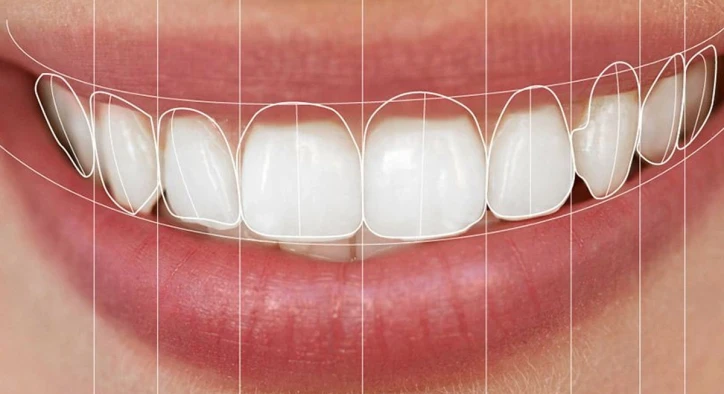
Once the data is collected, the dentist and technician create the digital design. Using specialised software, they draw the proposed teeth over your photographs and adjust the width, length, edge shape and spacing so that the smile follows the lines of your face. They check that the upper front teeth are in proportion to each other, that the smile line follows the curve of the lower lip, and that the midline of the teeth matches the midline of the face as far as is practical.
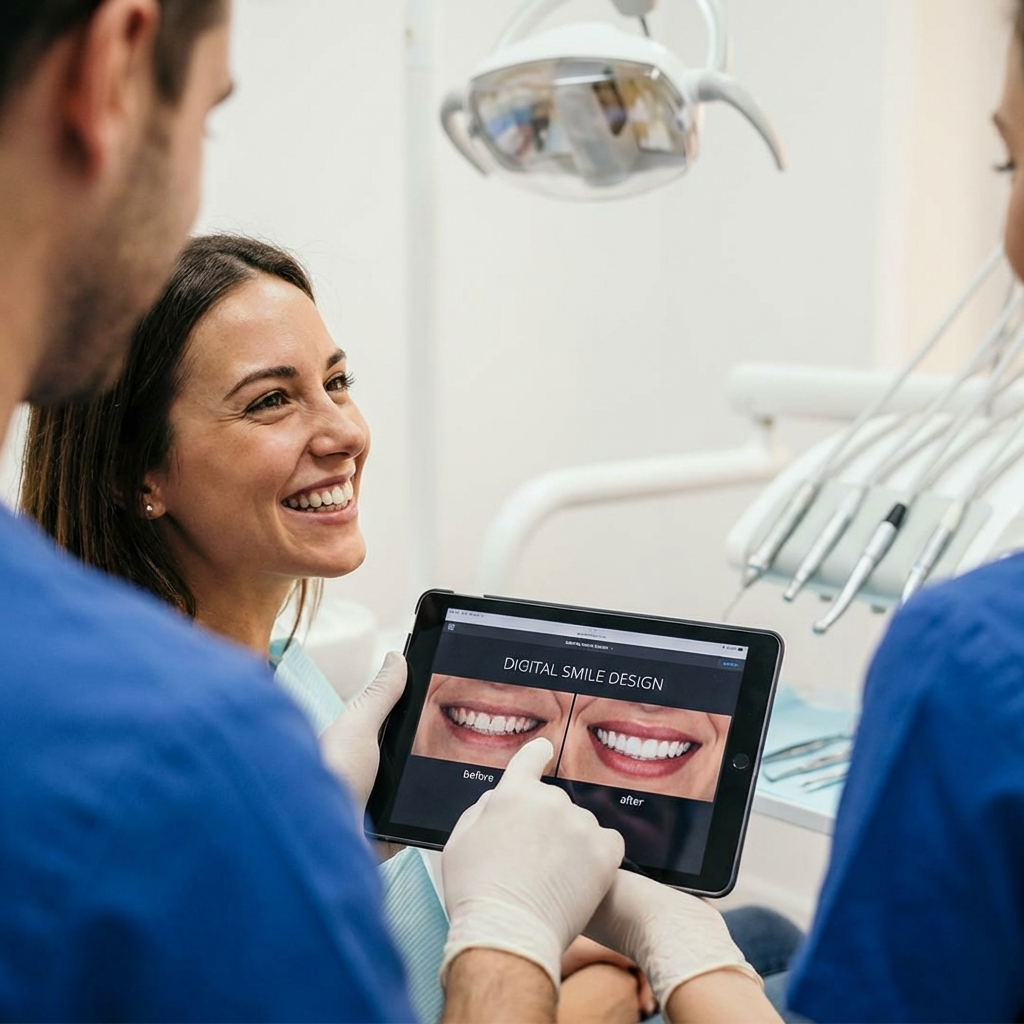
At this stage you usually see the result on screen, often as a before and after overlay of your own photograph. This is the first moment when the plan becomes visible, and it is the right time to react honestly. If the teeth look too large, too uniform or too bright, say so. A digital design can be changed in minutes, which is exactly why this stage is so useful. It costs nothing in comfort and nothing in tooth structure to try another version.
Trial Smile: Testing Your New Smile in the Mouth
A picture on a screen is helpful, but a smile is worn on a living face. This is why many clinics move from the digital design to a physical mockup, often called a trial smile. The plan is transferred to the mouth, usually with a temporary material placed over the existing teeth. It is removable, it does not require cutting the teeth in most cases, and it gives you a real sense of the proposed shape and length.
During the trial smile you can look in the mirror, take photographs, speak, laugh and compare how the new teeth feel. Many patients take pictures home to show family or friends, and that is a sensible step. Opinions from people who know you well often help. The trial smile is also an important functional test. If the planned teeth interfere with speech, catch the lip or change the bite in an uncomfortable way, this is the time to find out and correct the plan.
A trial smile is an approximation. Temporary material does not behave exactly like porcelain, and the final result may look slightly different in texture and light. Your dentist should explain these differences so that you know what to expect from the finished work.
What You Decide and What the Dentist Decides
One of the most useful ideas in digital smile design is a clear division of roles. The patient guides the look of the smile, while the dentist protects function and health. The table below shows how these decisions usually divide.
| Topic | The patient usually decides | The dentist usually decides |
|---|---|---|
| Tooth shape | Rounder, softer or more squared look | Which shapes suit the bite and the lips safely |
| Tooth length | How much of the teeth should show | Limits set by gum position, bite and speech |
| Shade | How natural or bright the colour should be | Which shades are realistic for the chosen material |
| Alignment | How uniform or individual the smile should look | Whether movement, veneers or other methods are suitable |
| Treatment choice | Priorities, budget and timing | Which treatment is medically appropriate and how much tooth must be changed |
This division protects both sides. The patient is not asked to make technical decisions without information, and the dentist is not asked to guess aesthetic preferences. When a request cannot be met safely, a good dentist explains why and offers the closest alternative instead of simply agreeing.
Digital Smile Design for Veneers
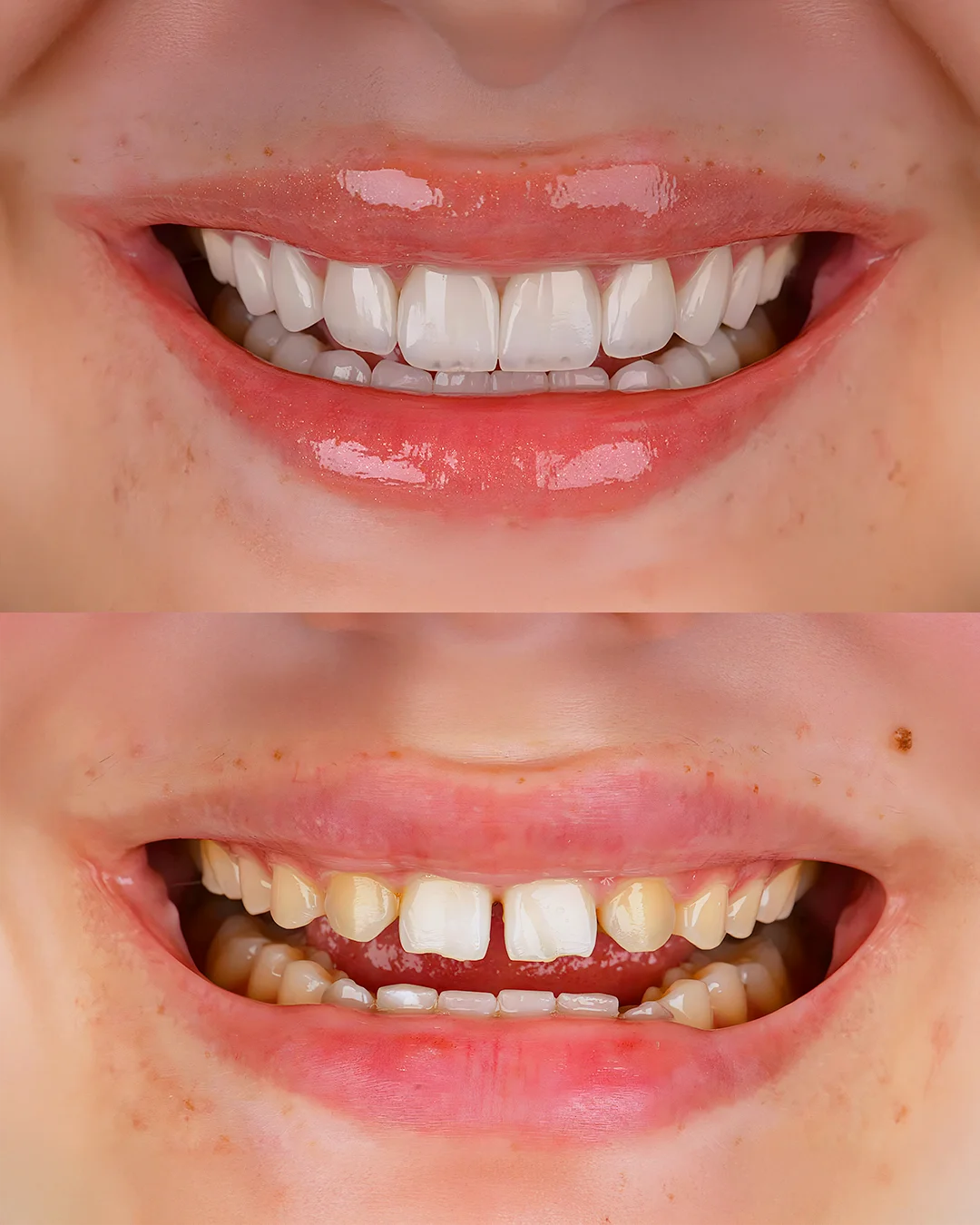
Veneers are the treatment most often linked with digital smile design, and with good reason. Because veneers change the visible shape, length and colour of the front teeth, small differences in the plan produce large differences in appearance. Previewing the result reduces the risk of choosing teeth that are too white, too large or too uniform for the face.
For veneers, the design also helps to estimate how much tooth reduction will be needed. A conservative plan that stays close to the natural shape usually needs less preparation than a plan that changes length and position dramatically. If you are still deciding whether veneers are right for you, a smile design consultation before veneers lets you compare options without commitment. It can also reveal that a simpler approach such as whitening, bonding or aligners may be enough for your goals.
Digital Smile Design for Implants and Full Mouth Cases
The method is not limited to cosmetic work. When several teeth are missing or a full rehabilitation is planned, digital design helps coordinate the work of the dentist, the surgeon and the dental laboratory. The ideal position of the final teeth is planned first, and the implant positions are then worked out to support that result, rather than the other way round.
For complex cases the process may include a longer trial period with temporary teeth, so the patient can test chewing, speech and appearance over several days. This is especially valuable when the bite is being changed, because comfort and function matter as much as appearance. Digital planning in these cases still depends on a thorough medical assessment, and the suitability of any treatment is confirmed only after examination and imaging.
Digital Smile Design Cost: What Affects the Price
Prices vary widely between clinics and countries, and no honest guide can give a single figure. In many clinics, the design stage is included in the treatment plan, while others charge a separate consultation or planning fee. It is worth asking at the first appointment whether the design and the trial smile are included or priced separately.
Several factors influence the overall cost of a plan that uses digital smile design:
- The number of teeth involved and the type of restoration chosen.
- The materials, such as porcelain, zirconia or composite.
- Whether a physical mockup or a longer trial period is part of the plan.
- The need for preparatory treatment such as gum care, whitening or orthodontics.
- The dental laboratory work and the number of visits required.
Ask for a written plan that lists what is included, so that you can compare offers on equal terms. A design stage that helps you avoid an unwanted result can be worth more than a small saving on the final work.
Limits of Digital Smile Design
Digital smile design is a powerful planning tool, but it does not guarantee a particular outcome. A screen image is a visual proposal. The final result depends on the dentist's skill, the quality of the laboratory work, the materials chosen and the way your own teeth, gums and bite respond. Some features, such as the translucency of the edges or the fine surface texture, cannot be fully shown in a digital preview.
The method also cannot replace a proper health check. Active gum disease, decay or an unstable bite must be treated before any cosmetic plan goes ahead, and in some cases the preview will show that the ideal design is not safe for your teeth. Be wary of any clinic that shows impressive images without examining your mouth first. A realistic plan always starts with the condition of your teeth and gums.
Frequently Asked Questions
What is digital smile design in simple terms?
It is a way of planning a new smile on screen, using your own photographs and scans, so that you can see and approve the proposed result before any dental treatment begins.
Is a smile mockup the same as the final result?
No. A mockup is a preview made with temporary material or a digital image. It shows shape, length and proportion, but the final teeth are made from different materials and may look slightly different in texture and light.
Does digital smile design hurt or change my teeth?
The design stage itself involves photographs, scans and a conversation, so it is painless. A trial smile is usually placed over the existing teeth and is removable, although your dentist will tell you if your case needs a different approach.
Do I need digital smile design before veneers?
It is not mandatory, but it is strongly recommended. Previewing the shape, length and shade of veneers helps you avoid results that look too large, too white or too uniform, and it lets you approve the plan before any tooth preparation begins.
Can I change the design after seeing the mockup?
Yes, and that is the purpose of the stage. Shape, length, spacing and shade can be adjusted until you and your dentist agree on a design that looks natural and works safely with your bite.
About the Author