




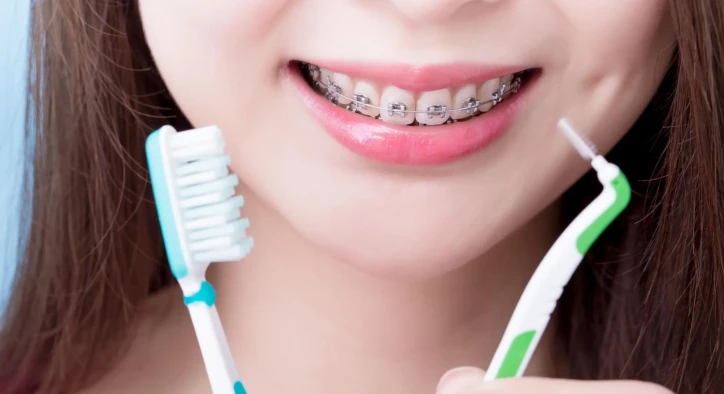

Starting orthodontic treatment with fixed brackets is a major step toward achieving a perfectly aligned, healthy smile. However, the day your brackets are bonded, your daily oral hygiene changes entirely. Fixed brackets, archwires, metal bands, and elastic ties create hundreds of tiny physical traps where food particles and microscopic plaque can easily accumulate.
If you neglect your daily hygiene, bacteria will quickly multiply around these boundaries. This can lead to enamel demineralization, white spot lesions, persistent bad breath, and swollen gums. Maintaining an impeccable braces cleaning routine is not just about keeping your breath fresh; it is a critical medical step to ensure that your teeth remain healthy and stain-free underneath the metal hardware.
This comprehensive guide explores the advanced tools required for orthodontic maintenance, breaks down the step-by-step cleaning process, shares safe hygiene hacks, and answers crucial clinical questions about professional dental cleanings.
Table Of Contents
- Why Orthodontic Hygiene Requires Specialized Protocols?
- Essential Hardware: Braces Cleaning Tools and Specialized Kits
- 2. Orthodontic Toothbrushes (V-Trim Cut)
- The Ultimate Step-by-Step Braces Cleaning Routine
- Clinical Comparison: Standard Hygiene vs. Dedicated Orthodontic Kits
- Smart Braces Cleaning Hacks for Busy Lifestyles
- Professional Care: How Often Should I Get Cleanings with Braces?
- Frequently Asked Questions
Why Orthodontic Hygiene Requires Specialized Protocols?
When you look closely at a fixed orthodontic bracket, you see that it acts like a miniature shelf attached to your enamel. Standard toothbrushing methods only clean the flat surfaces of your teeth, completely missing the hidden areas directly beneath the archwire and around the edges of the brackets.
When plaque sits against your enamel for extended periods, it releases acids that strip away vital minerals. This process leaves behind permanent, chalky white squares on your teeth once the braces are removed.
To prevent this permanent cosmetic damage, patients must transition away from basic grocery-store brushing and adopt a comprehensive, multi-layered approach using specialized cleaning equipment.
Essential Hardware: Braces Cleaning Tools and Specialized Kits
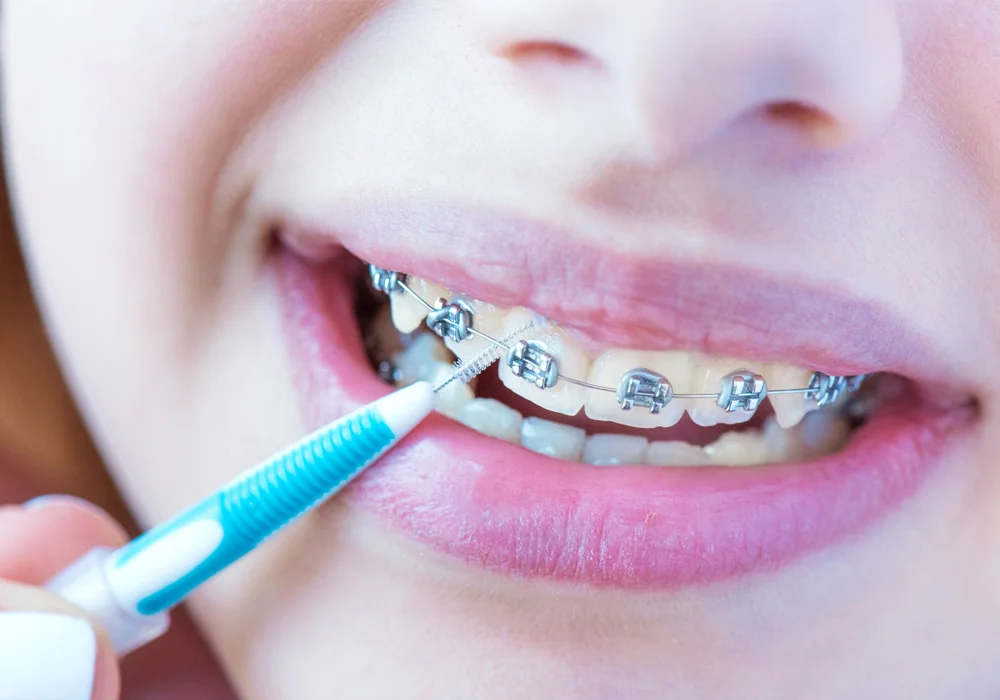
To maintain healthy teeth and gums throughout your orthodontic treatment, you need to use specific tools designed for fixed braces. Relying on a regular toothbrush alone is not enough. Investing in a dedicated braces cleaning kit for teeth ensures you have the right tools to clean every angle effectively.
1. The Interdental Braces Cleaning Brush
An interdental braces cleaning brush is a small, pine-tree-shaped brush that fits directly beneath the archwire. This specialized tool allows you to scrub the sides of each individual bracket and clean the gaps between your teeth where standard bristles cannot reach.
2. Orthodontic Toothbrushes (V-Trim Cut)
An orthodontic toothbrush features a specific V-shaped groove cut along the center of its bristles. This unique design allows the outer bristles to clean the enamel surfaces above and below the bracket while the shorter center bristles thoroughly scrub the metal or ceramic surfaces.
3. Water Flosser Orthodontic Tip Braces Cleaning
Using a water flosser orthodontic tip braces cleaning approach is an absolute game-changer for daily hygiene. The specialized orthodontic tip features a small, tapered brush head at the end of the nozzle. This clever design combines targeted high-pressure water streams with mechanical brushing, blasting away stubborn food particles and sticky plaque from underneath wires and around gum margins with ease.
4. Orthodontic Floss Threaders and Superfloss
Traditional dental floss cannot pass directly through your teeth when an archwire is in place. Floss threaders act like a flexible needle, allowing you to safely guide the floss underneath the wire. Alternatively, using specialized Superfloss makes it simple to slide between tight spaces and clean the gum line thoroughly.
The Ultimate Step-by-Step Braces Cleaning Routine
To keep your enamel completely healthy, you should follow this thorough, step-by-step braces cleaning routine at least twice a day, ideally after every main meal.
Step 1: Rinse with Warm Water
Before reaching for your toothbrush, spend 30 seconds rinsing your mouth vigorously with warm water. This simple step helps loosen and flush out large food particles trapped in your wires, making the rest of your cleaning routine much more effective.
Step 2: Brush with the V-Trim Toothbrush
Apply a non-abrasive fluoride toothpaste to your brush. Hold the brush at a 45-degree angle pointing downward to clean the tops of your brackets, then flip it to a 45-degree angle pointing upward to clean underneath them. Finally, brush the chewing surfaces and the back of your teeth thoroughly for a full two minutes.
Step 3: Utilize the Interdental Proximity Brush
Take your small interdental brush and carefully slide it vertically underneath the archwire. Move it gently up and down along the sides of every single bracket to clear away any remaining plaque or debris from the hidden margins.
Step 4: Hydro-Dynamic Flossing
Fill your water flosser reservoir with lukewarm water. Trace the nozzle carefully along your gum line, pausing briefly at the spaces between your teeth and around each bracket base to flush away any remaining debris.
Step 5: Therapeutic Fluoride Mouthwash
Finish your routine by rinsing with an alcohol-free fluoride mouthwash for 60 seconds. Spit it out without rinsing with water afterward, allowing the protective fluoride layer to coat and strengthen your enamel overnight.
Clinical Comparison: Standard Hygiene vs. Dedicated Orthodontic Kits
Using the right tools makes a significant difference in your oral health. Let us look at how standard hygiene options compare to a dedicated braces cleaning kit.
Clinical Criteria | Standard Grocery Store Hygiene | Advanced Orthodontic Cleaning Kit |
Enamel Coverage Area | Approx. 60% (misses areas behind wires) | 100% full-angle structural cleaning |
Plaque Biomass Removal | Moderate; leaves soft debris at bracket base | High; lifts plaque from deep margins |
Gum Inflammation Risk | High due to plaque left at the gum line | Low; high-pressure streams protect tissue |
White Spot Prevention | Poor; mineral loss can occur around brackets | Excellent; thorough cleaning protects enamel |
Bad Breath Mitigation | Short-term fixes (masks odor temporarily) | Deep clean removes the bacteria causing bad breath |
Smart Braces Cleaning Hacks for Busy Lifestyles
Maintaining clean teeth while away from home can be a challenge. These practical braces cleaning hacks make it easy to keep your brackets spotless throughout the day:
- The Quick Water-Flush: If you find yourself dining out without your full cleaning kit, head to the restroom and rinse your mouth vigorously with water three or four times. This simple step clears away visible food debris until you can brush properly at home.
- Carry a Travel Interdental Brush: Keep a pocket-sized interdental brush in your bag or wallet. It provides a quick, discreet way to clear away visible food particles from your front brackets after lunch.
- Avoid Sticky and Hard Foods: The best cleaning shortcut is avoiding foods that create a mess in your brackets in the first place. Steering clear of sticky caramels, gummy candies, and tough crusts keeps your hardware safe and clean.
- Use a Compact Mirror App: Keep a pocket mirror handy or use your phone's front camera to quickly check your teeth after eating, ensuring your smile is clean before heading into meetings or social events.
Professional Care: How Often Should I Get Cleanings with Braces?
When patients start orthodontic treatment, they frequently ask: "How to clean braces effectively at home, and How often should I get cleanings with braces from a professional?"
While a thorough home routine is essential, it cannot completely prevent plaque from turning into hard tartar over a long treatment period. Tartar can trap harmful bacteria against your enamel and slow down your orthodontic progress by creating resistance along the archwire.
Clinically, patients wearing fixed braces should receive a professional scale and polish every 3 to 4 months, rather than the standard 6-month interval used for patients without hardware.
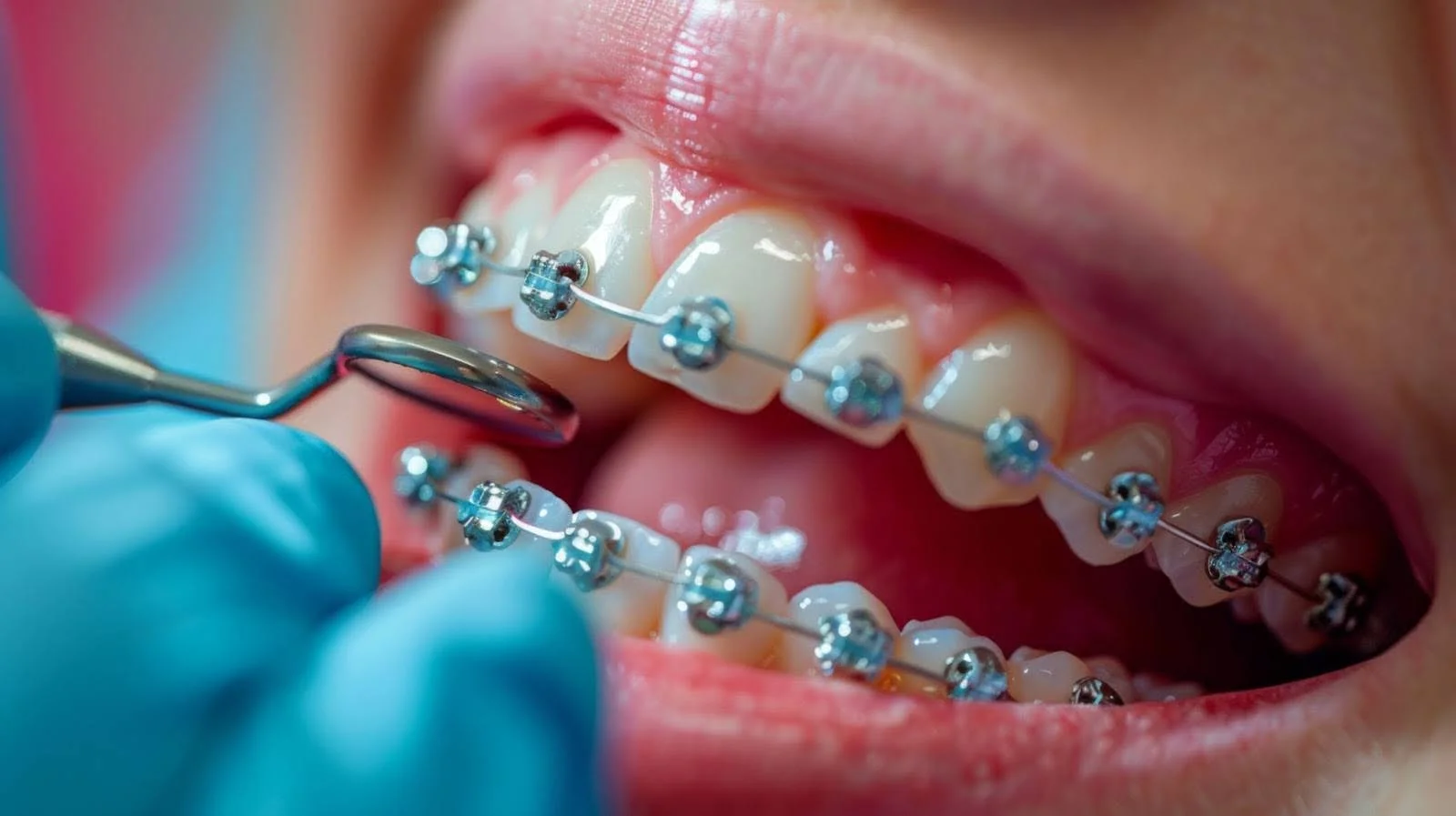
During these visits, the dental hygienist uses specialized ultrasonic scalers and gentle polishing tools to clean around the delicate brackets safely. This professional maintenance ensures your gums stay healthy and your teeth move smoothly into their ideal positions.
Frequently Asked Questions
How to clean braces if I run out of specialized tools?
If you run out of your interdental brushes or floss threaders, continue brushing carefully with a standard soft-bristled toothbrush, angling it thoroughly above and below your brackets. Rinse your mouth vigorously with water after every meal, and replace your specialized orthodontic tools as soon as possible.
Does cleaning braces too aggressively cause brackets to loosen?
Brushing with a soft-bristled toothbrush or using a water flosser will not damage or loosen properly bonded brackets. However, using hard objects like wooden toothpicks or metal pins to pick out trapped food can easily break the dental adhesive or bend delicate archwires.
Can I use whitening toothpaste while wearing fixed braces?
No, it is best to avoid whitening toothpastes during your orthodontic treatment. These products can only whiten the exposed areas of your enamel, leaving behind darker, unwhitened squares under your brackets once your braces are removed. Stick to standard cavity-protection fluoride toothpastes instead.
Why do my gums bleed during my braces cleaning routine?
Bleeding gums are a clear sign of inflammation (gingivitis), which happens when plaque is left sitting along the gum line for too long. Do not stop cleaning the area; instead, continue brushing gently and flossing thoroughly. With consistent care, the plaque will clear away, and your gums will return to a healthy, pink state within a week.
About the Author