




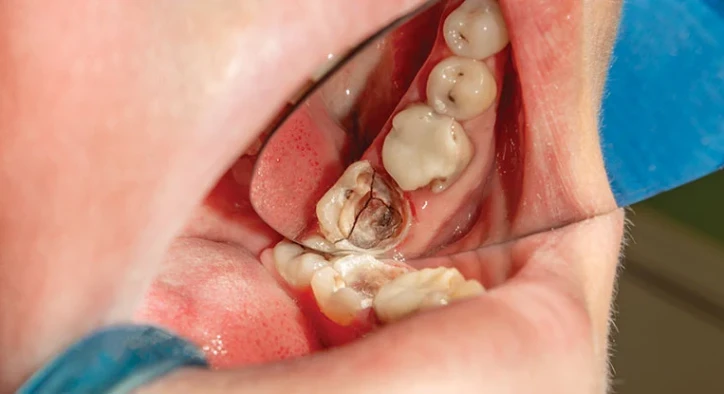

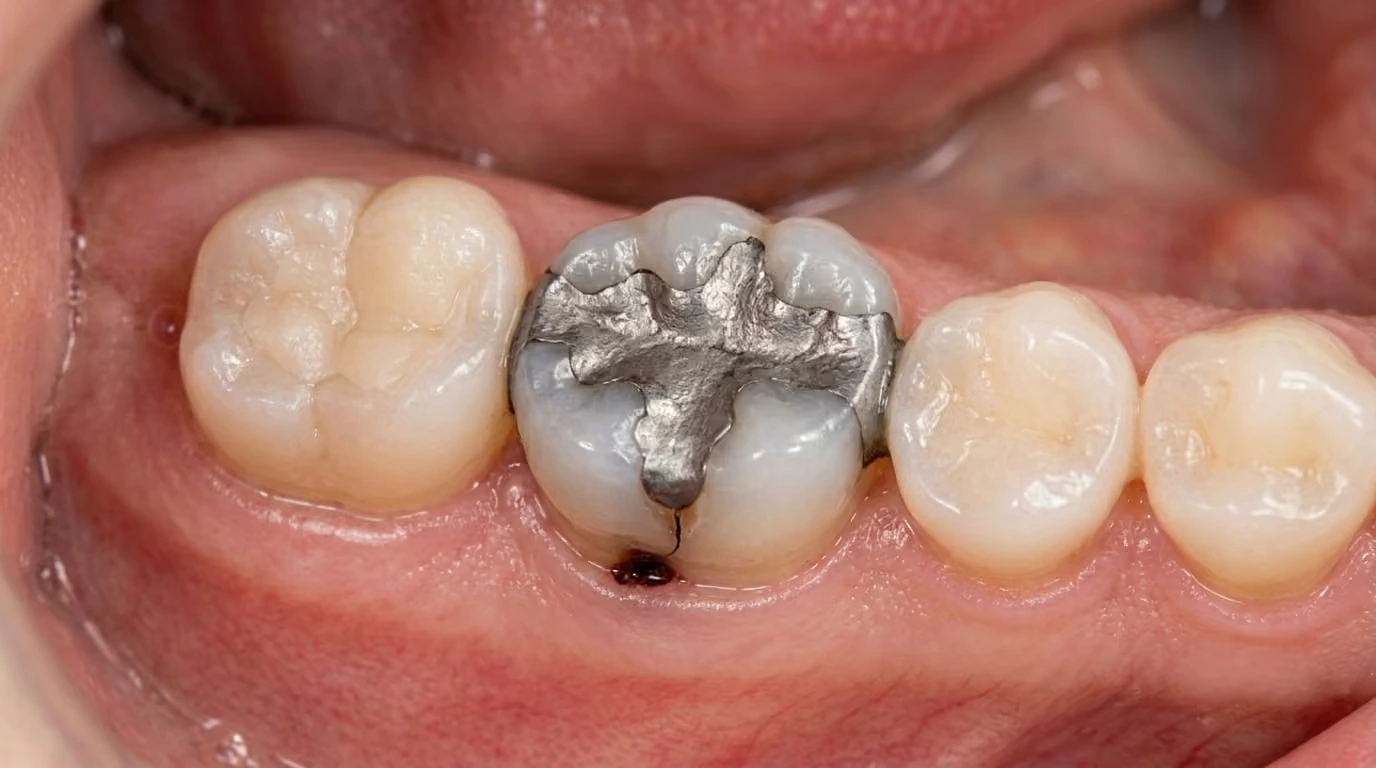
Experiencing an unexpected crunch while chewing dinner, followed by a sharp edge felt by the tongue in the back of the mouth, is a common clinical reality. In restorative dentistry, a chipped molar represents a structural breakdown of the posterior occlusal table under heavy functional loading. Because molars bear the primary masticatory forces in the human jaw, absorbing bite loads that routinely exceed one hundred and fifty pounds per square inch, their complex multi-cusp architecture is uniquely susceptible to fatigue fractures, deep decay undermining, and mechanical shear failures.
Patients who discover a broken back tooth frequently examine the damaged chipped molar tooth in the mirror and search for information regarding how to fix chipped molar tooth to prevent further tooth loss. A common point of confusion occurs when patients notice a chipped molar no pain scenario, mistaking the absence of acute toothache for an insignificant injury. Others evaluate treatment options like a simple chipped molar filling, ask whether can a chipped molar be fixed without invasive surgery, research what variables influence chipped molar repair cost, or explore advanced chipped molar repair protocols. This clinical guide delivers transparent medical facts to restore your tooth safely.
Table Of Contents
- Biomechanical Architecture: What Causes a Chipped Molar?
- Identifying Primary Drivers of Molar Fractures
- Clinical Assessment: Why Is There Often a Chipped Molar No Pain?
- Diagnostic Evaluation: Can a Chipped Molar Be Fixed?
- Restorative Pathways: How to Fix Chipped Molar Tooth Defects
- Financial Factors: What Influences Chipped Molar Repair Cost?
- Comprehensive Comparison: Chipped Molar Treatment Modalities
- Frequently Asked Questions
- What is a chipped molar and why did it happen while eating soft food?
- Can a chipped molar tooth heal on its own without dental treatment?
- Is a chipped molar no pain an emergency that needs treatment?
- How to fix chipped molar tooth damage quickly at home before seeing a dentist?
- Does a chipped molar filling last as long as a dental crown?
Biomechanical Architecture: What Causes a Chipped Molar?
To understand why a molar fractures, one must analyze the physical forces acting on the posterior dental arches. The occlusal surface of a molar consists of multiple elevated cusps separated by anatomical grooves called fissures.
- [ MASTICATORY SHEAR FORCE ]: Chewing hard food, nocturnal clenching, or old amalgam expansion
- [ CUSP FRACTURE OCCURS ]: Outer enamel wall shears away, exposing porous dentin
When a tooth is intact, functional bite forces transmit down through the center of the tooth into the alveolar bone. However, when an individual bites on an unyielding object like an olive pit, ice cube, or unpopped popcorn kernel, an off-axis point load strikes an inclined cusp plane. This creates tensile shear stresses that travel along microscopic craze lines. If the tooth has been weakened by previous large fillings or untreated interproximal decay, the unsupported enamel wall breaks off, resulting in a sudden, sharp fracture.
Identifying Primary Drivers of Molar Fractures
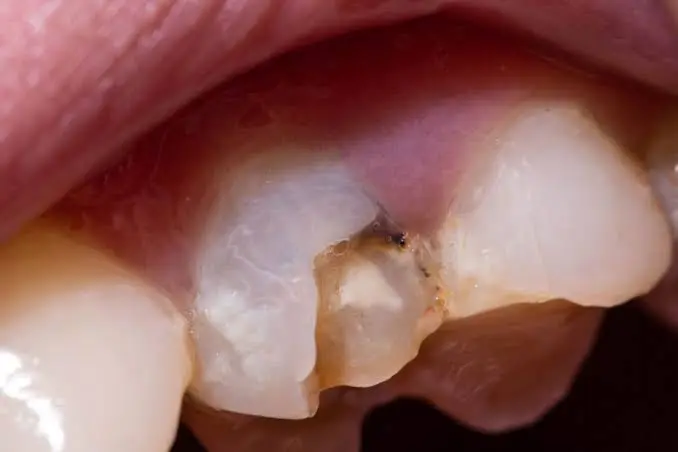
A fracture rarely happens on completely sound tooth structure without underlying physical, biological, or thermal triggers.
- Large Cavities Undermining Enamel: Cavities dissolve the soft, supportive dentin beneath the surface enamel. Deprived of its elastic foundation, the hard, brittle enamel shell collapses under routine chewing pressure.
- Large Aging Amalgam Fillings: Dental amalgam does not bond chemically to natural tooth structure; it relies on mechanical undercuts that require removing healthy dentin. Furthermore, silver amalgam expands and contracts with hot and cold temperature fluctuations at a rate higher than natural tooth structure, creating internal micro-wedges that eventually split molar cusps.
- Nocturnal Bruxism and Clenching: Grinding teeth while sleeping generates sustained isometric loads that exceed two hundred pounds per square inch. This repetitive fatigue loading causes crystalline enamel rods to shear off along the gumline or across occlusal margins.
- Sudden Hard Foreign Objects: Biting unexpectedly into a hard fragment hidden inside soft food concentrates the entire force of the jaw onto a single millimeter of tooth surface, causing an immediate mechanical fracture.
- Age-Related Enamel Brittleness: As teeth age, the dentin dehydrates and the enamel loses micro-elasticity, making molars increasingly brittle and prone to chipping past age fifty.
Clinical Assessment: Why Is There Often a Chipped Molar No Pain?
A major reason patients delay dental appointments is encountering a chipped molar no pain scenario. In restorative dentistry, the absence of acute pain does not indicate that the damage is harmless.
- [ SUPERFICIAL ENAMEL CHIP ]: Breakage confined to outer crystalline enamel; zero pain response
- [ EXTENSIVE EXPOSURE ]: Mild sensitivity to cold, but deep pulp nerve remains uninflamed
The outer enamel layer contains no sensory nerve endings or blood vessels. If a fracture cleaves off an enamel cusp without penetrating deep into the dentin or exposing the central pulp chamber, the tooth cannot physically register pain. However, even if the tooth feels completely comfortable, the rough jagged edges will cut the lateral borders of the tongue and inner cheek. More critically, the exposed, porous dentin beneath the break becomes an open gateway for oral bacteria to travel straight toward the pulp, turning a painless chip into an irreversible nerve infection within weeks if left untreated.
Diagnostic Evaluation: Can a Chipped Molar Be Fixed?
When examining a broken tooth, patients frequently ask: can a chipped molar be fixed? In over ninety percent of clinical cases, a broken molar can be preserved and restored, provided the fracture has not split the root vertically beneath the jawbone.
A dental clinician assesses restorability by taking a high-resolution digital radiograph to verify root apex health and placing a bite stick or tooth sleuth on individual cusps to test for cracked tooth syndrome. If the fracture line terminates above the bone margin and the central pulp remains healthy and vital, the tooth can be rebuilt with lasting functional strength. Only when a fracture line extends deep down the center of the root trunk is tooth extraction and implant placement required.
Restorative Pathways: How to Fix Chipped Molar Tooth Defects
A dentist determines how to fix chipped molar tooth defects based on the volume of lost tooth structure and whether the pulp nerve has been compromised. Several restorative options exist for definitive chipped molar repair.
[ INITIAL CLINICAL TRIAGE ]: Assess fracture depth, pulp vitality, and remaining cusp thickness
- Direct Composite Resin Filling: For minor chips where less than one-third of a single cusp is missing, a chipped molar filling is the ideal, conservative choice. The dentist removes sharp edges, applies an adhesive bonding system, and layers tooth-colored nano-hybrid composite directly over the break to recreate natural chewing anatomy in a single appointment.
- Ceramic Onlay or Partial Crown: When one or two functional cusps have broken off, placing a large direct filling is biologically contraindicated because composite cannot withstand repetitive chewing loads across a wide area. Instead, the dentist prepares the tooth conservatively and bonds a computer-milled lithium disilicate or zirconia onlay over the broken cusps. This preserves healthy tooth structure while restoring ninety percent of original tooth strength.
- Full Coverage Dental Crown: If the chip involves multiple cusps, extends subgingivally, or occurs on a tooth that has previously undergone root canal treatment, a full crown encases the entire remaining tooth structure, shielding it from splitting under masticatory pressure.
- Root Canal Therapy Combined with Crown: If the fracture extends deep into the central pulp chamber, exposing the red nerve tissue to saliva and bacteria, an endodontist must remove the infected pulp and seal the root canals before placing a protective permanent crown.
Financial Factors: What Influences Chipped Molar Repair Cost?
Patients planning dental treatment frequently inquire about what creates differences in chipped molar repair cost. Because clinical damage ranges from minor enamel smoothing to complex surgical interventions, overall fees depend on several medical variables rather than a single fixed rate.
The complexity of the restorative approach is the primary cost factor; a minor single-surface composite filling involves minimal chairside time, whereas a precision-milled ceramic onlay or a monolithic zirconia crown requires digital scanning technology and advanced dental laboratory fabrication. Additional variables include whether the fracture requires diagnostic three-dimensional imaging, whether nerve exposure necessitates preliminary root canal therapy, and whether gum recontouring is required to expose the fracture margin for a proper biological seal.
Comprehensive Comparison: Chipped Molar Treatment Modalities
Evaluating the functional characteristics of each restorative option helps patients understand which therapy fits their clinical situation.
Clinical Parameter | Direct Composite Filling | Ceramic Onlay (Partial Crown) | Full Zirconia Crown |
Damage Severity | Minor chip, single cusp margin | Moderate chip, 1 to 2 missing cusps | Severe fracture, multiple cusps |
Tooth Preparation | Zero to minimal enamel beveling | Conservative; preserves healthy walls | Circumferential reduction of crown |
Bite Strength Support | Moderate; best for smaller areas | Outstanding; reinforces remaining tooth | Maximum; fully encases the tooth |
Clinical Longevity | Five to seven years before repolishing | Ten to fifteen years with proper care | Fifteen to twenty years or longer |
Number of Appointments | Single immediate dental visit | One to two visits (CAD/CAM or lab) | One to two clinical visits |
Pulp Nerve Risk | Very low; minimally invasive | Very low; keeps pulp chamber intact | Low to moderate due to reduction |
Frequently Asked Questions
What is a chipped molar and why did it happen while eating soft food?
A chipped molar is a physical fracture of the chewing surface or cusp of a back tooth. It often appears to happen while eating soft food because a microscopic crack or hidden cavity had been slowly weakening the tooth structure internally for months. The final bite of food simply acted as the final trigger that caused the undermined enamel wall to give way.
Can a chipped molar tooth heal on its own without dental treatment?
No. Enamel and dentin are non-living biological tissues that contain no blood vessels or cellular repair systems, meaning a broken tooth cannot grow back or heal itself. Left untreated, the sharp exposed margins will collect plaque and trap food, allowing bacteria to dissolve the exposed dentin and eventually infect the nerve.
Is a chipped molar no pain an emergency that needs treatment?
While a painless chip may not require a midnight emergency hospital visit, it still requires prompt dental attention within a few days. The absence of pain simply means the nerve chamber is not yet exposed; however, the exposed porous dentin is unprotected against bacterial penetration, and normal chewing forces can easily break the remaining tooth structure past the point of repair.
How to fix chipped molar tooth damage quickly at home before seeing a dentist?
At home, you cannot fix the tooth permanently, but you can protect your mouth. Rinse with warm salt water to clean debris from the fracture, apply a small piece of sugar-free gum or temporary dental wax over the sharp edge to prevent cutting your tongue, avoid chewing on that side of your mouth, and eat soft foods until your dental appointment.
Does a chipped molar filling last as long as a dental crown?
A direct composite filling is excellent for small chips, but it does not have the same structural lifespan or strength as a ceramic onlay or crown when extensive cusp structure is lost. For large fractures, biting pressures can shear a large filling off the tooth, whereas a bonded onlay or crown encases the tooth, providing superior long-term fracture resistance for over fifteen years.
About the Author