





The persistent, scalding sensation affecting the oral mucosa in the absence of visible clinical lesions or underlying dental decay represents one of the most complex chronic pain disorders in stomatology. Clinically recognized as burning mouth syndrome (BMS), understanding the pathology of a burning mouth requires examining the delicate interplay between peripheral small-fiber neuropathies, central sensory processing alterations, and systemic biochemical imbalances. When sensory nerve fibers within the tongue, palate, and inner lips fire spontaneous pain signals, patients experience an unyielding thermal discomfort comparable to scalding their oral tissues with boiling liquid.
For patients experiencing daily discomfort that peaks toward the evening or causes a metallic taste, identifying burning mouth syndrome causes is the first step toward effective relief. While many turn to online forums looking for individual success stories like how i cured my burning mouth syndrome, true resolution requires an evidence-based clinical strategy tailored to whether the condition is primary (neuropathic) or secondary (systemic). This comprehensive clinical guide explores the underlying neuropathology, evaluates whether is burning mouth syndrome dangerous, details protocols on how to treat burning mouth syndrome, and reviews modern options for burning mouth syndrome treatment.
Table Of Contents
- What Is Burning Mouth Syndrome and What Are the Primary Causes?
- What Are the Clinical Symptoms and Diagnostic Patterns?
- Restorative & Medical Strategies: How to Treat Burning Mouth Syndrome
- Is Burning Mouth Syndrome Dangerous and What Is the Clinical Prognosis?
- Frequently Asked Questions
- Is burning mouth syndrome a sign of oral cancer?
- Can burning mouth syndrome go away completely on its own?
- Why does cold water or eating temporarily relieve the burning sensation?
- What foods and drinks should be avoided with burning mouth syndrome?
- Can dental appliances or metal crowns cause a burning mouth?
What Is Burning Mouth Syndrome and What Are the Primary Causes?
To establish a proper clinical care plan, clinicians must distinguish between primary idiopathic glossodynia and secondary symptoms driven by identifiable health factors. When defining burning mouth syndrome, oral medicine specialists describe a chronic or recurrent burning pain in the oral cavity without identifiable local or systemic mucosal defects.
The underlying burning mouth syndrome causes are broadly categorized into two clinical pathways:
- [ PRIMARY BMS: NEUROPATHIC ]: Small-fiber sensory neuropathy of the chorda tympani & trigeminal nerves
- [ BIOCHEMICAL PAIN SIGNALS ]: Loss of central inhibition leads to spontaneous burning signals in the brain
- [ SECONDARY BMS: SYSTEMIC ]: Nutritional deficiencies, endocrine shifts, medication side-effects, dry mouth
- Primary (Neuropathic) Mechanism: Damage or degeneration of small-diameter sensory nerve fibers within the oral mucosa, combined with a loss of central pain inhibition in the trigeminal system, leads to spontaneous nerve firing.
- Nutritional Deficiencies: Low levels of Vitamin B12, folate, riboflavin, ferritin, or zinc disrupt nerve sheath integrity, triggering tissue discomfort.
- Hormonal Fluctuations: Significant drops in estrogen during perimenopause and menopause alter neurosteroid regulation and oral mucosal sensitivity.
- Xerostomia (Dry Mouth) & Sjogren’s: Reduced salivary flow deprives the mucosa of lubricating glycoproteins, leaving nerve endings susceptible to mechanical friction.
- Pharmacological Triggers: Medications such as ACE inhibitors for hypertension, certain antidepressants, and oral diuretics can induce burning side effects.
What Are the Clinical Symptoms and Diagnostic Patterns?
Identifying characteristic symptom patterns helps confirm a clinical diagnosis of burning mouth syndrome:
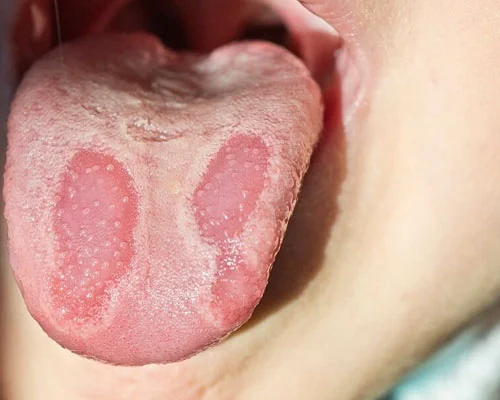
- Scalding or Tingling Sensation: A continuous burning sensation that most commonly affects the tip and lateral borders of the tongue, followed by the hard palate, inner lips, and alveolar ridges.
- Diurnal Progression: Discomfort is often mild upon waking, steadily intensifies throughout the day, reaches maximum intensity by late afternoon or evening, and rarely disrupts sleep.
- Dysgeusia & Altered Taste: Patients frequently report a persistent bitter or metallic taste alongside the burning sensation.
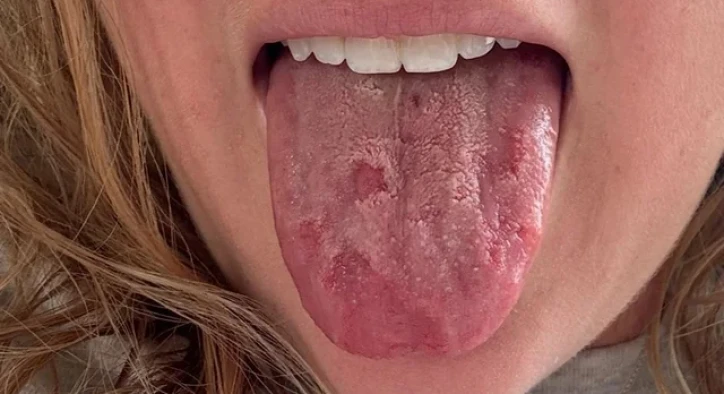
- Absence of Visible Tissue Lesions: The oral mucosa appears completely normal, pink, and healthy upon visual examination, with no redness, ulcers, or swelling.
Restorative & Medical Strategies: How to Treat Burning Mouth Syndrome
Understanding how to treat burning mouth syndrome requires a multi-modal therapeutic approach aimed at stabilizing hyperactive nerve pathways and resolving underlying systemic deficiencies.
- [ PHASE 1: SYSTEMIC CORRECTION ]: Supplement B-vitamins, iron, zinc, and adjust offending medications
- [ PHASE 2: TOPICAL NEURO-RELIEF ]: Topical clonazepam rinses, capsaicin, and artificial saliva
- [ PHASE 3: NEUROMODULATORY RX ]: Low-dose gabapentin, pregabalin, or tricyclic neuromodulators
Evidence-based burning mouth syndrome treatment protocols include:
- Nutritional & Metabolic Correction: High-dose supplementation of methylcobalamin (Vitamin B12), active folate, and zinc picolinate to support peripheral nerve regeneration.
- Topical Neuromodulatory Rinses: Sucking or swishing with a topical clonazepam solution (a GABA agonist) calms peripheral sensory nerve receptors without systemic sedative side effects.
- Oral Alpha-Lipoic Acid (ALA): A potent neuroprotective antioxidant that neutralizes oxidative stress in sensory nerve sheaths and promotes nerve repair.
- Low-Dose Systemic Neuromodulators: Medications such as low-dose gabapentin, pregabalin, or amitriptyline help reset the central pain threshold within the brain.
- Salivary Lubrication: Utilizing sugar-free enzyme-based oral sprays and avoiding sodium lauryl sulfate (SLS) in toothpastes prevents mechanical irritation.
Is Burning Mouth Syndrome Dangerous and What Is the Clinical Prognosis?
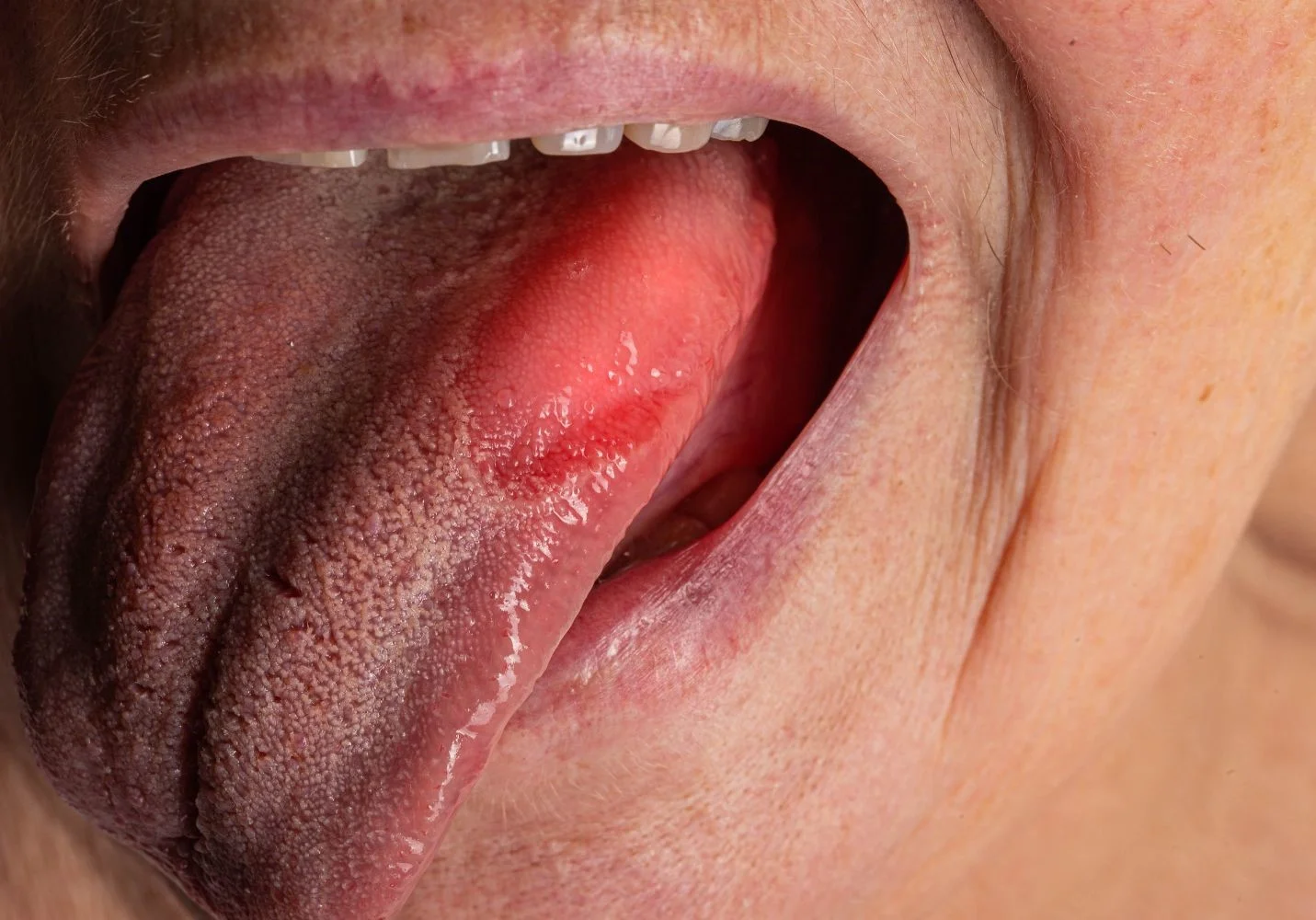
Addressing the common patient concern (is burning mouth syndrome dangerous) stomatologists clarify that while the condition is chronic and emotionally exhausting, it is not life-threatening.
Clinical Parameter | Normal Healthy Oral Mucosa | Burning Mouth Syndrome State |
Mucosal Appearance | Smooth, pink, well-hydrated tissue | Visually normal, but with microscopic nerve hyperactivity |
Pain Characteristics | Zero discomfort; normal temperature sensing | Continuous scalding, burning, or tingling sensation |
Taste Perception | Normal sensory discrimination | Frequent bitter, metallic, or diminished taste (dysgeusia) |
Tissue Damage Risk | None | No risk of tissue ulceration or malignant transformation |
The syndrome does not cause oral cancer, tissue necrosis, or structural damage. However, without proper clinical care, the continuous discomfort can lead to chronic anxiety, sleep disturbances, and depression.
Frequently Asked Questions
Is burning mouth syndrome a sign of oral cancer?
No. Burning mouth syndrome is a benign neuropathic condition that does not cause, lead to, or indicate oral cancer. The burning sensation is caused by microscopic nerve dysfunction rather than cellular mutations or tissue malignancy.
Can burning mouth syndrome go away completely on its own?
In secondary cases caused by nutritional deficiencies, medication side effects, or dental allergies, the condition often resolves completely once the root cause is treated. In primary neuropathic cases, spontaneous recovery occurs in approximately 3% to 5% of patients, while the majority require targeted neuromodulatory treatment to manage symptoms.
Why does cold water or eating temporarily relieve the burning sensation?
Eating or drinking cold fluids temporarily stimulates different mechanoreceptors and cold-sensing thermoreceptors on the tongue. These overriding non-painful signals temporarily block the burning pain pathways in the brain, providing brief relief.
What foods and drinks should be avoided with burning mouth syndrome?
Patients should avoid acidic foods (citrus fruits, tomatoes), spicy seasonings (chili, pepper), alcoholic beverages, cinnamon-flavored products, coffee, and toothpastes containing sodium lauryl sulfate (SLS), as these substances directly irritate sensitive nerve endings.
Can dental appliances or metal crowns cause a burning mouth?
Yes. Secondary burning sensations can occasionally be triggered by contact allergies to dental metals (such as nickel, palladium, or cobalt) or methyl methacrylate resin in removable dentures. A patch test can confirm whether a dental material allergy is contributing to mucosal irritation.
About the Author