




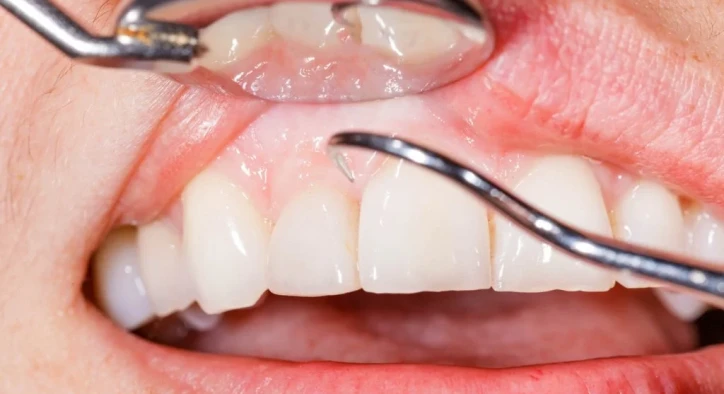

Achieving an aesthetically harmonious smile requires a balanced relationship between bright, healthy teeth and uniform, pink gingival architecture. In modern aesthetic periodontics, evaluating gum bleaching (clinically known as gingival depigmentation) represents an advanced solution for patients presenting with excessive physiological melanin pigmentation. While dark brown or black patches on the gums are biologically benign and healthy, many individuals feel self-conscious when smiling broadly, especially if a high lip line reveals dark gingival tissue.
For international patients researching clinical aesthetics, evaluating gum bleaching Turkey protocols provides access to state-of-the-art laser technology in specialized clinics. Prospective patients frequently ask does gum bleaching hurt, wonder is gum bleaching painful during recovery, review documented transformations in gum bleaching before and after cases, examine the superior precision of laser gum bleaching, and research variables influencing overall gum bleaching cost. This comprehensive clinical guide explores melanocyte cellular ablation, photo-thermal laser mechanics, recovery timelines, and long-term aesthetic retention.
Table Of Contents
- What Is Gum Bleaching and What Causes Dark Gingival Pigmentation?
- Technical Superiority: Why Laser Gum Bleaching Outperforms Traditional Scalpel Surgery
- Patient Comfort: Does Gum Bleaching Hurt and Is It Painful?
- Structural Evaluation: Gum Bleaching Before and After Results
- Cost Variables and Choosing Gum Bleaching Turkey
- Frequently Asked Questions
What Is Gum Bleaching and What Causes Dark Gingival Pigmentation?
To understand how gingival color modification works, explaining gum bleaching requires analyzing the cellular histology of the oral epithelium. Gingival hyperpigmentation is caused by the deposition of melanin granules produced by melanocytes located in the basal and suprabasal layers of the gingival epithelium.
The biological progression of laser depigmentation follows a defined pathway:
- [ CLINICAL PIGMENT MAPPING ]: Assessment of melanin depth and gingival biotype
- [ TARGETED PHOTOTHERMAL ABLATION ]: Laser energy vaporizes melanin-rich basal cells
- [ INSTANT COAGULATION & SEALING ]: Capillaries and nerve endings close without bleeding
- [ EPITHELIAL REGENERATION ]: Fresh, non-pigmented secondary epithelium forms smoothly
Gingival pigmentation patterns are largely determined by:
- Genetic and Ethnic Factors: Physiological melanin pigmentation is common among individuals of Mediterranean, African, Middle Eastern, and Asian descent, representing a natural variation of oral tissues.
- Tobacco-Induced Smoker's Melanosis: Chronic smoking stimulates oral melanocytes through chemical and thermal irritation, leading to dark patches along the anterior labial gums.
- Systemic Medications and Endocrine Disorders: Certain medications (like antimalarials) or systemic conditions (such as Addison's disease) can elevate melanin production.
Technical Superiority: Why Laser Gum Bleaching Outperforms Traditional Scalpel Surgery
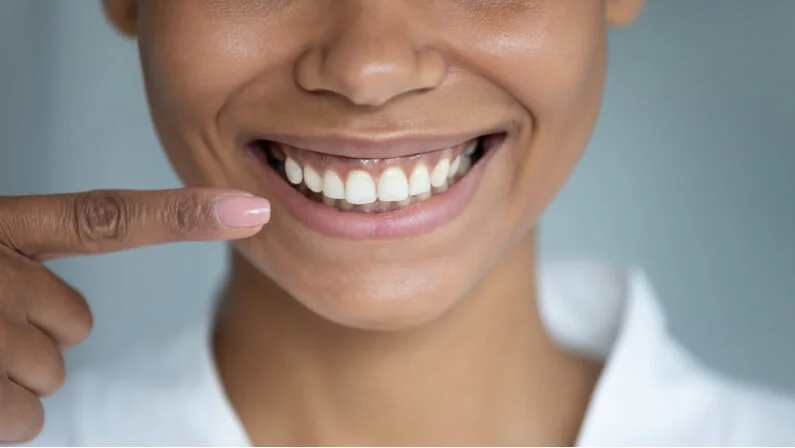
Historically, periodontists removed pigmented gum layers using surgical scalpels or rotating abrasive burs. Today, laser gum bleaching has replaced these invasive techniques due to its micro-precision and tissue preservation.
Clinical Metric | Conventional Scalpel Depigmentation | Advanced Laser Gum Bleaching |
Bleeding Control | Significant intraoperative hemorrhage | 100% bloodless due to instant photocoagulation |
Need for Surgical Dressings | Requires protective periodontal pack (Coe-Pak) | Zero dressings needed; open secondary healing |
Post-Operative Discomfort | Moderate to severe pain and swelling | Minimal discomfort; slight warmth for 24 hours |
Procedure Duration | 45 to 60 minutes with scalpels | 15 to 25 minutes using focused laser fibers |
Recurrence Rate | Higher recurrence due to incomplete cell vapor | Lower recurrence; precise target ablation |
Utilizing specialized soft-tissue dental lasers (such as Diode, Nd:YAG, or Erbium lasers), the light energy is absorbed selectively by melanin and hemoglobin pigments. This ablates the pigmented cells without overheating or damaging the deeper connective tissues or underlying alveolar bone.
Patient Comfort: Does Gum Bleaching Hurt and Is It Painful?
A primary concern among prospective patients is: does gum bleaching hurt? Furthermore, patients frequently inquire: is gum bleaching painful during the days following treatment?
From a clinical standpoint, the treatment is virtually painless:
- During the Procedure: The entire treatment is performed under profound local topical anesthesia or a gentle local anesthetic infiltration. Patients feel zero sharp pain, experiencing only slight warmth or a gentle vibration from the laser tip.
- Immediate Post-Operative Phase: Once the anesthetic wears off, discomfort is minimal. Most patients compare the sensation to eating food that was slightly too hot, easily managed with mild over-the-counter pain relievers like paracetamol or ibuprofen for the first 24 hours.
- Healing Diet: Patients are advised to avoid acidic citrus fruits, spicy seasonings, and crunchy chips for three to five days to prevent chemical or mechanical irritation to the newly healing epithelial surface.
Structural Evaluation: Gum Bleaching Before and After Results
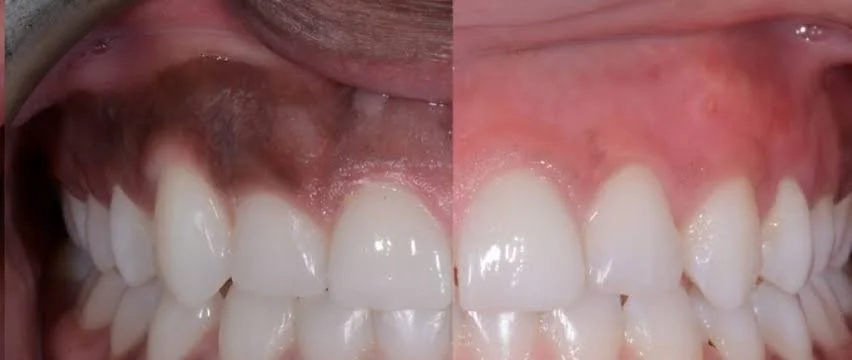
Analyzing documented outcomes in gum bleaching before and after records highlights the transformation achieved through laser depigmentation.
Clinical Parameter | Pre-Treatment Hyperpigmented State | Post-Treatment Restored State |
Gingival Color Shade | Dark brown, purple, or black blotches | Uniform, healthy, aesthetic coral-pink hue |
Surface Texture | Uneven discoloration across attached gingiva | Smooth, stippled, anatomically contoured tissue |
Gingival Margin Health | Intact but visually dominant and distracting | Harmonious white-and-pink aesthetic balance |
Patient Smile Confidence | Reluctance to smile broadly on camera | Confident, unrestrained broad smile expression |
Cost Variables and Choosing Gum Bleaching Turkey
When budgeting for treatment, patients evaluate the factors that determine gum bleaching cost. Because individual cases vary in surface area and pigment depth, pricing is structured on clinical complexity rather than flat rates.
Variables affecting the overall fee include:
- Extent of Pigmentation: Treating isolated dark spots on two anterior teeth involves different clinical time compared to full-arch upper and lower jaw depigmentation.
- Laser Technology Utilized: Clinics employing premium Erbium:YAG water lasers or high-precision diode systems maintain advanced clinical standards.
- Combination Smile Design: Many patients combine depigmentation with dental veneers, professional teeth whitening, or crown lengthening.
- Destination Advantages in Turkey: Choosing gum bleaching turkey allows international patients to receive world-class periodontal care in accredited dental hospitals with significant cost efficiencies, often combining care with travel.
Frequently Asked Questions
Is gum bleaching permanent or will the dark color return?
Laser gum bleaching provides long-lasting results, typically remaining effective for several years. However, because melanocytes exist naturally throughout oral tissues, microscopic cells can occasionally migrate back into the treated area over five to ten years, especially if the patient smokes. Maintaining good oral hygiene and avoiding tobacco prevents premature repigmentation.
How long does it take for gums to heal after laser bleaching?
Superficial epithelial healing occurs quickly. The treated gums develop a protective superficial white film during the first 48 hours, which sloughs away as fresh, healthy pink tissue forms beneath. Complete epithelial regeneration is typically achieved within 7 to 10 days.
Can smoking cause gums to turn dark again after treatment?
Yes. Tobacco smoke contains nicotine and toxic particulates that stimulate oral melanocytes to produce excess melanin as a protective biological response. Patients who continue smoking after depigmentation face a significantly higher risk of melanosis recurrence.
Are there any side effects or risks associated with laser gum bleaching?
When performed by an experienced periodontist, laser depigmentation is exceptionally safe. Rare complications are limited to transient thermal sensitivity, minor localized swelling, or slight superficial irritation, which resolve naturally within a few days without leaving scars.
Who is an ideal candidate for laser gum bleaching?
An ideal candidate is any patient with healthy, disease-free gums who is concerned about dark brown or black physiological melanin patches. Patients with active gingivitis or periodontitis must first complete periodontal treatment to resolve inflammation before undergoing cosmetic depigmentation.
About the Author