





People who are thinking about veneers, or who have just had them fitted, often ask the same question: what can you not eat with veneers? The good news is that most patients return to a normal diet. The list of foods to avoid is short, and it is based on protecting the thin shell of porcelain or composite that now covers your teeth, not on giving up eating well.
Table Of Contents
- What Can You Not Eat With Veneers? The Short Answer
- Why Eating Habits Matter With Veneers
- Hard Foods to Avoid or Handle With Care
- Sticky and Chewy Foods
- Foods and Drinks That May Stain
- Veneers Food Guide at a Glance
- Porcelain vs Composite Veneers: Does It Change the Menu?
- What to Eat in the First Days After Placement
- Safe Eating Habits for Everyday Life
- Caring for Veneers and When to Call Your Dentist
- Planning Veneer Treatment with DentPrime
- Frequently Asked Questions
This guide explains which foods need care, why they matter, what to eat in the first days after treatment and how to build habits that help veneers last. The information is general. Your dentist knows the material used for your veneers and can give advice that fits your own mouth.
What Can You Not Eat With Veneers?
There are three groups to keep in mind: very hard foods, very sticky foods and strongly coloured foods or drinks. Hard foods can chip or crack a veneer if you bite into them with your front teeth. Sticky foods can pull on the edge of a veneer. Strong colours can stain the material around the edges, or the natural tooth beside it.
None of these is banned for life. Most people can still eat them from time to time, with small changes in how they do it. Cutting an apple into slices, for example, is a much safer habit than biting into a whole one.
Why Eating Habits Matter With Veneers
A veneer is a thin layer bonded to the front of the tooth. Porcelain is strong when it is supported by the tooth beneath it, but it is also brittle, and a sudden sharp force at the wrong angle can cause a chip. Composite is a little more forgiving, although it can wear and pick up stains more easily.
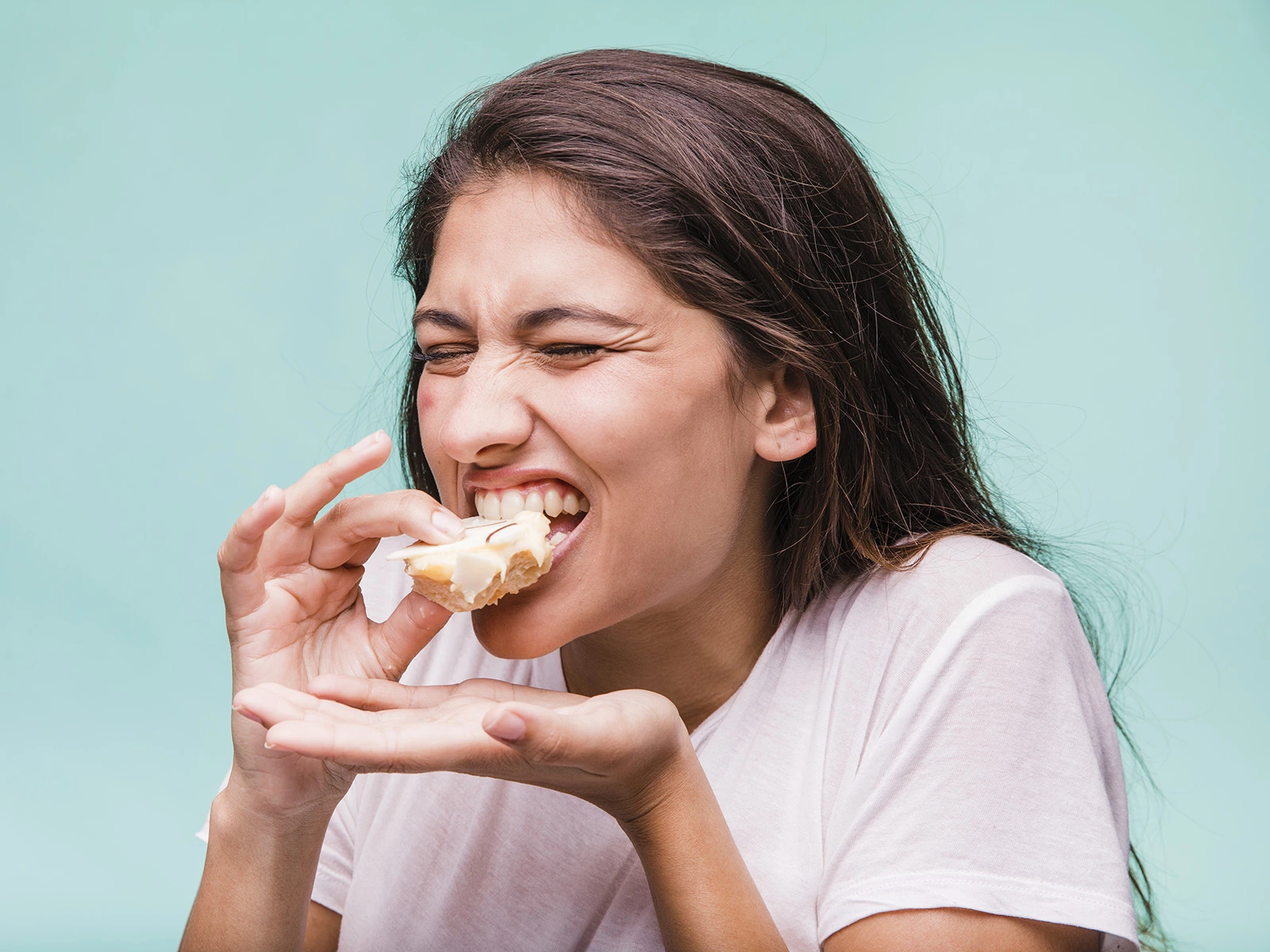
The front teeth are built to cut, not to crush. Using them as tools for opening packets, cracking nuts or tearing tough food puts them under strain that veneers do not handle well. Small habits repeated every day make more difference than one unusual meal.
Hard Foods to Avoid or Handle With Care
Hard foods are the main cause of damage. You do not have to cut them out, but it is wise to avoid biting into them with your front teeth. Items that need care include:
- Ice cubes and hard sweets that are crunched rather than sucked.
- Whole nuts in the shell and hard seeds.
- Raw carrots, whole apples and other hard fruit and vegetables bitten straight from the whole.
- Hard bread crusts, bagels and crusty rolls torn with the front teeth.
- Bones, such as chicken wings or ribs, gnawed with the front teeth.
- Popcorn kernels, which are hard enough to crack a tooth or veneer.
For many of these, a simple change helps: cut the food into small pieces and chew with your back teeth.
Sticky and Chewy Foods
Very sticky foods, such as toffee, caramel and some chewing gum, can pull at a veneer as you open your mouth. Over time this may loosen the edge of the bond. Chewy sweets also cling to the teeth and leave sugar behind, which feeds bacteria around the gum line.
Occasional treats are unlikely to cause a problem, but it is wise not to make them a habit. If you like chewing gum, ask your dentist whether a sugar free type is suitable for your veneers.
Foods and Drinks That May Stain
Porcelain resists stains well, but the thin line where the veneer meets the tooth, and the natural teeth beside it, can darken over time. Composite stains more easily than porcelain. Drinks and foods with strong pigments are the usual cause, including:
- Coffee, black tea and red wine.
- Dark fizzy drinks.
- Curry, tomato sauces and soy sauce.
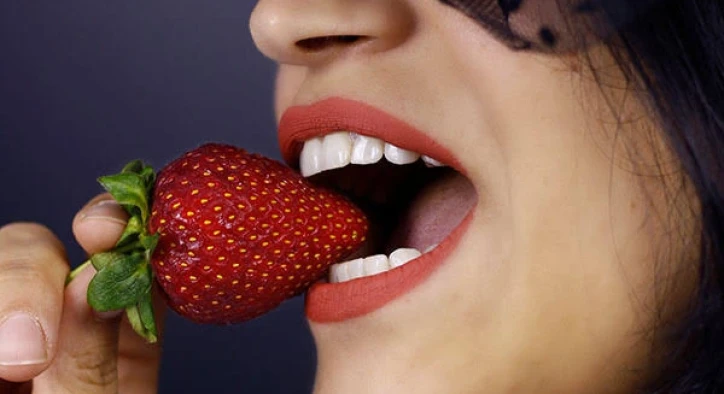
- Berries and beetroot.
- Tobacco, which is a major cause of discolouration.
You do not need to avoid these completely. Drinking through a straw, rinsing with water afterwards and keeping up regular cleaning can limit the effect.
Veneers Food Guide at a Glance
The table gives a simple overview. It is a general guide, and your dentist can adjust it for your situation.
| Food or drink | Risk to veneers | What helps |
|---|---|---|
| Ice, hard sweets, nuts in shell | Chipping or cracking | Avoid biting them, or skip them |
| Whole apples, raw carrots, crusty bread | Pressure on front teeth | Cut into small pieces, chew at the back |
| Toffee, caramel, chewy sweets | Pulling on the edges | Keep to rare treats |
| Coffee, tea, red wine | Staining around the edges | Use a straw, rinse with water |
| Curry, tomato and soy sauces | Staining, mostly with composite | Rinse and brush afterwards |
| Soft foods such as pasta, fish, eggs, yogurt | Very low | Safe choices for daily meals |
Porcelain vs Composite Veneers: Does It Change the Menu?
The material makes a difference to how careful you need to be. Porcelain veneers are hard and stain resistant, but they can chip under a sharp impact. Composite veneers are less brittle, but they can stain and wear faster, so the colour drinks and sticky foods matter more over time.
Whichever material you have, the basic advice is the same: avoid very hard foods with the front teeth, limit sticky foods and look after your cleaning routine. Your dentist can tell you which of these matters most for your veneers.
What to Eat in the First Days After Placement
After veneers are fitted, the teeth can feel a little sensitive, and the bonding material is still settling. For the first day or two, it is sensible to choose soft foods and to avoid very hot or very cold items if your teeth feel sensitive. Good options include scrambled eggs, soup that is not too hot, pasta, yogurt, mashed vegetables and soft fish.
If you have temporary veneers while the final ones are made, be extra careful. Temporary ones are weaker, and sticky or hard foods are more likely to dislodge them. Follow any instructions your dentist gives you about waiting before eating, and ask if you are unsure.
Safe Eating Habits for Everyday Life
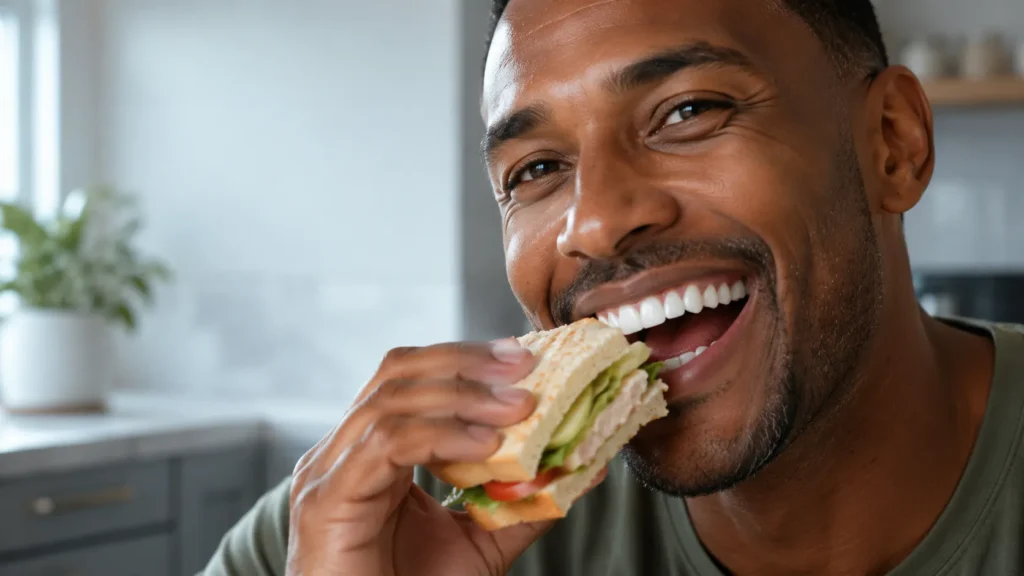
You can enjoy a varied diet with a few simple habits. These steps help protect your veneers:
- Cut hard fruit, vegetables and bread into small pieces before eating.
- Chew with your back teeth and avoid tearing food with the front ones.
- Do not use your teeth to open packets, bottles or to bite nails and pens.
- Rinse your mouth with water after coffee, tea, wine or strongly coloured food.
- Brush twice a day and clean between the teeth once a day.
Over time these steps become automatic. Most patients say that after a few weeks they hardly think about them.
Caring for Veneers and When to Call Your Dentist
Regular check ups let your dentist look at the edges of the veneers and the health of the gums. A professional clean is often advised every six months or as your dentist suggests. If you grind your teeth at night, ask about a night guard, because grinding is one of the most common causes of chipped veneers.
Contact your dentist if a veneer feels loose, if you notice a chip or crack, if a rough edge catches your tongue or if you have lasting pain or sensitivity. Do not try to fix a veneer yourself, and do not keep biting on a damaged one, because that can make the problem worse.
Frequently Asked Questions
Can you eat normally with veneers?
Yes, most people eat normally. You mainly need to avoid biting hard foods with the front teeth, limit very sticky foods and take care with strongly coloured drinks. Your dentist can give advice that fits your type of veneer.
Can you eat apples and carrots with veneers?
Yes, but it is safer to cut them into slices or sticks and chew with your back teeth. Biting into a whole hard apple with the front teeth puts a lot of pressure on a veneer.
Can you drink coffee and red wine with veneers?
Yes. Porcelain resists stains well, but the edges and the natural teeth beside it can darken, and composite stains more easily. Using a straw, rinsing with water and keeping up regular cleaning helps.
How soon can you eat normally after veneers?
Many people feel comfortable returning to most foods within a day or two, but sensitivity varies. Follow your dentist's instructions, choose soft foods at first and be careful with temporary veneers.
What happens if a veneer chips while eating?
Stop biting on it and contact your dentist. A small chip can sometimes be polished or repaired, while a larger one may need the veneer to be replaced. Do not try to fix it yourself.
About the Author