





Losing a tooth raises a practical question very quickly: should the gap be filled with a dental implant or with a bridge? Both options can restore chewing and appearance, and both are used every day in dental clinics. They work in very different ways, though, and the right choice depends on your mouth, your health, your budget and your plans for the future.
This guide compares dental implant vs bridge in plain language. It explains how each treatment works, what the process involves, how they differ in cost and lifespan, how they affect bone and the teeth next to the gap, and which questions to ask before you decide. The information is general, and only a dentist who has examined you can say which option is suitable.
Table Of Contents
- Dental Implant vs Bridge: The Basic Difference
- How a Dental Implant Works
- How a Dental Bridge Works
- Cost: Which Option Is More Expensive?
- Lifespan and Durability
- Effects on Bone and Neighbouring Teeth
- Comparison Table
- Who May Be Better Suited to Each Option?
- What the Process Looks Like
- Questions to Ask Your Dentist
- Planning Your Treatment with DentPrime
- Frequently Asked Questions
Dental Implant vs Bridge: The Basic Difference
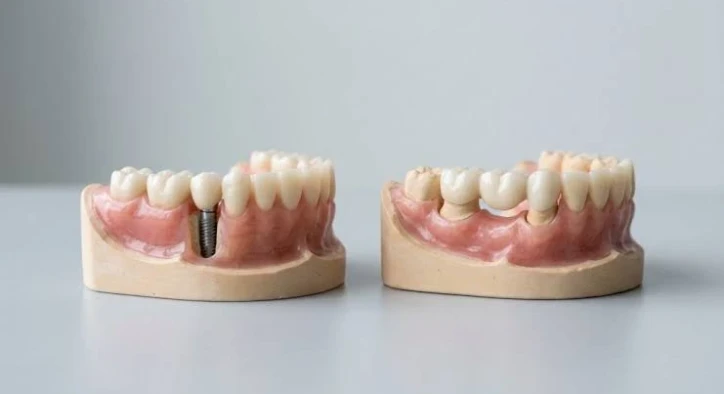
A dental implant replaces the root of the missing tooth. A small post, usually made of titanium, is placed in the jawbone, and after healing a crown is attached to it. The result stands on its own and does not rely on the teeth beside it.
A dental bridge replaces the missing tooth by joining it to the teeth on either side. Those neighbouring teeth are shaped and fitted with crowns, and the false tooth between them is carried by those crowns. A bridge therefore depends on healthy teeth next to the gap, while an implant depends on enough bone in the jaw.
How a Dental Implant Works
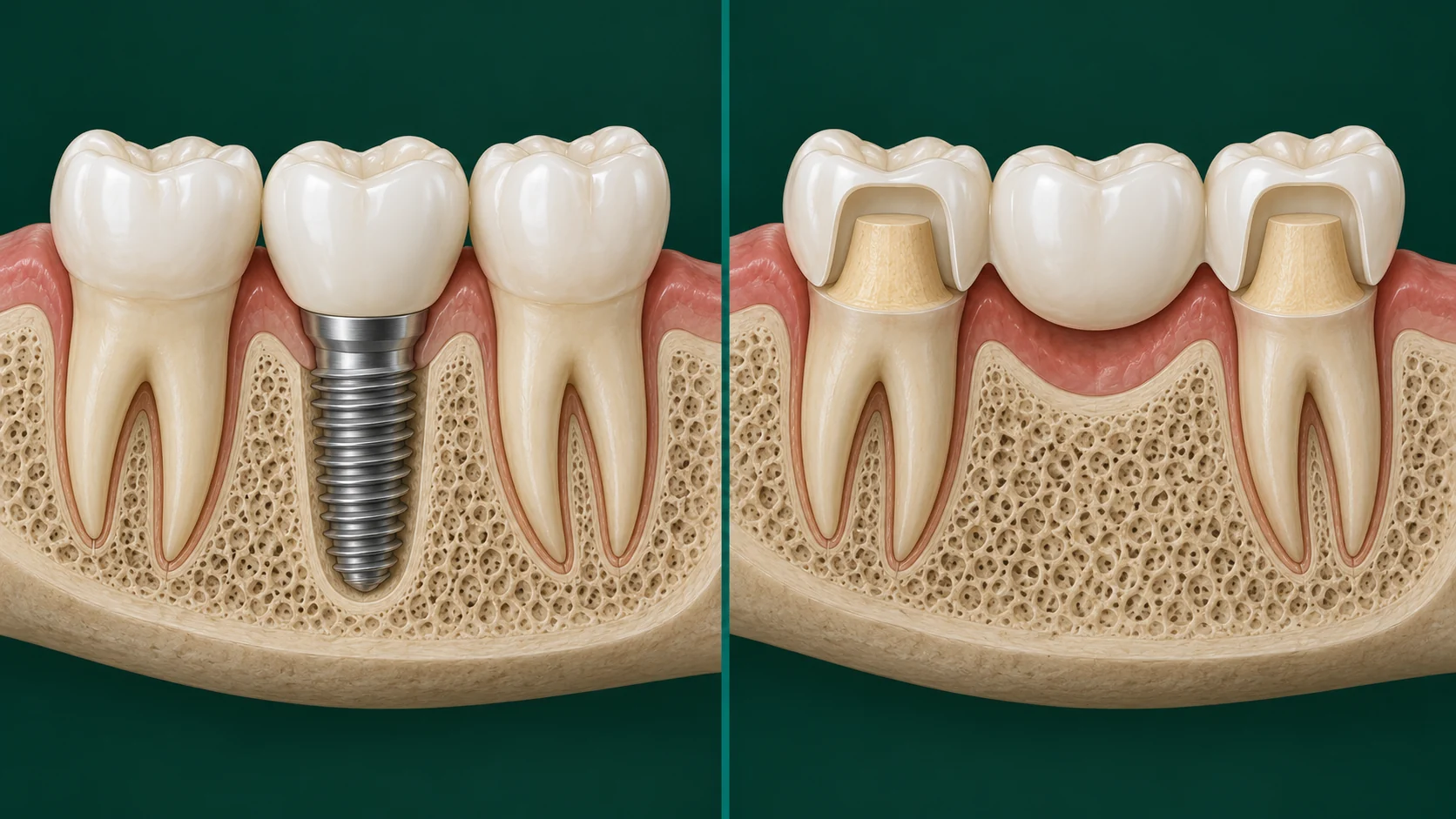
An implant treatment begins with an examination, X rays and often a three dimensional scan to check the bone. The post is placed under local anaesthetic, and the bone then needs time to bond with it. This healing period varies from person to person and is often a few months.
When the post is stable, an abutment and a crown are fitted. Some patients are suitable for faster protocols, but this depends on bone quality and general health. If the bone is thin, a bone graft may be advised first, which can lengthen the treatment.
How a Dental Bridge Works
A bridge is usually made in two or three visits. The dentist shapes the neighbouring teeth, takes impressions or a scan, and fits a temporary bridge while the final one is made. The finished bridge is then cemented in place.
Because the process does not involve surgery in the jaw, it is often quicker than an implant. The trade off is that healthy tooth structure on both sides of the gap must be reduced to carry the crowns. That is a permanent change to those teeth.
Cost: Which Option Is More Expensive?
Costs differ by country, clinic and materials, so any figure here would be misleading. In general, an implant costs more at the start, because it involves surgery, a post and a crown. A bridge usually costs less upfront.
Over many years, the picture can change. A bridge may need replacing sooner, and the teeth that carry it can develop problems that need further treatment. An implant often needs fewer changes if it is cared for well. Ask for a written plan that shows both the starting cost and the expected long term care.
Lifespan and Durability
With good oral hygiene and regular check ups, an implant post can last for many years, and the crown on top may need replacing at some point because of normal wear. A bridge also lasts many years, but it is usually expected to need replacement sooner than an implant post.
These are general expectations and not promises. Smoking, gum disease, grinding and poor home care can shorten the life of either option. Results vary between patients, and your dentist can tell you what is realistic in your case.
Effects on Bone and Neighbouring Teeth
When a tooth is lost, the bone that held it can slowly shrink. An implant sits in the bone and passes chewing forces into it, which helps keep the bone in that area stimulated. A bridge does not do this, so the bone under the false tooth may continue to shrink over time.
For neighbouring teeth, the difference is more direct. An implant leaves them untouched. A bridge needs them to be reduced and crowned, and they then carry extra load. If they are already heavily filled or weak, that can be a reason to prefer an implant.
Comparison Table
The table below summarises the main differences. It is a general guide, and your own examination decides what applies.
| Feature | Dental implant | Dental bridge |
|---|---|---|
| Replaces | The root and the crown | The crown only, supported by neighbours |
| Neighbouring teeth | Left untouched | Reduced and crowned |
| Surgery needed | Yes, minor surgery in the jaw | No jaw surgery |
| Treatment time | Longer, includes healing | Usually shorter |
| Starting cost | Usually higher | Usually lower |
| Effect on bone | Helps keep bone stimulated | Does not support the bone |
| Cleaning | Brush and floss as normal | Special floss under the bridge |
Who May Be Better Suited to Each Option?
An implant may suit people who have enough healthy bone, good general health and healthy gums, and who prefer not to alter neighbouring teeth. It is often considered when the teeth beside the gap are sound and do not need crowns.
A bridge may suit people who cannot have surgery, who do not have enough bone and do not want a graft, or whose neighbouring teeth already need crowns. It can also be a choice when speed matters. Some health conditions, medicines and habits affect both options, so your dentist should review them before a plan is made.
What the Process Looks Like
The path differs slightly for each option, but the first steps are similar. A typical planning sequence is:
- A consultation and examination, including X rays or a scan.
- A review of your health, gum condition, bone and bite.
- A discussion of both options, with their costs, time and care needs.
- A written treatment plan and, if needed, preparation such as gum treatment or a bone graft.
- The treatment itself, followed by a review and a follow up schedule.
Take your time at the discussion step. A good dentist will explain why one option may suit you better and will not rush you toward the most expensive one.
Questions to Ask Your Dentist
Ask what the plan involves, how long each stage takes, and what happens if something does not go as expected. Ask about the materials, the experience of the dentist with the chosen method and how long the work is expected to last.
It is also fair to ask what care you will need at home and how often you must attend check ups. A clear answer to these questions tells you a lot about how a clinic works. No dentist can promise a particular outcome, but a careful one will explain the risks and the alternatives openly.
Frequently Asked Questions
Is a dental implant better than a bridge?
Neither is better for everyone. An implant avoids altering neighbouring teeth and supports the bone, while a bridge is often quicker and avoids jaw surgery. The right choice depends on your bone, gums, health and priorities.
Which lasts longer, an implant or a bridge?
An implant post is generally expected to last longer than a bridge when it is well cared for, but this is not guaranteed. Home care, check ups and habits such as smoking all affect how long either option lasts.
Does getting an implant hurt more than getting a bridge?
Both procedures are done under local anaesthetic. An implant involves minor surgery, so some soreness afterwards is common and usually settles within days. A bridge involves shaping teeth, which can also cause temporary sensitivity.
Can I have a bridge if I do not have enough bone for an implant?
Often yes, because a bridge relies on the neighbouring teeth and not on the bone. A bone graft is another route to an implant, and your dentist can explain which is more suitable.
How long does it take to replace a missing tooth with each option?
A bridge is often completed within a few weeks, while an implant usually takes several months because of healing time. The exact timeline depends on your case and the method chosen.
About the Author