




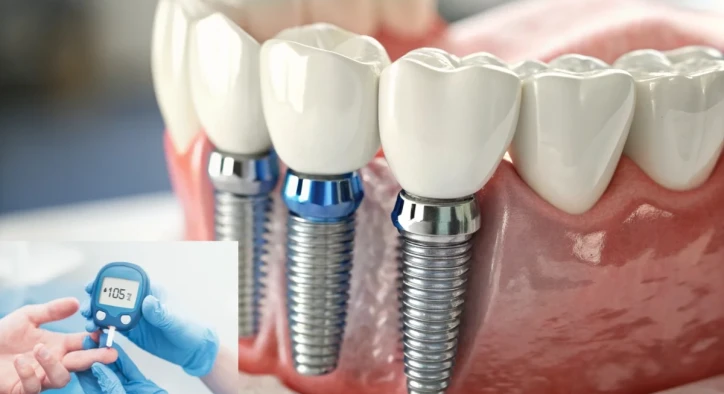

Many people with diabetes lose teeth sooner than they expected, and they often wonder whether a dental implant is still a safe choice for them. The question is a fair one, because diabetes can affect the gums, the bone and the way the body heals. At the same time, many people with well managed diabetes are able to have implants.
Table Of Contents
- Can Diabetics Have Dental Implants? The Short Answer
- How Diabetes Affects Healing and Gum Health
- Why Blood Sugar Control Matters Before Implants
- Possible Risks of Dental Implants for Diabetics
- Dental Implants for Diabetics at a Glance
- Who May Be Suitable and Who May Need to Wait
- How to Prepare for Implant Treatment
- Managing Diabetes on the Day of Surgery
- Healing and Aftercare for Diabetic Patients
- Long Term Care and Keeping Implants Healthy
- Planning Treatment with DentPrime
- Frequently Asked Questions
This guide explains how dental implants and diabetes relate to each other, why blood sugar control matters, what risks to be aware of, how to prepare and what to expect during healing. The information is general. Only your dentist, together with the doctor who looks after your diabetes, can say whether implants are suitable for you.
Can Diabetics Have Dental Implants?
In many cases, yes. Having diabetes does not automatically rule out dental implants. What matters most is how well the diabetes is controlled, how healthy the gums and bone are and how your body heals. Many dentists treat people with diabetes, and the plan is usually adjusted to take extra care before, during and after the procedure.
That said, poorly controlled diabetes can raise the risk of complications. If your blood sugar has been high for a long time, your dentist may ask you to improve it with your doctor before starting. This is not a refusal, but a way of giving the implant the best chance to heal.
How Diabetes Affects Healing and Gum Health

When blood sugar stays high for long periods, small blood vessels can be affected and the body becomes less able to fight infection. In the mouth, this can mean gums that become inflamed more easily and wounds that heal more slowly. Dry mouth is also common, which raises the risk of decay and gum problems.
Gum disease and diabetes affect each other. Untreated gum disease can make it harder to keep blood sugar stable, and high blood sugar can make gum disease worse. This is true for both type 1 and type 2 diabetes, so a dental check and, if needed, gum treatment are often the first steps before any implant is planned.
Why Blood Sugar Control Matters Before Implants
An implant depends on the bone growing firmly around the post, and this process needs good healing. When blood sugar is well managed, the body is generally in a better position to do this. Your dentist may ask for a recent HbA1c result, which shows your average blood sugar over the past few months.
There is no single number that applies to everyone, and the decision is made individually with your doctor. Many clinics prefer that the diabetes is stable and under regular care before implant surgery. If it is not, improving it first is often the wiser path.
Possible Risks of Dental Implants for Diabetics
All implant surgery carries some risk, and a few risks may be higher when diabetes is not well controlled. Your dentist will discuss them with you. They can include:
- Slower healing of the gum and bone after surgery.
- A higher chance of infection around the implant.
- Inflammation of the gum and bone around the implant, which can threaten its stability.
- A greater risk that the implant does not fix firmly into the bone.
- Dry mouth and gum disease that make long term care harder.
These risks do not mean that implants will fail. With good control, careful planning and regular care, many people with diabetes keep their implants for years. Results vary between patients, and no dentist can promise a particular outcome.
Dental Implants for Diabetics at a Glance
The table gives a simple overview of the main points. It is a general guide, and your own examination decides what applies to you.
| Factor | Well controlled diabetes | Poorly controlled diabetes |
|---|---|---|
| Suitability for implants | Often possible after assessment | May need to wait until levels improve |
| Healing | Usually closer to normal | May be slower |
| Infection risk | Lower | Higher |
| Planning | Standard plan with extra monitoring | Medical review before treatment |
| Long term care | Regular check ups and cleaning | Closer follow up and gum care |
Who May Be Suitable and Who May Need to Wait
People whose diabetes is stable, who have healthy gums or treated gum disease, enough bone and good daily cleaning habits may be suitable for implants. Their doctor should be aware of the plan, and they should be able to attend follow up visits.
Some people may need to wait or take another route. This may be the case if blood sugar is very high or changes a lot, if there is active gum disease or infection, if there are other health problems that affect healing, or if the person smokes. In these cases, treating the problem first often leads to a safer result, and other options such as a bridge or denture may be discussed.
How to Prepare for Implant Treatment
Good preparation helps the process go smoothly. The steps often look like this:
- Tell your dentist about your diabetes type, your medicines and your recent HbA1c and blood sugar readings.
- Talk to your diabetes doctor about the planned treatment and any changes to medicines.
- Have any gum disease or infection treated before implant surgery.
- Stop smoking if you smoke, because it affects healing and implant success.
- Agree a clear plan for meals, medicines and monitoring on the day of surgery.
Do not skip any of these steps. They help your dentist plan safely and help you know what to expect.
Managing Diabetes on the Day of Surgery
On the day of surgery, it is important to keep your blood sugar stable. Your dentist and doctor will tell you whether to eat beforehand, how to take your medicines and how to check your levels. Do not change your insulin or tablets on your own, and do not go for a long time without food unless you are told to.
Bring your testing device and something sugary in case your level drops. Appointments in the morning are often easier to plan. If you feel shaky, sweaty or unusually tired during treatment, tell the team straight away.
Healing and Aftercare for Diabetic Patients
After implant surgery, some swelling and tenderness are normal. Healing can take longer in people with diabetes, so follow your dentist's instructions carefully and attend all follow up visits. Keep the area clean in the way you are shown, and use any mouthwash or medicine as prescribed.
Keep checking your blood sugar as your doctor advises, because stable levels help healing. Contact your dentist without delay if you notice fever, increasing pain, spreading swelling, a bad taste or discharge, or if the implant feels loose, because these can be signs of infection.
Long Term Care and Keeping Implants Healthy
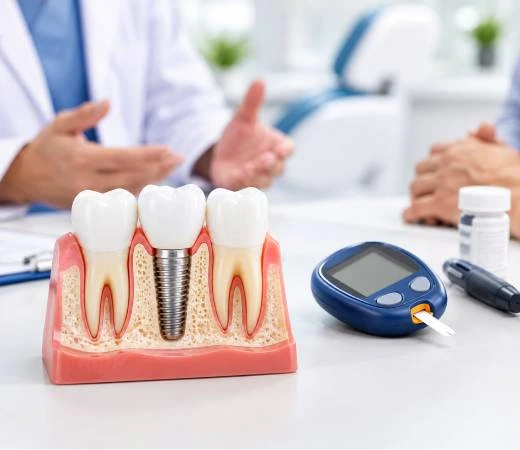
Implants need regular care to last. The main habits are:
- Brush twice a day with a soft brush and clean between the teeth every day.
- Keep your blood sugar within the range set by your doctor.
- Attend dental check ups and professional cleaning as often as your dentist advises.
- Avoid smoking and tobacco.
- Report bleeding gums, bad breath or any looseness early.
Looking after your mouth also helps your general health, since gum health and blood sugar influence each other.
Frequently Asked Questions
Are dental implants safe for people with diabetes?
They can be, especially when diabetes is well managed and the gums are healthy. Risks such as slower healing and infection may be higher when blood sugar is poorly controlled, so your dentist and doctor will assess your case first.
Can I get an implant if my blood sugar is high?
Your dentist may ask you to bring it under better control with your doctor before surgery. This helps healing and lowers the risk of complications. Once your levels are stable, implants may be possible.
Do dental implants heal slower in diabetics?
Healing can be slower in some people with diabetes, particularly when blood sugar is not well controlled. Following aftercare instructions and attending follow up visits helps your dentist monitor the process.
Does diabetes cause dental implant failure?
Diabetes does not automatically cause failure, but poorly controlled diabetes can raise the risk of infection and problems with healing. Good control, healthy gums and regular care help protect the implant.
What should I tell my dentist before getting an implant?
Tell them your diabetes type, your medicines, your recent HbA1c and blood sugar readings, and any other health conditions. Also mention if you smoke or have had gum disease, so that they can plan safely.
About the Author