




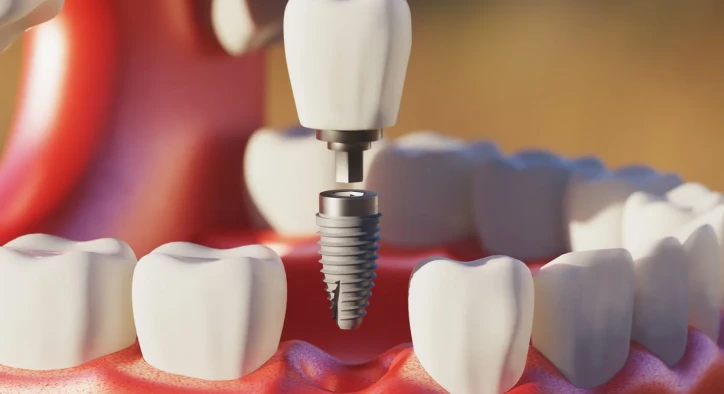

For patients suffering from long-term tooth loss and extensive jawbone resorption, conventional dental implant placement often presents significant anatomical hurdles. Severe horizontal bone atrophy, narrow interdental spaces, and systemic medical contraindications to extensive bone grafting frequently prevent the use of standard root-form titanium fixtures. In modern reconstructive implantology, the implementation of a mini dental implant represents a minimally invasive, biologically sound alternative designed to restore chewing stability without extensive surgical augmentation.
By utilizing ultra-narrow, single-piece titanium alloy screws, clinicians can firmly anchor removable overdentures or replace small anterior teeth in a single visit. Understanding what is a mini dental implant begins with recognizing its distinct engineering: a solid-body screw with an integrated ball-shaped retention head that bypasses the need for multi-stage abutment connections. This clinical guide explores the biomechanics of narrow fixtures, evaluates the critical trade-offs in mini dental implant vs regular implants, details current mini dental implant cost benchmarks, examines how much is a mini dental implant across global markets, and outlines indications for long-term oral rehabilitation.
Table Of Contents
- What Is a Mini Dental Implant and How Does It Work Biomechanically?
- Mini Dental Implant vs Regular Implants
- Denture Retention and Single-Tooth Replacement
- What Are the Potential Mini Dental Implants Problems and Limitations?
- Cost Analysis: How Much Is a Mini Dental Implant Globally?
- Frequently Asked Questions
What Is a Mini Dental Implant and How Does It Work Biomechanically?
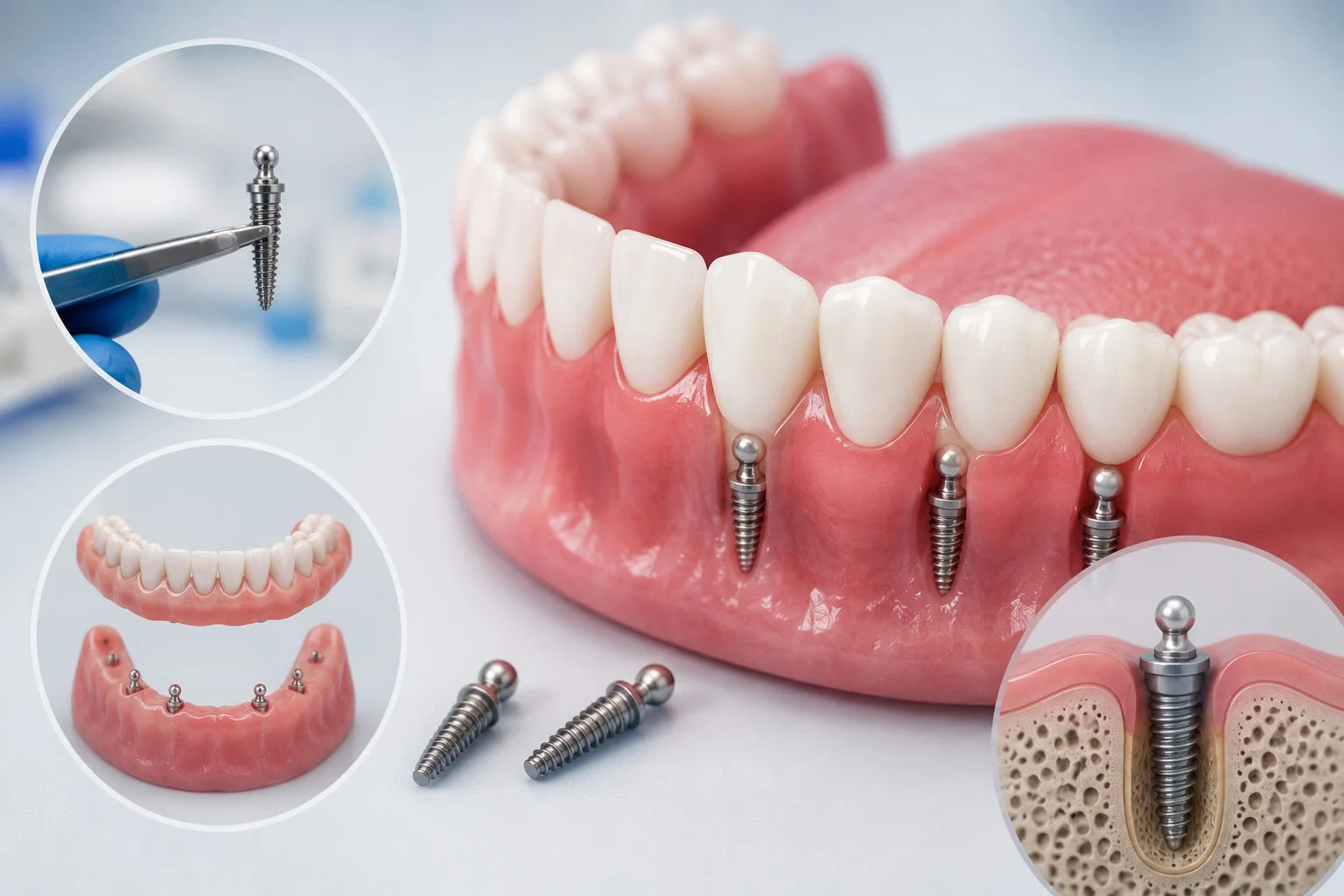
When patients evaluate narrow-ridge tooth replacement, answering what is a mini dental implant requires analyzing fixture dimensions and structural design. A mini dental implant (MDI) is a narrow-diameter biocompatible titanium alloy post measuring between 1.8 mm and 3.0 mm in diameter, compared to standard regular implants that measure 3.5 mm to 6.0 mm.
The fundamental engineering and surgical protocol follow a streamlined pathway:
- [ CONVENTIONAL ROOT-FORM IMPLANT ]: 3.5 to 6.0 mm diameter │ Two-piece fixture + screw-retained abutment
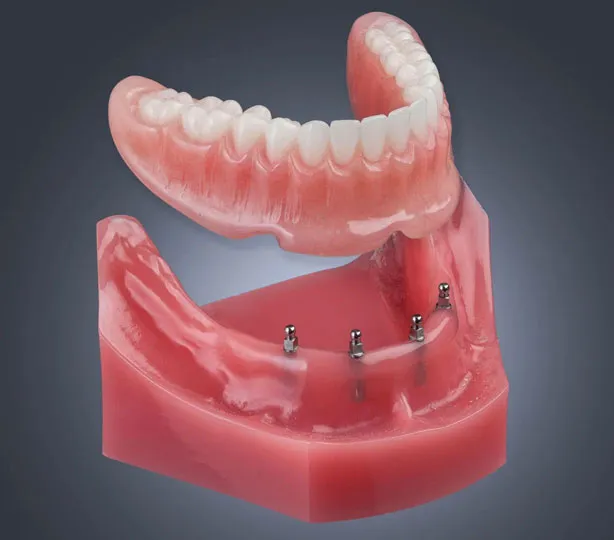
- [ SOLID MINI DENTAL IMPLANT ]: 1.8 to 3.0 mm diameter │ Single-piece fixture with integrated ball head
- [ FLAPLESS TRANSMUCOSAL INSERTION ]: Inserted directly through gum tissue into narrow bone with minimal trauma
- [ IMMEDIATE PROSTHETIC RETENTION ]: Housing cap with rubber O-ring snaps directly onto integrated ball head
Unlike traditional implants that require surgical incisions, periosteal flap reflection, extensive osteotomy drilling, and months of unloaded submerged healing, mini fixtures utilize a flapless transmucosal approach. The self-tapping, high-torque thread design allows primary mechanical stability upon insertion, often enabling immediate prosthetic loading on the very same day.
Mini Dental Implant vs Regular Implants
When deciding between narrow and conventional diameters, analyzing mini dental implant vs regular systems highlights essential mechanical and physiological trade-offs:
Clinical Parameter | Mini Dental Implant (MDI) | Conventional Regular Implant |
Diameter Range | 1.8 mm to 3.0 mm (Ultra-narrow) | 3.5 mm to 6.0 mm (Standard root-form) |
Structural Architecture | Single-piece solid body (Integrated ball head) | Two-piece modular system (Fixture + separate abutment) |
Surgical Protocol | Flapless, minimally invasive, micro-pilot drill | Mucogingival flap reflection, graduated drill sequence |
Bone Grafting Need | Rarely required; fits into narrow, atrophic ridges | High probability of bone grafting or sinus lifting |
Primary Clinical Indication | Denture stabilization, narrow incisor gaps | Single molars, multi-unit bridges, full-arch All-on-4/6 |
Occlusal Force Resistance | Moderate (Reduced surface area for bone bonding) | Maximum (High surface area for heavy chewing forces) |
Denture Retention and Single-Tooth Replacement
Mini fixtures are engineered for specific clinical scenarios where bone width is insufficient for conventional root forms:
- Mini Dental Implants for Dentures: The primary application of MDIs involves stabilizing loose lower or upper full dentures. Typically, four to six mini implants are placed along the anterior ridge, and corresponding metal housings containing elastomeric O-rings are cured directly into the base of the patient's existing or new denture, snapping it firmly into place.
- Narrow Anterior Single Tooth Replacement: Ideal for replacing congenitally missing maxillary lateral incisors or mandibular central incisors where interdental root proximity prevents the placement of a standard 3.5 mm fixture.
- Temporary Orthodontic Anchorage: Utilized as temporary skeletal anchorage devices (TADs) to facilitate complex orthodontic tooth movements before being easily unscrewed.
What Are the Potential Mini Dental Implants Problems and Limitations?
While narrow fixtures offer remarkable advantages, understanding potential mini dental implants problems is vital for long-term clinical success. Due to their smaller diameter, MDIs possess a reduced surface area for osseointegration, making them less suited for heavy chewing forces in posterior molar regions.
Furthermore, because mini implants feature a single-piece design, excessive lateral bending forces can lead to titanium fatigue and fixture fracture if occlusal forces are not carefully distributed. Over time, the rubber O-rings inside the prosthetic housing undergo mechanical wear and require routine replacement every 12 to 18 months to maintain strong snapping retention.
How Much Is a Mini Dental Implant Globally?
When researching how much is a mini dental implant, total treatment fees depend on the number of fixtures placed, whether an existing denture can be retrofitted, and the geographic location of the surgical center. Because the surgical procedure is flapless and avoids expensive bone grafting biomaterials, the overall mini dental implant cost is substantially lower than conventional implant reconstruction.
A review of average global costs per individual mini implant reveals significant regional variations:
- United Kingdom & Western Europe: £500 to £1,000 per individual mini implant, with full-arch overdenture stabilization packages (4 mini implants + retrofitted denture) ranging from £2,500 to £4,500.
- United States: $600 to $1,500 per mini fixture, with complete denture stabilization running between $3,000 and $6,000.
- DentPrime Turkey Packages: By leveraging direct medical manufacturing partnerships and specialized digital workflows, DentPrime delivers premium grade-5 titanium mini dental implants for £200 to £350 per fixture, and complete 4-implant denture stabilization packages for £1,000 to £1,800.
Frequently Asked Questions
How long do mini dental implants last compared to traditional implants?
With meticulous oral hygiene, proper occlusal balancing, and regular checkups, mini dental implants can easily last 10 to 15+ years or longer. While standard regular implants have slightly higher long-term survival rates in posterior zones due to greater bone contact area, MDIs offer exceptional long-term stability when used primarily for overdenture retention.
Is the placement of mini dental implants painful?
No. Because mini dental implants are placed using a minimally invasive flapless technique without cutting gum tissue or placing surgical sutures, post-operative discomfort is remarkably minimal. Most patients manage minor soreness with standard over-the-counter pain relievers and can eat a soft diet on the same evening.
Can mini dental implants be used to replace back molars?
Generally, no. Back molar teeth withstand immense vertical and lateral biting forces exceeding 500 Newtons. The narrow diameter of a mini implant makes it vulnerable to structural bending fatigue under heavy molar mastication. Conventional standard-diameter implants (4.5 mm to 6.0 mm) remain the gold standard for posterior molar replacement.
How do you care for and clean mini dental implants?
Daily maintenance involves brushing the integrated metal ball heads thoroughly twice a day using a soft-bristled toothbrush and non-abrasive antimicrobial toothpaste. Patients with implant-retained overdentures must also clean the undersides of their dentures and use interdental brushes or a water flosser around the ball attachments to prevent plaque accumulation.
Can my existing denture be used with mini dental implants?
Yes, in many cases. If your current removable denture is in good structural condition with correct bite alignment and minimal tooth wear, your dentist can modify its acrylic base by drilling small recesses and curing metal retention housings directly into it, converting your conventional denture into a snap-on overdenture on the same day.
About the Author