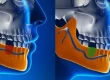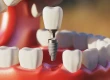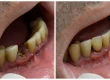







Rehabilitating a severely reduced dentition where only a few natural teeth remain presents one of the most demanding challenges in restorative dentistry. When seeking a solution that combines the rock-solid stability of a fixed bridge with the hygiene advantages of a removable appliance, the telescopic denture stands out as the ultimate gold standard of German dental engineering. Instead of relying on visible, destructive wire clasps that exert damaging tipping forces on anchor teeth, this advanced restorative protocol utilizes high-precision double crowns to achieve exceptional retention through pure physical friction.
For patients navigating complex partial tooth loss, understanding the technical workflow of the double crown telescopic denture provides clarity and confidence. Many evaluate the advantages of a telescopic denture vs overdenture, investigate the laboratory precision behind the telescopic denture technique, and assess real-world expectations regarding telescopic denture longevity. Furthermore, patients must understand the daily hygiene protocols on how to clean telescopic denture appliances, identify potential telescopic denture problems, and explore the factors that determine the overall telescopic denture cost without flat fee estimates. This clinical guide explores double-crown frictional mechanics, laboratory milling, periodontal axial loading, and long-term oral stability.
Table Of Contents
- What Is a Telescopic Denture and How Does the Double-Crown Friction Work?
- Technical Comparison: Telescopic Denture vs Overdenture
- The Precision Protocol: Understanding the Telescopic Denture Technique
- Durability, Hygiene, and Managing Telescopic Denture Problems
- What Drives Telescopic Denture Cost?
- Frequently Asked Questions
- Can a telescopic denture be expanded if I lose another natural tooth in the future?
- Does getting a telescopic denture hurt?
- Can telescopic dentures be supported by dental implants instead of natural teeth?
- How do you take out a telescopic denture if the friction is very tight?
- Is a telescopic denture noticeable to other people when I smile or talk?
What Is a Telescopic Denture and How Does the Double-Crown Friction Work?
To understand why this system offers exceptional retention, explaining the mechanical basis of a telescopic denture requires analyzing the interaction between two precisely fitted copings. Clinically recognized as a double-crown overdenture, the system consists of a primary inner crown permanently cemented onto the prepared natural tooth or implant, and a secondary outer crown permanently integrated into the removable denture base.
The biomechanical and technical workflow follows a structured sequence:
- [ PREPARED ABUTMENT TEETH ]: Teeth shaped with parallel walls or slight taper
- [ PRIMARY COPING CEMENTATION ]: Thin primary gold/zirconia crown cemented over natural tooth
- [ HIGH-PRECISION CNC MILLING ]: Primary walls milled to parallel friction angles (0 to 2 degrees)
- [ SECONDARY COPING HOUSING ]: Outer crown cast into denture base glides over inner crown
- [ FRICTIONAL FIT RETENTION ]: Atmospheric suction and surface contact lock denture in place
When the patient inserts the prosthesis, the secondary outer crown slides smoothly over the primary inner coping. As the two parallel surfaces make full contact, microscopic surface tension and atmospheric pressure create a secure friction fit. This mechanism holds the denture firmly in place during chewing and speaking, completely eliminating the loose, unstable feeling common with traditional removable plates.
Technical Comparison: Telescopic Denture vs Overdenture

Understanding the structural differences in a telescopic denture vs overdenture helps patients choose the optimal restorative pathway for their remaining dentition.
Clinical Parameter | Double-Crown Telescopic Denture | Ball/Locator Overdenture | Conventional Clasp Partial Denture |
Retention Mechanism | Micro-friction between dual crowns | Mechanical snap with nylon matrices | Mechanical grip via metal wire clasps |
Aesthetic Visibility | Completely invisible retention | Hidden beneath the acrylic base | Visible metal clasps on smile line |
Bite Force Transmission | Pure axial load along root long axis | Mixed mucosal and implant loading | Dangerous lateral tipping forces |
Palatal Freedom | Horseshoe design; free palate | Semi-open palate configuration | Thick palatal metal bar or plastic plate |
Long-Term Expandability | Easily modified if anchor tooth is lost | Requires locator cap replacement | Difficult to modify; often needs remaking |
The Precision Protocol: Understanding the Telescopic Denture Technique
The clinical and dental laboratory execution of the telescopic denture technique requires extreme accuracy, where tolerances are measured in microns:
- Periodontal and Abutment Evaluation: The remaining natural teeth are treated periodontally, root-treated if indicated, and prepared with a defined chamfer margin to receive primary copings.
- Primary Coping Milling: The inner copings, crafted from high-noble gold alloys or high-density biocompatible zirconia, are cast or CAD/CAM milled. A precision milling unit cuts the axial walls to exact parallelism (cylindrical telescopes) or an exact conical taper (tapered conical crowns).
- Secondary Framework Fabrication: The secondary outer crowns are electroformed or milled with zero-clearance tolerance to fit the primary crowns, then permanently laser-welded into the chromium-cobalt or titanium denture framework.
- Aesthetic Setting and Acrylation: Highly aesthetic composite or porcelain denture teeth are aligned, pink gingival tissue is characterized, and the complete prosthesis is polished.
- Clinical Delivery: Primary copings are permanently cemented, and the outer telescopic denture is seated, achieving a seamless friction fit.
Durability, Hygiene, and Managing Telescopic Denture Problems
When evaluating the investment in this treatment, patients frequently inquire about telescopic denture longevity. Clinical studies consistently demonstrate that well-maintained telescopic restorations have a lifespan of 15 to 20 years or longer. Because the design transfers masticatory forces straight down the long axis of the tooth root, it protects the surrounding periodontal ligament and prevents premature bone loss.
However, patients should be aware of potential telescopic denture problems and their solutions:
- Gradual Loss of Friction: Over many years of daily insertion and removal, friction between metal surfaces can slightly decrease. Dentists easily restore tight retention by replacing subtle friction pins or placing thin composite shims inside the secondary crown.
- Decay Beneath Primary Crowns: If oral hygiene is neglected, bacteria can attack the margin of the cemented inner coping. Understanding how to clean telescopic denture copings is vital: patients must brush the cemented inner gold or zirconia posts twice daily with fluoride toothpaste and a soft brush after removing the outer plate.
- Cleaning the Prosthesis: The outer denture must be rinsed after every meal, cleaned with a specialized denture brush and non-abrasive cleanser, and soaked in water overnight to prevent bacterial biofilm accumulation.
What Drives Telescopic Denture Cost?

When researching overall expenses, patients evaluate the factors that determine telescopic denture cost rather than relying on flat fee numbers. Because every telescopic prosthesis is a custom-engineered masterwork, pricing is calculated based on individual technical demands.
Key clinical variables that influence the overall cost include:
- Number of Abutment Teeth: Costs scale with the number of primary and secondary crowns required to anchor the arch (typically 2 to 6 double crowns).
- Material Selection: Electroformed 24-karat gold copings, high-noble dental alloys, or CAD/CAM milled solid zirconia represent different material and laboratory expenses.
- Framework Architecture: Utilizing computer-milled titanium frameworks versus cast cobalt-chromium metal bases.
- Pre-Prosthetic Treatments: The need for preliminary periodontal stabilization, endodontic therapies, or extractions prior to coping placement.
Frequently Asked Questions
Can a telescopic denture be expanded if I lose another natural tooth in the future?
Yes. One of the greatest advantages of a telescopic denture is its adaptability. If a supporting natural tooth is lost years later due to root fracture, a dental technician can easily remove the root, extract the inner coping, and reline that section of the existing denture base with pink acrylic and a prosthetic tooth without having to build an entirely new denture.
Does getting a telescopic denture hurt?
No. The preparation of the natural anchor teeth is performed under local anesthesia, ensuring you experience zero pain during shaping and impressions. After delivery, the gums may feel mild pressure during the first few days as you adapt to the friction fit, which subsides quickly.
Can telescopic dentures be supported by dental implants instead of natural teeth?
Yes. Telescopic dentures can be anchored entirely by dental implants or by a strategic combination of implants and remaining natural teeth. Custom titanium or zirconia primary copings are screwed directly onto the implants, providing an exceptionally stable, completely palate-free fixed-removable restoration.
How do you take out a telescopic denture if the friction is very tight?
When the prosthesis is new, the friction fit is exceptionally snug. To remove it safely, use the pads of both index fingers along the outer acrylic borders on both sides simultaneously, pulling straight down (for upper dentures) or straight up (for lower dentures) along the insertion path. Never twist, lever, or bite the appliance out of place.
Is a telescopic denture noticeable to other people when I smile or talk?
No. Unlike conventional partial dentures that rely on visible silver or gold metal clasps hooked around front teeth, a telescopic denture contains zero visible metal attachments. All mechanical retention is hidden entirely inside the prosthetic teeth, creating a completely natural and seamless smile.
About the Author