




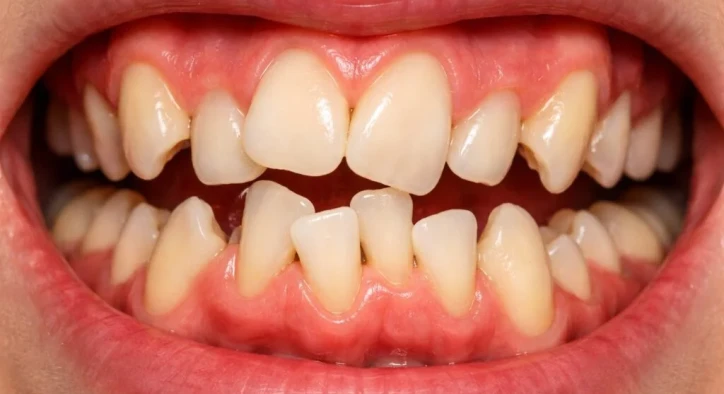

Achieving a uniform, symmetrical smile line requires a perfect mechanical relationship between your underlying jaw bone structure and your erupting teeth. When this spatial balance is disrupted, individuals frequently develop structural crowding, overlapping, or rotations. When reviewing your smile line, understanding what causes crooked teeth involves studying genetic skeletal patterns, childhood development habits, and localized tooth size discrepancies.
Misaligned teeth are more than just a cosmetic concern. From a medical standpoint, crowded or rotated enamel structures create deep physical stagnation areas where soft plaque and food particles collect, significantly increasing your risk for localized decay and chronic periodontal inflammation. This comprehensive clinical guide explores the biology of arch crowding, evaluates the limits of modern tooth reshaping, answers whether you can use composite bonding on crooked teeth safely, and reviews advanced restorative alternatives.
Table Of Contents
What Causes Crooked Teeth?
To select the correct correction pathway, your cosmetic team must determine the exact underlying cause of your dental crowding:
- Skeletal and Genetic Discrepancies: The most common cause is an evolutionary mismatch between jaw size and tooth width. If a patient inherits a narrow jaw structure from one parent and relatively wide teeth from the other, the erupting teeth will naturally lack the structural space needed to align uniformly, forcing them to overlap or rotate out of position.
- Childhood Developmental Habits: Chronic non-nutritive sucking habits during early childhood can permanently alter the shape of the developing jaw bone. Prolonged thumb-sucking or excessive pacifier use puts continuous physical pressure on the soft alveolar bone, narrowing the upper arch and causing severe adult crowding later in life.
- Early Primary Tooth Loss: When a primary tooth is lost prematurely due to decay or injury, the surrounding teeth naturally drift into the empty space. This migration blocks the path for the permanent adult tooth waiting underneath, forcing it to erupt at an abnormal angle or entirely outside the normal arch line.
The Reality of Composite Bonding on Crooked Teeth: Limits and Protocols
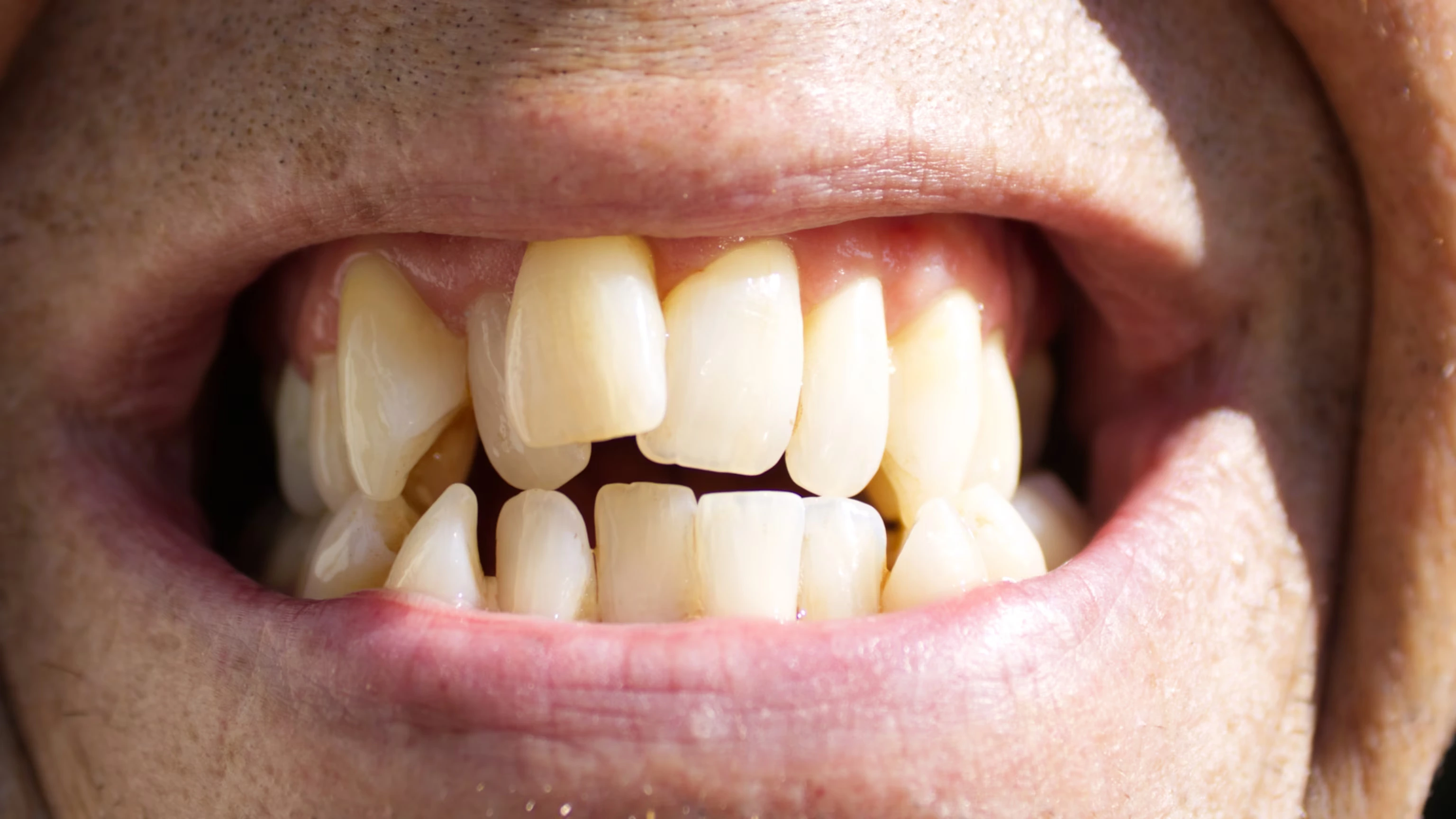
Patients looking for a fast transformation frequently ask, "can you get composite bonding on crooked teeth?" and look for options regarding crooked teeth bonding to avoid long orthodontic treatments. The clinical answer is yes, but only within strict anatomical boundaries.
- [ MISALIGNED TEETH ] ── Mild Rotation or Minimal Gap ── Composite resin can balance the volume
- [ ENAMEL PREPARATION ] ──── Zero drilling of structure ──── Applied directly to raw outer enamel
- [ PROPORTIONAL RISKS ] ──── Severe crowding or overlap ─── Excessive resin creates bulky, unhygienic ledges
Using composite resin to correct alignment issues is an additive technique. Your dentist applies a soft, silica-packed polymer paste directly over the recessed areas of a rotated tooth, building up the volume to match the surrounding teeth perfectly.
While this approach works beautifully for minor rotations or small gaps, using it for severe crowding is highly problematic. Trying to fix heavily overlapped teeth with resin requires applying an excessively thick layer of plastic. This addition creates bulky, unhygienic ledges near the gum line that trap plaque bacteria, leading to severe gum disease and rapid decay underneath the material.
How to Fix Crooked Teeth Without Braces?
If you want to achieve a straight smile line but want to know how to fix crooked teeth without braces, modern cosmetic dentistry offers two highly effective alternatives that blend speed with long-term stability:
1. Advanced Clear Aligner Therapy (Invisalign® Systems)
This modern system represents the premier way to correct crowding without using fixed metallic brackets and wires. Your clinician utilizes a high-resolution 3D intraoral scanner to map your arches completely, then designs a sequence of custom, clear polyurethane trays.
Each tray puts precise, micro-mechanical pressure on specific teeth, guiding them gently into their ideal positions over a period of six to twelve months. This approach keeps your treatment entirely invisible and allows you to maintain flawless oral hygiene during your transformation.
2. Premium Custom E-Max Veneers and Zirconia Crowns
For patients who want an immediate transformation, choosing veneers for crooked teeth offers a highly predictable solution. Instead of physically moving the roots of the teeth over several months, this approach uses custom-milled E-Max porcelain shells to mask structural irregularities instantly.
Your cosmetic dentist polishes away a tiny micrometer layer from the protruding edges of the misaligned teeth to create a balanced foundation. Next, custom-engineered ceramic shells are permanently bonded over the front surfaces, instantly creating a uniform, perfectly aligned, and bright smile line that remains stable for decades.
Evaluating the Structural Transformation: Home Aligners vs. Clinical Systems
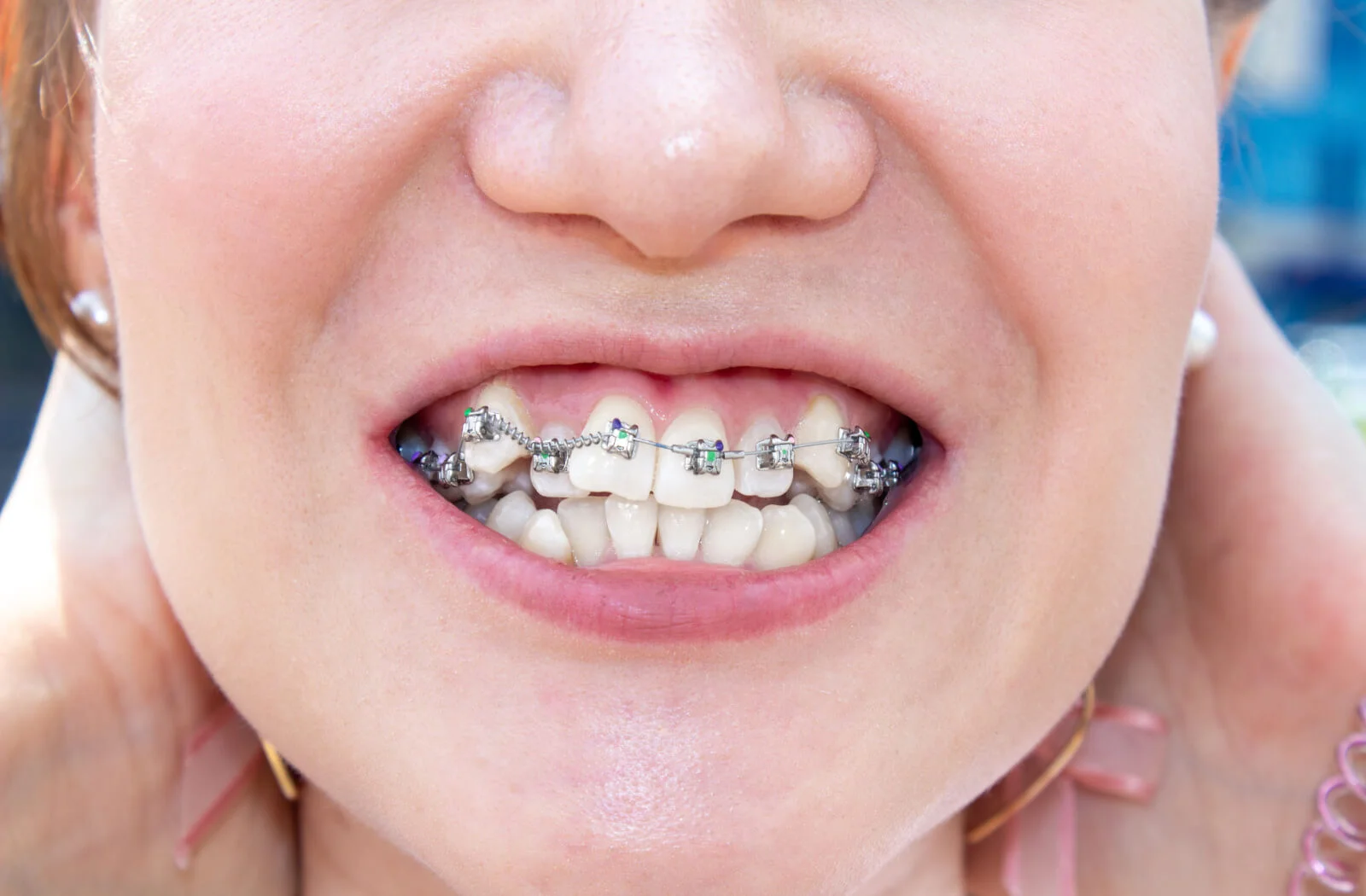
Analyzing a typical before and after crooked teeth journey highlights how matching the right clinical treatment to your unique anatomy alters your long-term success rate and oral health.
Treatment Strategy | Tooth Correction Mechanism | Enamel Preparation Needs | Structural Lifespan |
Clear Aligner Therapy | Moves roots physically through bone | Zero removal of tooth structure | Permanent natural results |
Premium E-Max Veneers | Masks structural defects instantly | Minimal micrometer surface prep | 15 to 21+ years |
Composite Bonding | Adds resin to fill out recessed zones | Zero drilling required | Three to five years (requires care) |
DIY Home Aligner Kits | Unmonitored physical force on teeth | High risk of root damage | Severe risk of tooth loss |
Frequently Asked Questions
Can composite bonding completely fix severely overlapped teeth?
No, composite bonding cannot fix severely overlapped teeth safely. Because resin is an additive material, building up heavily crowded teeth requires applying a thick layer of polymer that creates rough, unhygienic ledges near your gums. These traps collect food particles and plaque acids, leading to rapid decay and chronic gum inflammation. Severe crowding must be treated using clear aligners or custom porcelain veneers instead.
Is the enamel preparation for porcelain veneers safe for misaligned teeth?
Yes, when performed by an experienced cosmetic dentist, the preparation process is entirely safe and highly controlled. The clinician uses high-resolution magnification to remove only the precise micrometer layer from the protruding edges of the tooth needed to create a flat, uniform surface, ensuring the final ceramic shell sits flush with your natural gum line without adding bulk.
How long does composite bonding last on crooked teeth?
On average, composite bonding placed over misaligned teeth lasts between three and five years. Because the resin handles localized biting forces unevenly across a crooked smile line, the edges are more prone to chipping and surface wear than traditional porcelain. The material also requires regular professional polishing to maintain its initial gloss and prevent staining.
Why do crowded teeth increase the risk of developing gum disease?
Crowded and rotated teeth create tight, irregular spaces that standard toothbrush bristles and dental floss cannot reach effectively. When soft plaque biofilm remains trapped in these stagnation areas, bacteria release acidic byproducts that harden into calculus, causing continuous irritation to your gums that leads to chronic gingivitis and progressive bone loss if left untreated.
About the Author