




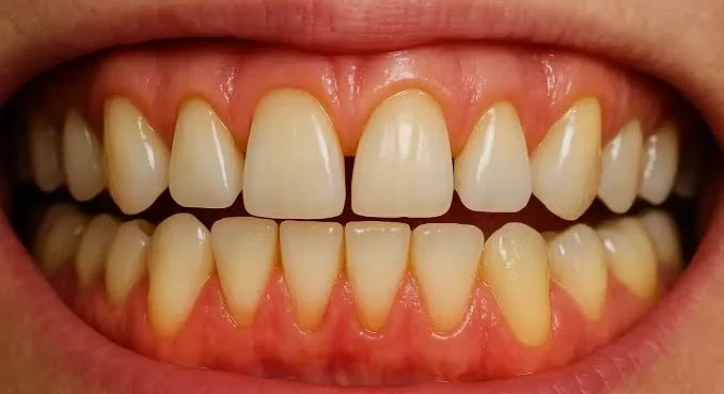

The gradual exposure of delicate root surfaces caused by apical migration of the soft tissue margins represents a highly destructive periodontal change that alters both cosmetic balance and long-term oral stability. When evaluating tooth root exposure, discovering exactly what causes receding gums represents the first structural step toward halting attachment loss. Unlike typical surface enamel structures, exposed root cementum lacks high mineral density, leaving teeth highly vulnerable to rapid decay, cervical notches, and intense temperature sensitivity if the protective soft tissue shield breaks down.
For patients noticing that their teeth look unnaturally long or experiencing a sharp sting when drinking cold water, seeking a permanent receding gums treatment is vital to preserve the tooth foundations. Once the delicate attachment fibers tear away from the root surfaces, the soft tissues cannot automatically crawl back up into their original position on their own. This comprehensive clinical guide explores the pathological receding gums stages, evaluates if can receding gums be reversed, breaks down modern surgical protocols explaining how to fix receding gums, and tracks the protective values behind the best toothpaste for receding gums formulations.
Table Of Contents
- What Causes Receding Gums and How Do the Destructive Stages Advance?
- Can Receding Gums Grow Back or Be Reversed Without Surgery?
- How to Fix Receding Gums Safely Using Micro-Periodontal Tunnel Grafting?
- Before and After Receding Gums Treatment Outcomes
- What Is the Global Receding Gums Treatment Cost?
- Frequently Asked Questions
- What is the best toothpaste for receding gums available today?
- Can minor receding gums be managed without undergoing surgery?
- What is the main cause behind the receding gums stages developing?
- Why do exposed tooth roots decay much faster than crown enamel?
- How long does the healing process take after an advanced tissue graft?
What Causes Receding Gums and How Do the Destructive Stages Advance?
To halt the progressive erosion of the soft-tissue boundaries, clinicians must accurately trace the underlying physical and biological forces driving the damage. When evaluating what causes receding gums, dentists identify a combination of mechanical wear and chronic internal inflammation.
The clinical progression follows a highly specific pathological timeline:
- Minor Receding Gums (Early Stage): The tissue loss is localized and restricted to the superficial tissue borders, measuring less than 1 to 2 millimeters. These minor receding gums defects are primarily caused by aggressive toothbrushing with hard-bristled brushes or early plaque irritation.
- Moderate Receding Gums: The tissue retreat extends past the attached gum line, reaching between 3 and 4 millimeters. The underlying alveolar bone begins to shrink, exposing the sensitive yellowish dentin layers of the root to food stains and temperature changes.
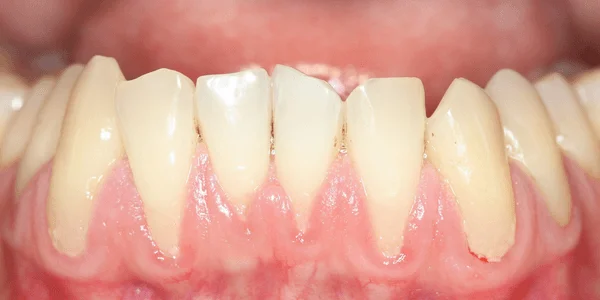
- Severe Receding Gums: Tissue degradation exceeds 5 millimeters, exposing over half of the root surface. At these advanced receding gums stages, extensive bone loss leads to painful tooth mobility, root decay, and eventual tooth loss if left unmanaged.
Can Receding Gums Grow Back or Be Reversed Without Surgery?
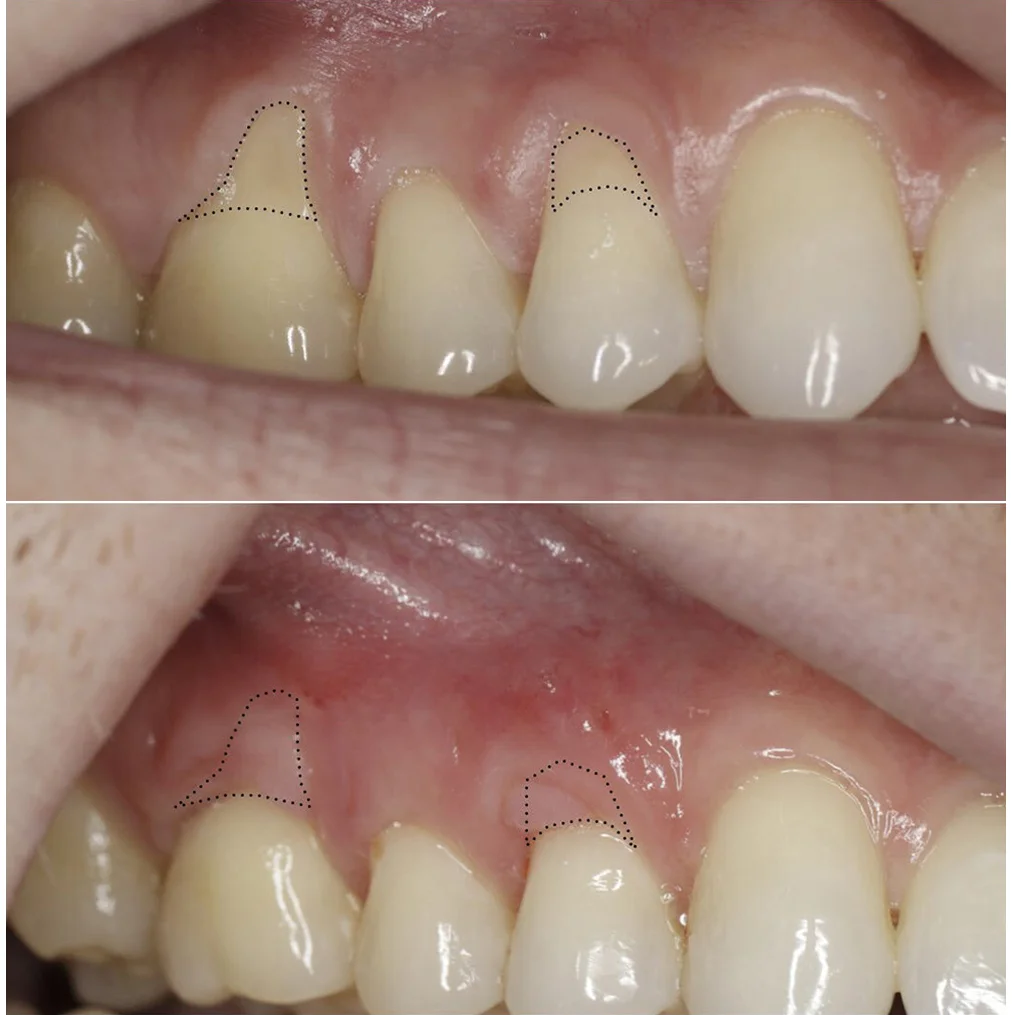
A very frequent question arises among international patients searching for non-invasive solutions online: "Can receding gums grow back?" From a strict biological standpoint, lost gum tissue cannot grow back spontaneously because it lacks an independent blood-supply framework to rebuild over bare root surfaces.
When patients ask can receding gums be reversed, the clinical answer depends on the stage of the damage:
- [ INFLAMMATORY GINGIVITIS ] ──── Soft tissues swollen due to plaque; 100% reversible with deep cleaning
- [ STRUCTURAL TISSUE RECESSION ] ── Marginal fibers torn, roots exposed; CANNOT be reversed without surgery
While early gingivitis swelling can be completely reversed by removing tartar, true structural recession involves permanent fiber destruction. No over-the-counter oil, gel, or commercial product can rebuild missing tissue. The focus of non-surgical care is learning how to stop receding gums from getting any worse, using structural adjustments like switching to the best toothpaste for receding gums containing potassium nitrate to block root sensitivity and utilizing ultra-soft electric brush sensors to stop mechanical wear.
How to Fix Receding Gums Safely Using Micro-Periodontal Tunnel Grafting?
When evaluating how to fix receding gums permanently, modern periodontics utilizes micro-invasive surgical restorations rather than thick, unnatural composite fillings. The gold standard for restoring missing tissue is a procedure called a Connective Tissue Graft (CTG) using the tunnel technique.
- Micro-Tunnel Preparation: The specialist uses micro-instruments to create a tiny pouch beneath the remaining gums around the exposed tooth roots, completely avoiding large, painful outer surface cuts.
- Connective Tissue Placement: A small, thin piece of healthy tissue is harvested from the patient's palate or a sterile donor matrix and slipped inside the prepared tunnel space, pulling it flat over the exposed roots.
- Surgical Tissue Stabilization: The graft is secured in place using micro-thin sutures. As the area heals, new blood vessels grow into the graft, locking the new, elevated soft-tissue shield over the roots to restore a flawless smile line.
Before and After Receding Gums Treatment Outcomes
Analyzing a typical clinical database of before and after receding gums treatment timelines shows how rebuilding the soft-tissue margins improves both tooth protection and smile geometry.
Evaluation Metric Index | Pre-Treatment Exposed Root State | Post-Surgical Rebuilt Architecture |
Root Coverage Percentage | 0% coverage; yellow dentin fully exposed to mouth acids | 85% to 100% stable root coverage over bare areas |
Cervical Root Sensitivity | Severe, sharp pain from cold, hot, or sweet triggers | Zero sensitivity; root nerve pathways sealed safely |
Soft Tissue Thickness Index | Thin, fragile tissue vulnerable to fast mechanical tearing | Thick, keratinized tissue band resistant to future wear |
Esthetic Crown Length | Teeth look artificially long, uneven, and aged | Proportional, youthful crown lengths matching lips |
What Is the Global Receding Gums Treatment Cost?
The financial investment required to complete advanced micro-periodontal tissue grafting depends heavily on the surgical techniques used and the location of the center. When reviewing the average receding gums treatment cost structures, traveling for care at elite centers like DentPrime in Turkey offers major financial benefits:
- United Kingdom & Western Europe: Premium tunnel grafting combined with donor tissue matrices easily costs between £600 and £1,200 per single tooth unit, making multi-tooth treatment financially difficult.
- DentPrime Turkey Packages: By utilizing our in-house premium micro-surgical networks and full-time parodontology specialists, we offer the exact same top-tier connective tissue grafting at a fraction of the cost, usually ranging from £150 to £250 per tooth unit.
Frequently Asked Questions
What is the best toothpaste for receding gums available today?
The best choice is a highly specialized, low-abrasion toothpaste containing potassium nitrate or stannous fluoride. These formulas form a protective shield over open microscopic dentin tubules, blocking nerve channels to eliminate root sensitivity while cleaning teeth safely without scratching delicate root surfaces.
Can minor receding gums be managed without undergoing surgery?
Yes, early instances of minor receding gums can be stabilized without surgery by removing the primary cause of the damage. If the issue is driven by aggressive brushing, switching to an ultra-soft electric brush sensor and fixing your technique will stop the tissue from shrinking any further.
What is the main cause behind the receding gums stages developing?
The main causes are aggressive mechanical brushing, chronic subgingival tartar accumulation from poor hygiene, untreated grinding or clenching habits that place heavy lateral forces on teeth, and natural genetic traits like having naturally thin gum tissue.
Why do exposed tooth roots decay much faster than crown enamel?
Exposed roots decay faster because they are covered by cementum, a soft bone-like layer that dissolves at a much lower acid level than hard enamel. Once cementum is exposed to mouth acids and food debris, deep cavities can form inside the root within a matter of months.
How long does the healing process take after an advanced tissue graft?
The initial surface healing takes between seven and fourteen days, during which you must stick strictly to a soft-food diet. Complete biological maturation, where the new tissue blends seamlessly with your natural gums, takes three to six months, providing a stable, lifetime shield over your roots.
About the Author