






The 4 8 10 rule for veneers is one of the most recognized aesthetic guidelines in modern dentistry. Patients who consider veneers often hear about this principle, yet few fully understand how it influences the final smile design. In cosmetic dentistry, proportions and harmony matter as much as the material used. This rule explains how teeth width ratios create a natural and symmetrical appearance when seen from the front.
Table Of Contents
- Understanding the 4 8 10 Rule
- Why the 4 8 10 Rule Matters in Veneers
- The Science Behind Smile Proportions
- How Dentists Apply the Rule
- Advantages of Following the 4 8 10 Rule
- Veneers Without the 4 8 10 Rule
- Cost Implications of Veneer Design
- Alternatives and Related Aesthetic Principles
- Who Is a Good Candidate for Veneers
- Veneers in Turkey and the 4 8 10 Rule
- Final Thoughts
Understanding the 4 8 10 Rule
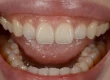
The 4 8 10 rule is based on the proportional visibility of the upper front teeth. When smiling, the central incisors, lateral incisors, and canines should ideally show in a balanced ratio. The numbers 4, 8, and 10 represent the relative widths of these teeth, ensuring the smile looks symmetrical, proportional, and pleasing to the eye.
Central incisors (two front teeth) should measure around 10 units
Lateral incisors (next to the front teeth) should be around 8 units
Canines should appear around 4 units
This ratio creates a flow that mimics natural dentition, avoiding an artificial or block-like smile.
Why the 4 8 10 Rule Matters in Veneers
Many patients worry that veneers will look fake or too perfect. The 4 8 10 rule prevents this by guiding dentists to design teeth shapes and sizes that follow natural patterns. Without such proportion, veneers may appear:
Too large, overwhelming the smile
Too small, leaving gaps and asymmetry
Uniform, leading to the stereotype of fake teeth
By following this rule, dentists achieve a harmonious smile where every tooth complements the other.

The Science Behind Smile Proportions
Dentists use facial symmetry, golden ratio concepts, and tooth proportion rules to create natural results. The 4 8 10 rule aligns with broader esthetic dentistry principles, ensuring that veneers enhance not just teeth but the entire facial balance.
For example:
A longer face may need slightly wider teeth
A round face may benefit from elongated central incisors
Gender, age, and personality can also influence the adjustments made within this ratio
How Dentists Apply the Rule
The 4 8 10 rule is not a strict mathematical formula but a guideline. Dentists adapt it during veneer preparation and placement:
Digital smile design is often used to preview results
Mock-ups or temporary veneers are created to test proportions
Adjustments are made before the final veneers are bonded
This ensures patients approve the look before committing to permanent restorations.
Advantages of Following the 4 8 10 Rule
Applying the 4 8 10 principle offers several benefits:
Creates a natural-looking smile
Prevents an artificial or bulky appearance
Provides a balanced facial aesthetic
Helps achieve long-lasting satisfaction with veneers
Enhances confidence by ensuring harmony between lips, gums, and teeth
Veneers Without the 4 8 10 Rule
When dentists ignore proportional guidelines, results may appear:
Unbalanced where teeth do not align visually
Artificial due to identical size across teeth
Disproportionate where front teeth dominate the smile
Such outcomes often require corrections or even full veneer replacement.
Cost Implications of Veneer Design
Patients often ask whether applying the 4 8 10 rule increases the cost of veneers. In reality, the price depends more on:
The number of veneers needed
Material chosen ( porcelain vs composite)
Dentist’s expertise
Geographic location of the clinic
In countries like the USA or UK, a single veneer can cost between $900 and $2,500, while in Turkey, high-quality veneers often range from $250 to $500 per tooth. Clinics in Turkey apply the same esthetic rules but at more affordable prices, making it a leading destination for smile design.

Alternatives and Related Aesthetic Principles
While the 4 8 10 rule is widely used, other concepts also guide smile design:
Golden proportion rule: Based on a 1.6 ratio between consecutive teeth
Recurring esthetic dental proportion: Focuses on relative size progression
Symmetry and midline alignment: Essential for balance
Dentists may combine these methods to personalize veneer results for each patient.
Who Is a Good Candidate for Veneers
The 4 8 10 principle can be applied to most patients considering veneers, especially those who want:
Whiter, straighter teeth
Correction of minor misalignments
Balanced smile proportions
Long-term aesthetic results
However, patients with severe bite issues or extensive decay may require other treatments before veneers.
Veneers in Turkey and the 4 8 10 Rule
Turkey has become one of the most popular destinations for patients seeking cosmetic dentistry. Clinics combine internationally trained dentists, advanced technology, and esthetic guidelines like the 4 8 10 rule to create smiles that rival Hollywood results. Patients not only save money but also benefit from personalized care that emphasizes natural aesthetics over artificial appearances.
Final Thoughts
The 4 8 10 rule for veneers is more than a number sequence. It is a proven aesthetic guideline that ensures smiles look natural, harmonious, and proportional. By following this principle, dentists create results that patients love for years. Those considering veneers should seek a clinic that applies scientific smile design methods rather than simply placing veneers for uniformity. For many, Turkey offers a perfect balance of expertise, technology, and affordability, making it an excellent option to achieve a natural, confident smile.
About the Author