




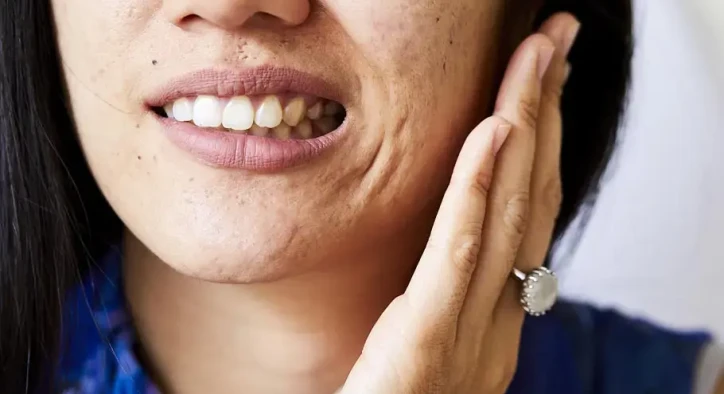

Waking up with persistent facial tightness, dull temple throbbing, or unexplainable tooth tenderness is a widespread clinical reality. In modern neuromuscular dentistry, jaw clenching represents a chronic involuntary parafunctional activity of the masticatory system. Unlike functional jaw movements such as chewing and speaking, clenching involves sustained, high-intensity static occlusal forces that overload dental enamel, strain the temporomandibular joints, and provoke chronic muscular fatigue.
Many individuals experiencing chronic morning soreness search for clear jaw clenching symptoms to distinguish normal stress fatigue from progressive gnathological disorders. Patients routinely investigate how to stop jaw clenching during daily tasks and seek remedies for destructive jaw clenching at night during sleep cycles. Whether a patient struggles with a persistent jaw clenching headache, evaluates the protective role of a mouth guard for jaw clenching, inquires about botox for jaw clenching, reviews facial changes before and after jaw clenching interventions, or explores targeted masseter botox for jaw clenching within a definitive jaw clenching treatment plan, this clinical guide delivers evidence-based answers.
Table Of Contents
- Biomechanics: What Drives Jaw Clenching and How Does It Affect the Body?
- Symptom Profile: Recognizing Key Jaw Clenching Symptoms
- Awake vs. Sleep Dynamics: Managing Jaw Clenching at Night
- Protective Appliance Therapy: The Role of a Mouth Guard for Jaw Clenching
- Neuromodulation: Botox and Masseter Botox for Jaw Clenching
- Clinical Treatment Protocol: How to Stop Jaw Clenching Systematically
- Comprehensive Comparison: Treatment Modalities for Clenching
- Frequently Asked Questions
- How do I know if I am clenching my jaw while sleeping?
- Is a custom mouth guard for jaw clenching better than a drugstore guard?
- How does masseter botox for jaw clenching work and is it safe?
- Can a jaw clenching headache mimic a chronic migraine?
- What changes occur before and after jaw clenching treatment with botox?
Biomechanics: What Drives Jaw Clenching and How Does It Affect the Body?
To understand the pathology, one must examine the neurological and muscular circuits that govern mastication. The primary closing muscles of the jaw are the masseter, temporalis, and medial pterygoid muscles, all innervated by the motor branch of the trigeminal nerve.
- [ CENTRAL NERVOUS SYSTEM AROUSAL ]: Micro-arousals during sleep or daytime sympathetic stress
- [ HYDRAULIC MECHANICAL OVERLOAD ]: Forces exceeding 250 pounds damage enamel, discs, and bone
During physiological chewing, bite forces are applied rhythmically and intermittently for less than twenty minutes per day, with peak pressures rarely exceeding seventy pounds per square inch. During an episode of clenching, particularly during non-rapid eye movement sleep stages, isometric contractions generate continuous static loads exceeding two hundred and fifty pounds per square inch for hours. Because there is no food bolus to cushion the impact, these massive forces transmit directly through the tooth crowns into the periodontal ligament, compress the fibrocartilage disc of the temporomandibular joint, and trigger muscle ischemia.
Symptom Profile: Recognizing Key Jaw Clenching Symptoms
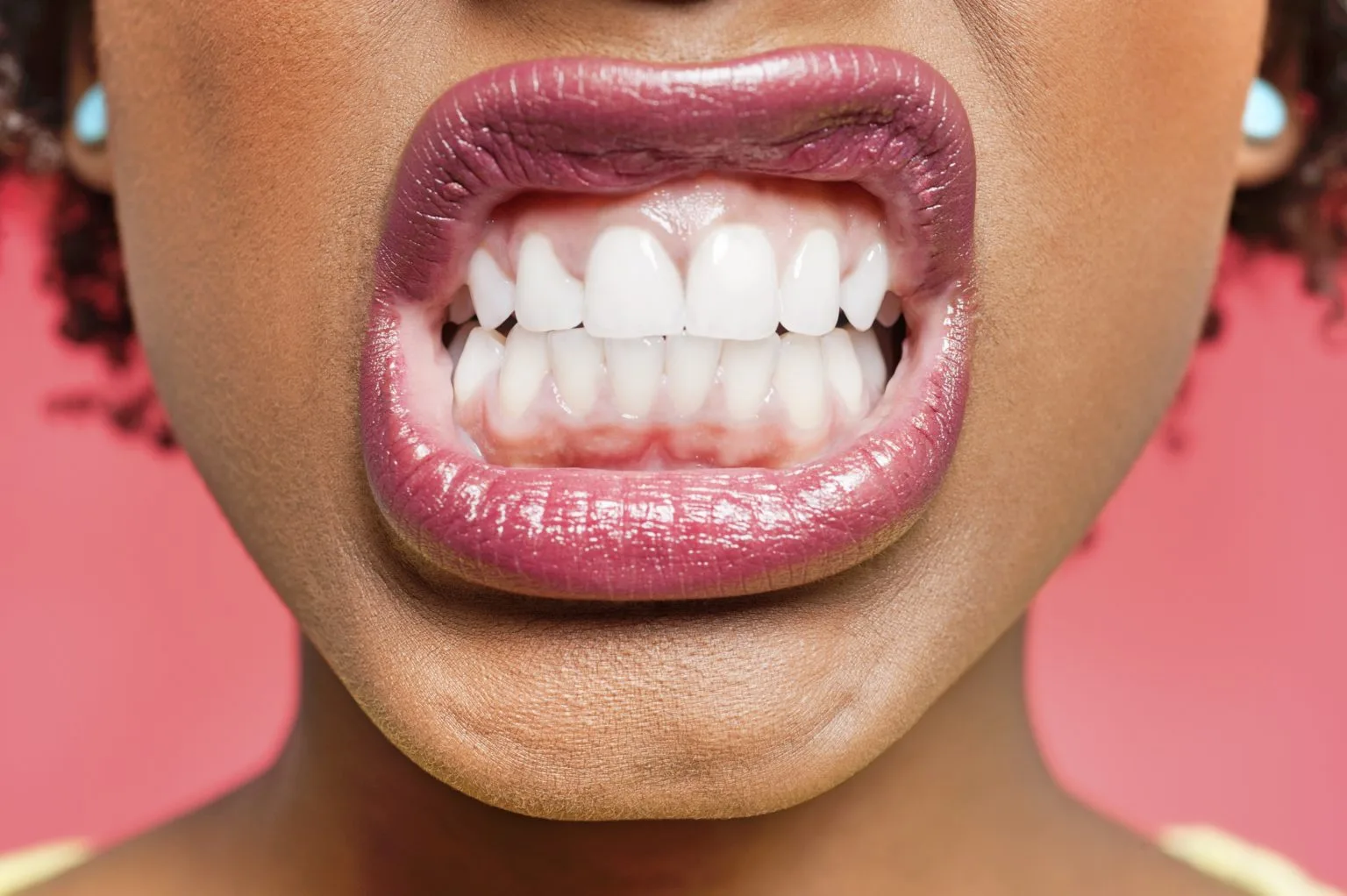
Identifying jaw clenching symptoms early prevents long-term anatomical damage to natural teeth and restorations. Because clenching frequently occurs subconsciously, patients often suffer from secondary symptoms before noticing the habit itself.
- Morning Masticatory Soreness: Waking with stiff, tired jaw muscles that feel overworked, accompanied by localized difficulty opening the mouth wide during breakfast.
- Tension-Type Temple Pain: A frequent jaw clenching headache characterized by a tight band of dull, aching pressure radiating across the temples, forehead, and base of the skull, caused by sustained temporalis muscle spasms.
- Dental Attrition and Abfraction: Excessive static force shears away enamel along the incisal edges and micro-fractures the crystalline structure at the gumline, creating wedge-shaped notches called abfraction lesions.
- Ear Fullness and Tinnitus: Because the lateral pterygoid muscle lies adjacent to the Eustachian tube and tympanic membranes, hyperactive jaw muscles provoke secondary ear ringing, stuffiness, and pseudo-ear infections.
- Masseter Hypertrophy: Persistent isometric exercise causes the masseter muscles to enlarge, resulting in a widened, square jawline over time.
Awake vs. Sleep Dynamics: Managing Jaw Clenching at Night
Clinical management requires distinguishing between awake clenching and jaw clenching at night, as their underlying biological drivers differ significantly.
Awake clenching is primarily a semi-conscious habit linked to sustained concentration, emotional frustration, or daytime mental stress. Patients frequently clench while typing on computers, driving in traffic, or lifting weights. Conversely, sleep clenching is classified by sleep medicine as a rhythmic masticatory muscle activity linked to central nervous system micro-arousals. These micro-arousals frequently coincide with airway resistance, sleep apnea episodes, gastroesophageal reflux, or emotional stress responses. Because the protective conscious reflexes are suppressed during deep sleep, nocturnal clenching causes far more extensive dental fracture and joint trauma than daytime clenching.
Protective Appliance Therapy: The Role of a Mouth Guard for Jaw Clenching
The primary clinical defense against nocturnal occlusal trauma is prescribing a custom-fabricated mouth guard for jaw clenching. Understanding the difference between medical appliances and commercial over-the-counter guards is vital for patient safety.
[ DIGITAL JAW SCANNING & BITE REGISTRATION ]: 3D mapping of centric relation and occlusal planes
[ BIOMECHANICAL JOINT UNLOADING ]: Even contact stops muscle spasm and guards enamel
- Hard Acrylic Stabilization Splints (Michigan Splint): The clinical gold standard. Custom milled from medical-grade hard acrylic, these rigid splints are worn over the upper or lower dental arch. They provide mutually protected occlusion with canine guidance, which immediately shuts down hyperactive masseter contraction reflexes and decompresses the temporomandibular joints.
- Dual-Laminate Appliances: Featuring a soft inner lining against the teeth for comfort and a hard outer shell to withstand grinding forces, these guards offer balanced protection for moderate clenchers.
- Dangers of Soft Boil-and-Bite Guards: Store-bought rubbery mouth guards must be avoided for chronic clenching. Because soft rubber acts like a chew toy, it stimulates the periodontal mechanoreceptors, encouraging the patient to chew and clench harder overnight, which worsens muscle soreness and permanently alters the dental bite.
Neuromodulation: Botox and Masseter Botox for Jaw Clenching
For patients suffering from chronic muscular spasm unresponsive to splint therapy alone, using botox for jaw clenching has emerged as a scientifically validated therapeutic modality.
Administering masseter botox for jaw clenching involves injecting precise units of botulinum toxin type A directly into the thick belly of the masseter and, when necessary, the anterior temporalis muscle. The neurotoxin temporarily blocks the release of acetylcholine at the neuromuscular junction, reducing the maximum involuntary contractile force of the muscle by roughly thirty to forty percent. The patient retains normal voluntary chewing and speaking ability, but involuntary, high-intensity clenching is physically prevented.
Comparing visual records before and after jaw clenching botox therapy demonstrates two distinct benefits. Functionally, tension headaches, tooth sensitivity, and facial fatigue subside within seven to fourteen days. Aesthetically, as the chronically overworked masseter muscles relax, they undergo gradual atrophy over two to three months, softening an overly squared facial shape into an oval contour. The clinical effect persists for four to six months before requiring maintenance.
Clinical Treatment Protocol: How to Stop Jaw Clenching Systematically
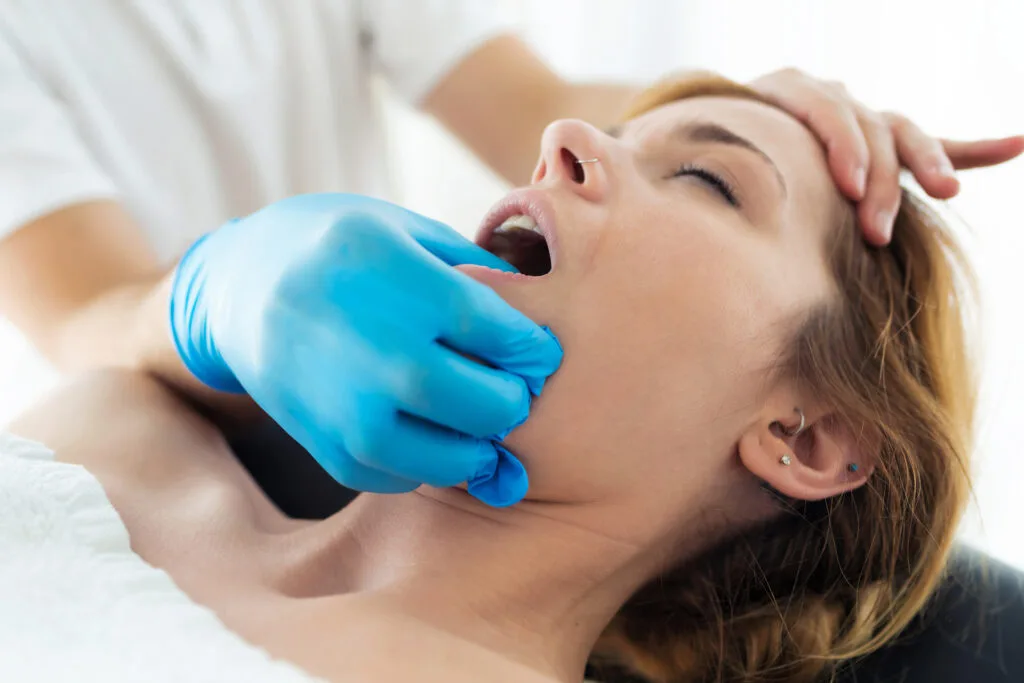
Learning how to stop jaw clenching permanently requires an integrated jaw clenching treatment approach addressing psychological triggers, neuromuscular imbalances, and dental mechanics.
- Daytime Biofeedback Awareness: Practice the lips together, teeth apart posture during waking hours. Place the tip of your tongue gently against the roof of your mouth behind your front teeth and ensure your upper and lower teeth never touch unless chewing food.
- Wear a Custom Night Guard: Consistently use your custom hard acrylic occlusal splint every single night to shield dental restorations, stabilize joint discs, and suppress destructive nocturnal muscle reflexes.
- Targeted Neuromuscular Injections: If muscle pain persists or the jawline has developed severe hypertrophy, consult an injector for masseter botox to reset muscle tone.
- Physiotherapy and Warm Moist Compresses: Apply warm, moist heat to the cheeks for ten minutes before bed to relax muscle fibers. Gentle jaw stretching exercises help lengthen contracted muscles.
- Screen for Sleep Disordered Breathing: If sleep clenching is accompanied by snoring, daytime exhaustion, or gasping, undergo a sleep study to rule out obstructive sleep apnea, as clenching often represents an unconscious bodily effort to reopen a collapsed airway.
Comprehensive Comparison: Treatment Modalities for Clenching
Evaluating the functional differences between therapy options allows clinicians and patients to formulate a targeted management strategy.
Clinical Parameter | Custom Hard Night Guard | Masseter Botox Injections | Soft Over-the-Counter Guard |
Primary Mechanism | Occlusal separation & joint unloading | Chemical muscle relaxation | Mechanical rubber barrier |
Muscle Force Reduction | Neurological reflex suppression | 30 to 40 percent direct force reduction | Often increases clenching reflex |
Duration of Relief | Multi-year structural protection | 4 to 6 months per treatment | Weeks to months before chewing through |
Facial Slimming Effect | None (purely mechanical shield) | Significant slimming within 8 weeks | None |
Bite Stability Protection | High; preserves tooth alignment | High; preserves restorations | Poor; risks permanent bite shift |
Ideal Clinical Application | First-line defense for all clenchers | Chronic pain & muscle hypertrophy | Sports protection only; avoid for sleep |
Frequently Asked Questions
How do I know if I am clenching my jaw while sleeping?
You can recognize nocturnal jaw clenching by observing key morning signs. These include waking up with tight, aching cheek muscles, experiencing a dull tension headache across your temples, noticing small chipped edges on your teeth, having indentations along the sides of your tongue, or feeling an unexplained soreness when biting your teeth together in the morning.
Is a custom mouth guard for jaw clenching better than a drugstore guard?
Yes. A custom hard acrylic mouth guard is vastly superior to drugstore options. Commercial soft guards are made of rubbery plastic that stimulates clenching reflexes, encouraging you to chew harder overnight. Custom hard guards are calibrated to your bite, decompressing the jaw joints and relaxing the muscles safely without shifting your teeth.
How does masseter botox for jaw clenching work and is it safe?
Masseter botox is a safe, minimally invasive procedure where small amounts of botulinum toxin are injected into the masseter muscle. It blocks the localized nerve signals that drive involuntary clenching, reducing clenching force by about thirty to forty percent while leaving normal eating, talking, and smiling completely unaffected.
Can a jaw clenching headache mimic a chronic migraine?
Yes. Clenching headaches frequently mimic migraines or chronic tension headaches. When the temporalis muscle, which fans across the side of your skull, stays locked in continuous isometric contraction for hours, it radiates intense, throbbing pressure behind the eyes, temples, and neck, which is often misdiagnosed as a primary neurological headache.
What changes occur before and after jaw clenching treatment with botox?
Before treatment, patients typically exhibit severe facial soreness, tension headaches, and an enlarged, square lower jawline caused by muscle overuse. After treatment, muscle spasms and morning headaches resolve within one to two weeks, and the overworked masseter muscles gradually slim down over two to three months, restoring a softer, more balanced facial profile.
About the Author