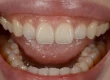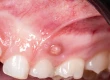







Human smiles are paradoxical they communicate health, youth, and confidence, yet one of the most common cosmetic concerns across cultures is Yellow Teeth. The topic is far from trivial: why some smiles discolor faster, whether “natural” fixes work, and what distinguishes professional interventions from household attempts is a surprisingly layered discussion. Instead of preaching rules or giving instructions, this article looks at the cultural, chemical and clinical context that shapes how people think about Yellow Teeth and what they actually do about them.
Table Of Contents
- Why Do Yellow Teeth Appear In The First Place?
- When People Prefer Home Remedies For Yellow Teeth
- Why Professional Treatment Exists Despite Home Enthusiasm
- The Cultural Mythology Around Fixing Yellow Teeth At Home
- When Home Solutions Collide With Biology
- Why Professional Whitening Doesn’t Mean “One Thing”
- Where This Leaves DentPrime And The Reader

Why Do Yellow Teeth Appear In The First Place?
When people say Yellow Teeth, they often imagine surface stains from coffee, tea or cigarette smoke. That explanation is not wrong but partial. Color shift can also originate beneath the enamel due to dentin shade, aging related thinning of enamel, certain medications from childhood, micro cracks that trap pigments, or even genetic variance in translucency. Two smiles with identical habits can age in color very differently simply because the enamel acts like a lens: thinner enamel “shows” dentin warmth more prominently.
Another under discussed point is optical contrast. A smile does not become “yellow” in the same objective sense for everyone; it can read as yellow simply because of a darker lip tone, less light exposure in photos, or because someone is used to seeing whitened teeth on screen a perceptual inflation caused by media. In other words, the psychology of Yellow Teeth exists as much in the eye of the viewer as in the mouth of the wearer.
When People Prefer Home Remedies For Yellow Teeth
Home attempts to deal with Yellow Teeth are not random folk rituals; they are usually driven by three logics:
- Cost & Control Logic People prefer to “try something harmless first” before investing in a clinic.
- Naturalness Logic Anything edible or plant derived is assumed to be gentle or “chemical free,” whether or not the chemistry behind it is benign.
- Privacy Logic Working on Yellow Teeth in private avoids clinic exposure, judgment or commitment.
Scrubs with baking soda, rinses with acidic fruit, swishing oils, charcoal brushing, whitening toothpaste rotations all arise from a belief that small repetitive actions might gradually compete with clinical outcomes. Whether they actually do is less important than the expectation structure that makes them psychologically attractive: the promise that time, patience and “consistency” will erase what millions of people pay doctors for.
Why Professional Treatment Exists Despite Home Enthusiasm
If home strategies were equivalently effective, clinics specializing in color correction would not exist yet they do. Professional grade bleaching, in office laser activation, custom trays, veneer planning or stain selective polishing address Yellow Teeth with controlled chemistry, reproducible calibration, and predictable timelines. The fact that patients still show up after trying home strategies tells us something crucial: people want results, not rituals.
The Cultural Mythology Around Fixing Yellow Teeth At Home
Before measuring outcomes, it is useful to look at the social narratives that protect home remedies. The idea that “nature knows best” is compelling because it morally flat ters the attempt: if one bleaches teeth with citrus rather than peroxides, the act feels ethically superior not medically superior. That moral placebo often sustains home attempts longer than data would justify.
There is also a pride component: solving Yellow Teeth without paying a professional functions like a competence display not unlike repairing a car engine alone. The improvement feels more “earned” when achieved without external help, whether or not the difference is clinically visible.
Finally, there is the fear of irreversibility: professional interventions are perceived as committing to a path especially when veneers or intensive bleaching are mentioned. By contrast, home rituals feel “undoable,” which psychologically lowers the entry barrier.
When Home Solutions Collide With Biology
A rarely discussed reality is that teeth do not respond to intention. Yellow Teeth related to dentin shade cannot be “scrubbed lighter” because the color source is not on the surface. Likewise, if enamel microcracks absorb pigments, abrasive scrubbing may enlarge those microchannels paradoxically making future stains more stubborn.
Even whitening toothpastes, which are formulated to be safer than pantry mixtures, still work mostly on extrinsic coloration. They polish; they do not rewrite dentin optical physics. This is why someone may brush “aggressively” for months, narrating effort, yet the smile frame on photographs looks unchanged: the substrate never engaged.
At the opposite extreme, acidic or charcoal based hacks can trade one cosmetic problem for another they can roughen enamel or alter gloss, making Yellow Teeth not only persist but appear more matte, which the human eye reads as older. The irony: in the attempt to escape a clinic, the risk of needing one increases.
Why Professional Whitening Doesn’t Mean “One Thing”
There is a misconception that clinic treatment is a single switch that flips Yellow Teeth into white. In reality, dentists work with tiers, durations, and customized thresholds. Some patients are routed to mild, reversible bleaching because the enamel is thin; others are candidates for stronger peroxides activated by light; others are not whitened at all but are redirected to veneers because color is entangled with shape, translucency, or crack pattern.
In professional contexts, the debate is never “bleach or not,” but “which axis is dominant stain, dentin, fracture, contrast, or expectation?” The intervention is downstream of the correct variable, not upstream of hope.
A Comparative Glance What People Expect vs What They Get
A simple expectation vs reality snapshot helps illustrate the asymmetry between household attempts and professional care:
Dimension | Home Attempts For Yellow Teeth | Professional Interventions |
Driver | Habit & hope | Diagnosis & protocol |
Target | Mostly surface | Surface and substrate |
Feedback loop | Slow, ambiguous | Fast, measured |
Risk | Depends on material & frequency | Controlled, bounded |
Conversion to result | Inconsistent | Systematic |
The contrast is not moral; it is structural. Clinics succeed not because they are “cleverer,” but because they start by naming the correct cause before touching the tooth.

The Invisible Variable: Time Horizon
What most people underestimate is the timeline tension embedded in decisions about Yellow Teeth. Home methods assume a long arc: “If I keep doing this, it will eventually show.” Clinical methods assume a finite arc: “If this is the cause, this is the lever.” One bets on persistence, the other on precision.
This time question explains why many people oscillate between the two rather than choosing one. They try home approaches until the patience reservoir runs dry then convert to professional care not because belief changed, but because the calendar did.
Psychological Outcomes Matter More Than Shade Numbers
No shade guide can measure relief. When people say they want Yellow Teeth gone, they are often asking for something upstream of color: not feeling filtered in photos, not re taking selfies, not editing smiles, not comparing themselves to calibrated Hollywood smiles, not being misread as careless.
Professional treatment is therefore not a “vanity purchase” but a clarity purchase: it resolves the ambiguity that makes people narrate their faces in hostile terms. If a predictable correction removes self monitoring, the value is not the shade but the silence.
Where This Leaves DentPrime And The Reader
A clinic like DentPrime does not compete with home rituals in the way phone cameras compete with SLRs. They serve different cognitive economies. Home attempts answer the desire to act without commitment; professional correction answers the desire to exit uncertainty. Both are rational inside their own logic.
The question is not “Which is better for Yellow Teeth?” but “Which matches the kind of discomfort you are trying to neutralize the financial one or the psychological one?” People do not choose between chemistry sources; they choose between versions of themselves.
What We Actually Learned About Yellow Teeth
The public obsession with Yellow Teeth is not just a stain story. It is a collision of optics, aging biology, expectation psychology, media inflation, moral narratives about “naturalness,” and risk aversion toward irreversible steps. Home remedies live on because they protect agency; professional interventions endure because they protect outcomes.
About the Author