





Maintaining optimal oral health requires a dedication to daily hygiene practices like brushing, flossing, and attending regular clinical checkups. However, some of the most destructive dental challenges occur entirely outside our conscious control while we are fast asleep. Millions of people worldwide suffer from nighttime bruxism, an involuntary habit of clenching or grinding the dental arches during the deep stages of sleep. Because this behavior occurs subconsciously, it often goes completely unnoticed until it begins to cause noticeable structural damage, requiring a targeted night guard grind teeth intervention to safeguard the mouth.
At DentPrime, we prioritize comprehensive oral health management, recognizing that a stable smile requires a balance between healthy tooth structure and relaxed jaw mechanics. SUB-conscious teeth grinding places continuous, extreme pressure on your entire dental framework, leading to a progressive cycle of enamel wear and joint strain.
As modern dental technology allows for precise digital jaw mapping and custom material fabrication, implementing a highly accurate teeth grind night guard strategy has become a predictable and effective way to protect your long-term wellness.
Table Of Contents
- What is Sleep Bruxism? Understanding Why We Grind Our Teeth at Night
- Common Signs You Need a Night Guard to Grind Teeth Safely
- How Does a Dental Night Guard Protect Your Smile?
- Custom Dental Night Guards vs. Over-the-Counter Boil-and-Bite Options
- Hard, Soft or Hybrid: Choosing the Right Guard for Severe Bruxism
- How Protecting Your Teeth Preserves Your Facial Profile?
- FAQ: Frequently Asked Questions
What is Sleep Bruxism? Understanding Why We Grind Our Teeth at Night
To address the wear and tear on your dental arches, it helps to explore the true nature of sleep bruxism from a neurological and physical perspective. This condition is classified as a sleep-related movement disorder rather than a simple dental flaw. Unlike daytime clenching, which is often a temporary response to immediate stress, nighttime grinding is an involuntary, rhythmic contraction of the powerful chewing muscles that occurs repeatedly throughout the night.
The exact triggers behind this nocturnal habit vary from person to person. While high stress levels and everyday anxiety can significantly increase the frequency and intensity of grinding episodes, structural factors like a misaligned bite (malocclusion) can also cause the jaw to unconsciously shift and grind as it struggles to find a comfortable resting position. Sleep micro-arousals can also trigger sudden, intense contractions of the masseter muscles, causing the teeth to rub against one another with immense force.
Common Signs You Need a Night Guard to Grind Teeth Safely
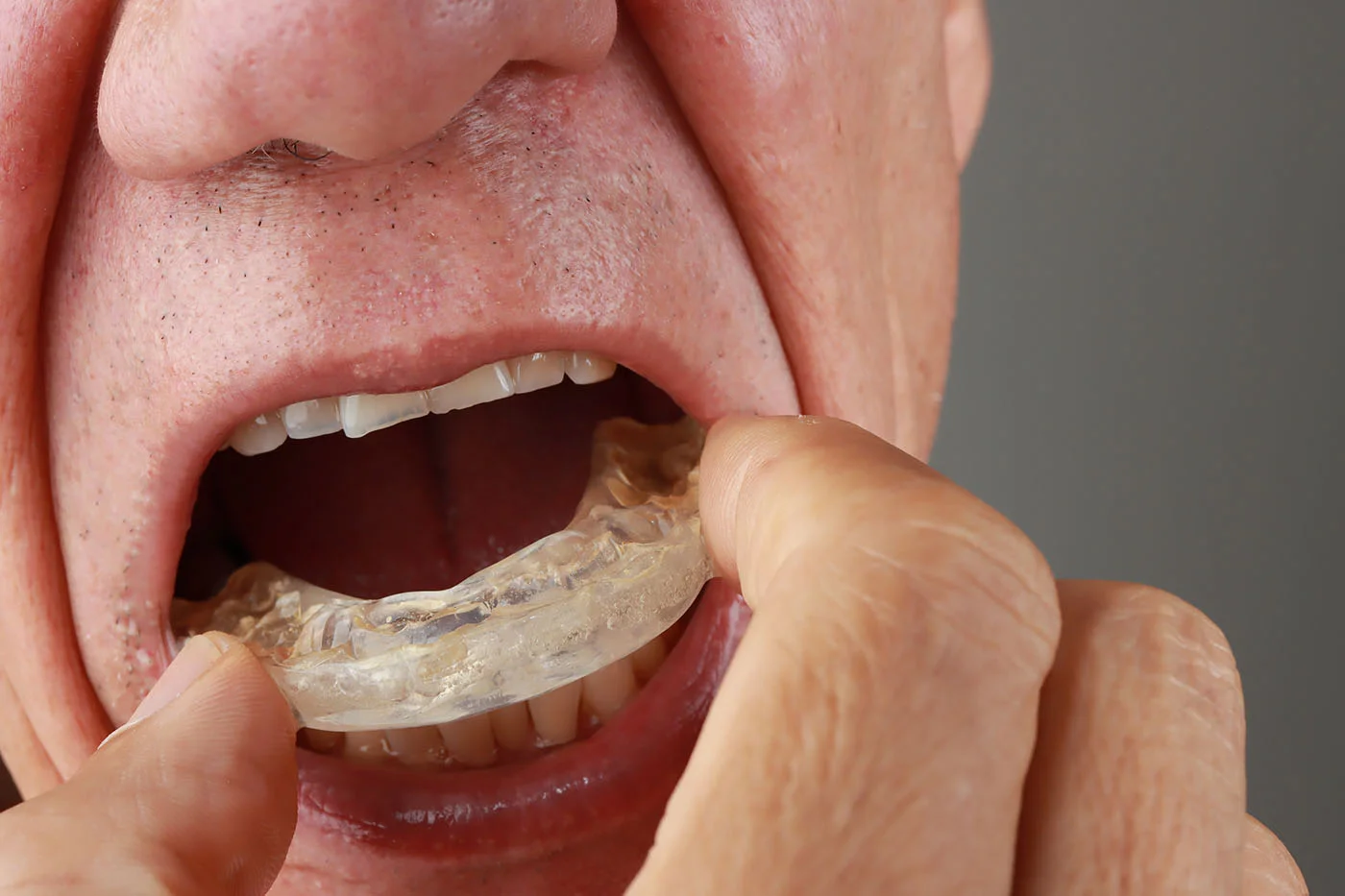
Because grinding occurs when you are completely unconscious, many individuals are completely unaware of their habit until a sleeping partner reports a loud, scraping noise coming from their side of the bed. However, your body leaves clear, physical clues behind every morning. Recognizing these specific teeth grinding symptoms early can help you take action before permanent structural degradation occurs.
- Chronic Morning Headaches: Waking up with a dull, aching pain that radiates across your temples or behind your eyes is a classic indicator of nightly clenching. The continuous muscle exertion places intense stress on the cranial fascia, mimicking the symptoms of a severe tension migraine.
- Flattened Enamel and Chipped Fillings: The continuous friction of tooth-on-tooth contact physically grinds down the natural anatomy of your teeth. Over time, the sharp chewing cusps of your molars become entirely flat, and the edges of your front teeth can look shortened, fractured, or chipped.
- TMJ Stiffness and Facial Pain: Your temporomandibular joints (TMJ), located right in front of your ears, act as the hinges for your jaw. Subjecting these joints to hours of continuous pressure leads to localized inflammation, clicking sounds when eating, and severe facial muscle soreness.
If you are experiencing these early warning signs, introducing a grind teeth night guard into your sleep routine can help buffer the forces and allow the joint tissues to heal safely.
How Does a Dental Night Guard Protect Your Smile?
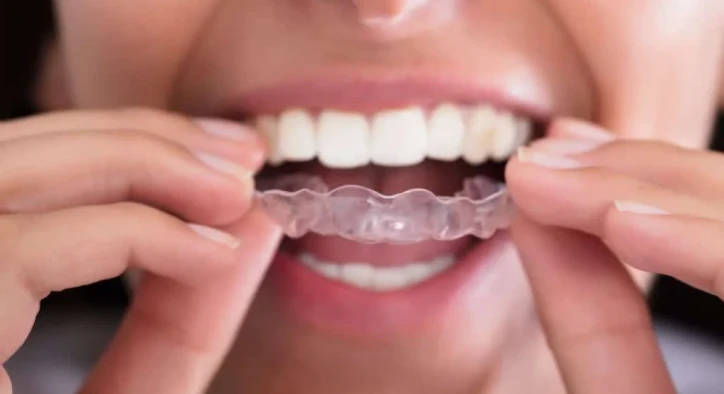
The mechanical objective of a night mouth guard grinding teeth appliance is straightforward yet vital. It acts as a sacrificial shield. When you place a custom-milled layer of specialized acrylic over your teeth, the opposing dental arch bites directly into the guard rather than grinding against your natural enamel.
By absorbing the brunt of the kinetic energy, a night mouth guard for teeth grinding prevents the teeth from locking together and scraping. This protective separation stops the progressive loss of tooth structure and isolates the friction, ensuring that your enamel remains completely intact. Furthermore, because the plastic layer slightly alters the vertical height of your bite, it prevents the jaw muscles from contracting with their absolute maximum force, providing a vital window of rest for your tired facial tissues overnight.
Custom Dental Night Guards vs. Over-the-Counter Boil-and-Bite Options
When looking for immediate relief from jaw discomfort, many patients consider purchasing cheap, generic "boil-and-bite" guards available at local drugstores. While these retail options look like a quick and cost-effective remedy, they can introduce significant long-term risks to your bite alignment.
Generic over-the-counter options are typically fabricated from thick, soft, rubbery plastics. Because they are not tailored to your exact dental architecture, they can feel bulky and loose inside the mouth. This loose fit often causes the brain to perceive the guard as a piece of food, stimulating the jaw’s natural chewing reflex and actually causing you to clench and chew more intensely throughout the night.
Conversely, a custom dental nightguard is designed from a highly precise digital or physical impression of your mouth. It fits tightly and securely over your teeth, distributing the heavy biting forces perfectly evenly across every single tooth. This precision fit prevents individual teeth from absorbing uneven pressure and ensures that your delicate bite alignment is never accidentally shifted or ruined over time.
Hard, Soft or Hybrid: Choosing the Right Guard for Severe Bruxism
Not all oral appliances are built the same way. The ideal material configuration for your mouth night guard grinding teeth protocol depends heavily on the severity of your grinding habits and the underlying health of your jaw joint.
- Soft Night Guards: These are flexible appliances ideal for patients who exhibit mild clenching without heavy, side-to-side grinding. They provide a comfortable cushion but can degrade quickly under intense daily pressure.
- Hard Night Guards: Crafted from dense, medical-grade acrylic, a hard guard is widely considered the best night guard for teeth grinding when dealing with severe, chronic bruxism. The hard, smooth surface allows the opposing teeth to glide across the plastic effortlessly without locking, preventing muscle tension.
- Hybrid Night Guards: These advanced appliances offer the best of both worlds. They feature a soft, flexible interior lining that sits comfortably against the sensitive enamel of your teeth, combined with a rock-hard acrylic exterior shell that stands up to heavy friction.
When evaluating a hard vs. soft night guard for severe bruxism, our specialists typically lean toward hard or hybrid variations to ensure the longest lifespan for the appliance and the safest mechanics for your jaw joint.
How Protecting Your Teeth Preserves Your Facial Profile?
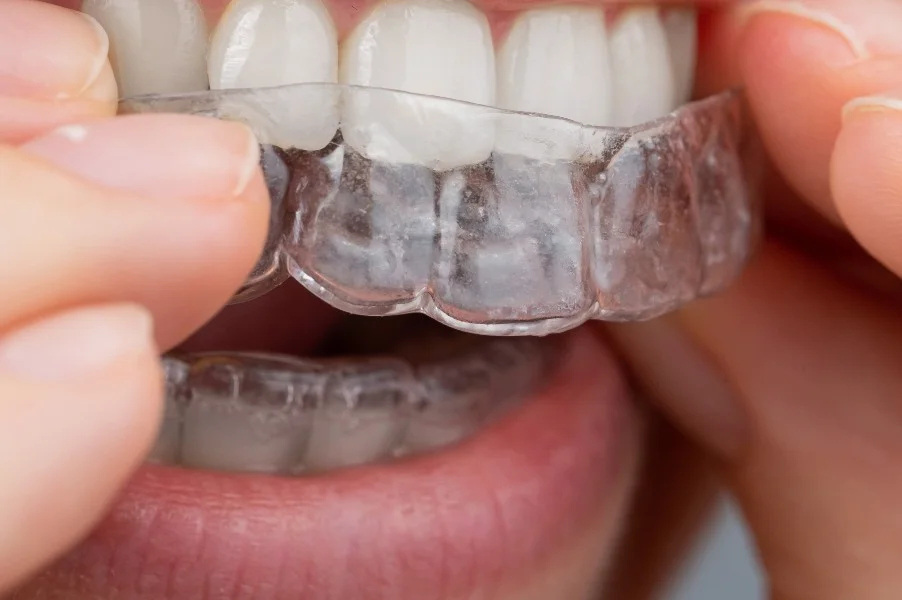
The long-term consequences of ignoring severe teeth grinding can extend far beyond internal dental issues, subtly transforming your physical appearance over several decades. When a patient lacks a protective grind teeth at night mouth guard, the continuous friction shortens the height of the teeth.
This gradual loss of enamel height shortens the lower third of the face—the vertical distance between the base of your nose and the bottom of your chin. This structural collapse can cause the lips to look thinned and compressed, while accentuating the folds around the mouth, leading to an prematurely aged facial appearance.
Furthermore, the continuous workout your jaw muscles endure causes masseter hypertrophy, a condition where the muscles thicken and expand. This expansion can broaden your lower jawline, changing an oval facial profile into a square shape. Using a night guard to cushion your teeth prevents this loss of structural height and supports masseter muscle relaxation, ensuring that your natural facial contours remain balanced and preserved.
Guard Category | Material Density | Primary Indication | Expected Lifespan |
Over-the-Counter | Soft, squishy plastic | Temporary emergency use only | 1 – 3 Months |
Clinical Soft | Flexible soft resin | Mild, quiet clenching profiles | 6 – 12 Months |
Clinical Hard | Solid dense acrylic | Heavy, severe grinding & TMJ strain | 3 – 5 Years |
Clinical Hybrid | Dual-layer soft & hard | Severe grinding with sensitive teeth | 2 – 4 Years |
FAQ: Frequently Asked Questions
Should I wear a night guard if I grind my teeth?
Yes. Wearing a night guard is highly recommended if you grind your teeth. It acts as a critical physical barrier that absorbs overnight biting forces, protecting your enamel from cracking, preventing root exposure, and alleviating tension in your jaw joints.
How to stop grinding teeth night guard?
While a night guard does not cure the neurological trigger behind sleep bruxism, it successfully stops the physical damage caused by the habit. If you want to know how to stop grinding teeth at night without night guard use, you must look into alternative therapies like managing chronic stress, undergoing bite-realignment orthodontics, or receiving masseter relaxation injections to address the overactive muscle loops.
How long does a custom dental night guard last?
A high-quality, laboratory-fabricated hard acrylic or hybrid night guard typically lasts between 2 to 5 years, depending on the severity of your grinding habits. Proper daily cleaning and keeping the appliance inside its ventilated case will extend its lifespan significantly.
Is a hard night guard better than a soft one?
For individuals dealing with moderate to severe grinding, a hard acrylic night guard is significantly better. Soft plastic materials can activate your natural chewing reflex, encouraging your jaw to bite down harder, whereas a hard, smooth surface allows your teeth to glide safely without locking the joint.
About the Author