





The long-term biological success of full-mouth rehabilitation depends heavily on selecting the correct foundational materials. For more than six decades, commercial pure titanium and its medical alloys have served as the uncontested foundation of implant dentistry, owing to their mechanical durability and excellent bone integration profiles.
However, modern aesthetic dentistry has witnessed a significant rise in ceramic engineering, leading to the development of non-metal, tooth-colored alternatives. When deciding on dental restorations, evaluating zirconia dental implants vs titanium requires a thorough look into material composition, structural mechanics, and how each material behaves within living tissue.
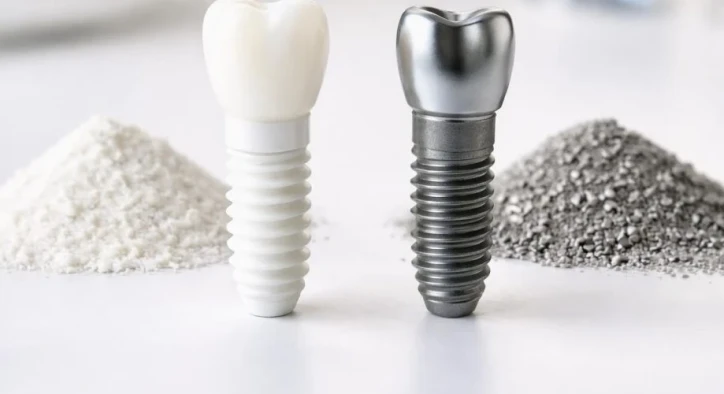
Titanium dental implants are fabricated from biocompatible Grade 4 or Grade 5 metal alloys. Conversely, ceramic implants are constructed from zirconium dioxide a crystal material stabilized with yttria to maximize its fracture toughness.
To find out whether a metal or ceramic foundation is the right choice for your smile, let us look closely at how these advanced materials perform across different clinical scenarios.
Table Of Contents
- Are Titanium or Zirconia Implants Better for Bone Healing?
- Is Zirconium or Titanium Better for Front Tooth Aesthetics?
- What Is the Best Material for Dental Implant Crowns?
- How Do Zirconia Implants Cost Compare Globally?
- Can You Develop an Allergy to Titanium Dental Implants?
- Which Material Demonstrates Higher Resistance to Plaque?
- Frequently Asked Questions
Are Titanium or Zirconia Implants Better for Bone Healing?
When evaluating whether are titanium or zirconia implants better for clinical healing, scientists measure a key property known as osseointegration. This term describes the natural process where living bone cells grow directly onto the microscopic surface of an implant, anchoring it permanently into your jawbone.
- Titanium Osseointegration Performance: Due to decades of clinical refinement, titanium fixtures feature specialized acid-etched surfaces that promote exceptional bone growth. They achieve a highly predictable permanent bond with the surrounding bone, maintaining a global success rate that exceeds 98% over long-term tracking.
- Zirconia Osseointegration Performance: Ceramic alternatives demonstrate excellent bone integration that closely matches the performance of traditional metal options. However, because zirconia is structurally rigid and lacks the natural elasticity of metal, it requires highly precise surgical placement and a slightly more conservative loading schedule during the early months of healing to ensure a secure, long-lasting bond.
Is Zirconium or Titanium Better for Front Tooth Aesthetics?
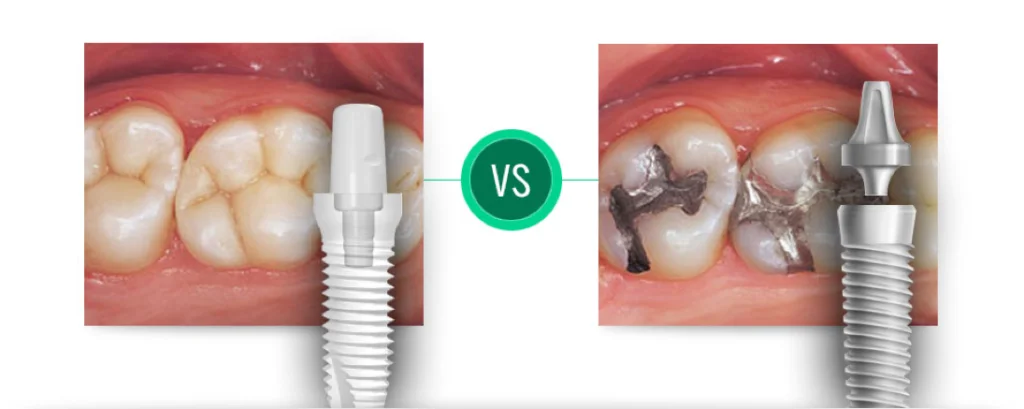
When choosing front-tooth restorations, patients frequently ask: "Is zirconium or titanium better for achieving a completely natural look?" In thin gum areas or the visible smile zone, material color becomes a highly critical design factor.
Traditional titanium options feature a dark silver-gray color. If a patient has naturally thin or delicate gum tissue, this metallic shade can occasionally cast a faint gray shadow through the gums at the base of the tooth, or become visible if minor gum recession occurs over time.
Zirconia options completely eliminate this cosmetic concern. Because the material is naturally bright white and semi-translucent, it blends seamlessly with your natural tooth roots. Even if slight gum recession happens in the future, the white ceramic remains completely hidden, making it an exceptional choice for restoring front teeth beautifully.
What Is the Best Material for Dental Implant Crowns?
To achieve a long-lasting, functional restoration, you must look at both the underlying implant post and the visible top portion of the tooth. Finding the best material for dental implant crowns involves matching strength with natural appearance.
For the final crown restoration, monolithic zirconia and layered porcelain fused to zirconia are widely recognized as the gold standards. Zirconia crowns offer incredible structural strength, handling daily chewing forces with ease while resisting chipping.
Furthermore, their natural translucency allows them to reflect light exactly like real enamel, providing a beautiful, long-lasting result that pairs perfectly with either a metal or ceramic implant foundation.
How Do Zirconia Implants Cost Compare Globally?
When planning your treatment, the structural differences between these materials also influence your financial investment. The overall zirconia implants cost is traditionally higher than that of standard metal setups due to the complex manufacturing processes required to mill precision ceramics without creating micro-fractures.
Clinical Component (Per Tooth) | Standard Titanium Implant Setup | Premium Zirconia Ceramic Setup |
Material Base Classification | Grade 4/5 Biocompatible Metal Alloy | Yttria-Stabilized Zirconia Ceramic |
Manufacturing Milling Complexity | Standard Precision Turning | High-Temperature Ceramic Sintering |
Average Cost in Western Europe | £1,200 – £2,500 | £2,000 – £3,800 |
DentPrime Turkey Package Price | Accessible Packaged Rates | Optimized Cost Structures |
By choosing to receive treatment at DentPrime in Turkey, international patients can access premium, certified international implant brands at highly affordable prices. Because our clinic benefits from lower operating costs and features an advanced, in-house CAD/CAM laboratory, we can deliver world-class dental restorations at a fraction of the cost found in Western Europe or the UK.
Can You Develop an Allergy to Titanium Dental Implants?
A primary reason patients choose ceramic alternatives is the desire for a completely metal-free solution. True clinical allergies to titanium dental implants are exceptionally rare, affecting less than 0.6% of the population.
However, individuals with known hypersensitivities to metals, chronic autoimmune challenges, or severe skin sensitivities may experience mild, localized tissue irritation from trace elements found in metal alloys.
For these patients, ceramic options provide a safe solution. Because the material is 100% hypoallergenic and non-metal, it prevents any risk of metallic sensitivity, ensuring your gums and surrounding tissues remain completely healthy and comfortable.
Which Material Demonstrates Higher Resistance to Plaque?
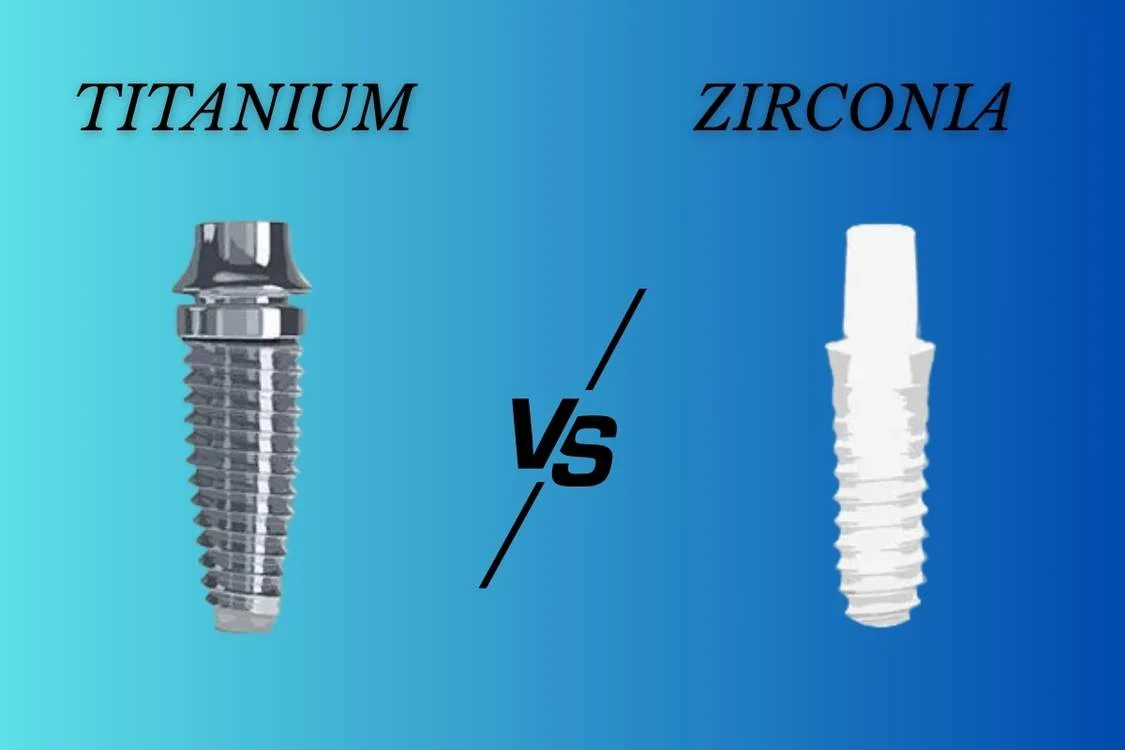
A significant biological advantage of ceramic options is how they interact with oral bacteria. Zirconia features an incredibly smooth, non-porous surface texture at the microscopic level.
This sleek surface makes it very difficult for soft plaque and harmful bacteria to attach to the implant base. By lowering the rate of plaque accumulation around the gum line, ceramic materials significantly reduce the risk of developing peri-implantitis the inflammatory issue that can weaken bone support and lead to implant failure if left uncleaned.
Frequently Asked Questions
Are titanium or zirconia implants better for full-arch bridges?
For full-mouth reconstructions like All-on-4 or All-on-6 setups, titanium implants remain the premier choice. Full-arch bridges require a slight amount of structural flexibility to handle immense, multi-directional chewing forces safely. Titanium posts provide this natural flex, whereas ceramic posts can be slightly more brittle when subjected to heavy, long-term biting forces across a wide bridge.
Why is the zirconia implants cost higher than titanium?
Milling solid zirconium dioxide requires specialized, high-precision laboratory equipment and complex high-temperature firing processes to ensure the ceramic achieves its maximum density and strength. These intensive manufacturing demands, combined with specialized surgical instrumentation, naturally result in a higher cost for the final product.
Do zirconia dental implants break easily?
No, modern yttria-stabilized zirconia is incredibly durable and built to last. It features high fracture toughness, making it highly resistant to daily wear and tear. While it does not possess the natural elasticity of titanium metal, a ceramic implant placed by an experienced surgeon will handle normal chewing forces beautifully for decades.
How do I clean and maintain ceramic dental implants?
Maintaining ceramic restorations is exactly the same as caring for natural teeth or titanium setups. Brush twice a day with an ultra-soft toothbrush, use a water flosser daily to clean beneath your bridge or crown margins, and visit your dental hygienist every six months for professional maintenance to keep your smile perfectly healthy.
About the Author