



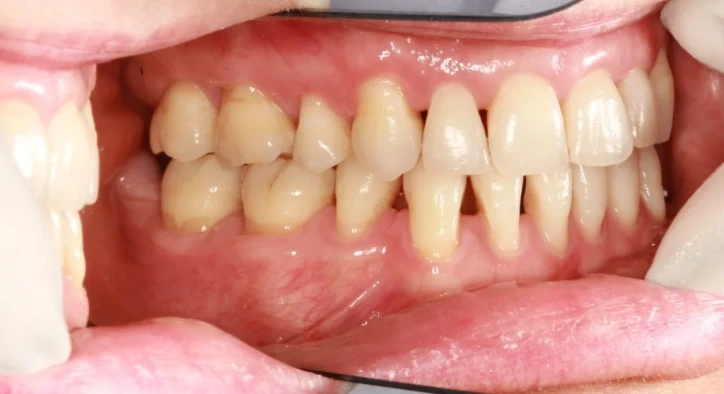

The appearance of dark, triangular gaps beneath the contact points of adjacent teeth represents a challenging aesthetic and functional issue in modern restorative dentistry. Clinically referred to as open gingival embrasures, understanding what is black triangle teeth requires examining the delicate anatomic relationship between tooth geometry, interproximal bone height, and the soft-tissue interdental papilla. When the soft tissue gum tissue recedes or fails to completely fill the space beneath the contact area, a dark void appears, impacting smile harmony and trapping food debris.
For patients noticing dark voids after orthodontic alignment or experiencing soft tissue recession, discovering how to fix black triangle teeth is essential for maintaining both confidence and oral hygiene. While searching for a black triangle teeth home remedy online is common, true tissue or structural restoration requires professional intervention. This clinical guide explores the primary biological triggers, evaluates the link between black triangle teeth invisalign procedures and post-orthodontic spacing, details black triangle teeth bonding techniques, showcases expectations for black triangle teeth before and after outcomes, and outlines comprehensive black triangle teeth treatment protocols.
Table Of Contents
What Is Black Triangle Teeth and What Triggers Open Embrasures?
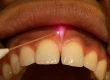
To establish an effective treatment plan, clinicians must identify the underlying cause of interproximal soft-tissue loss. When answering what is black triangle teeth, periodontists describe a condition where the interdental papilla (the pink triangular gum tissue between teeth) pulls back or fails to reach the contact point of adjacent teeth.
The primary biological and mechanical causes include:
- Periodontal Bone Resorption: Gum disease causes the underlying alveolar bone to shrink. As bone height drops, the overlying gum papilla recedes, leaving an open triangular space.
- Triangular Tooth Anatomy: Teeth with narrow cervical roots and wide incisal borders create high contact points, resulting in large natural embrasure spaces beneath.
- Post-Orthodontic Uncrowding: Aligning overlapped teeth often reveals hidden gaps. This explains why patients frequently observe black triangle teeth after braces or during aligner therapy—the teeth are straight, but the gums cannot expand to fill the newly exposed space.
- Aggressive Hygiene or Trauma: Over-flossing or hard toothpick use can damage delicate papilla fibers, leading to localized tissue shrinkage.
- [ TRIANGULAR CROWN GEOMETRY ]: High contact point leaves large interproximal gap beneath
- [ PAPILLA TISSUE RECESSION ]: Bone loss or inflammation causes pink gum tissue to retreat
- [ DARK VOID FORMATION ]: Light fails to reflect, creating a visible "black triangle"
- [ BIOCLEAR / BONDING FIX ]: Injection-molded composite reshapes tooth roots to seal gap
Restorative Solutions: How to Fix Black Triangle Teeth Safely
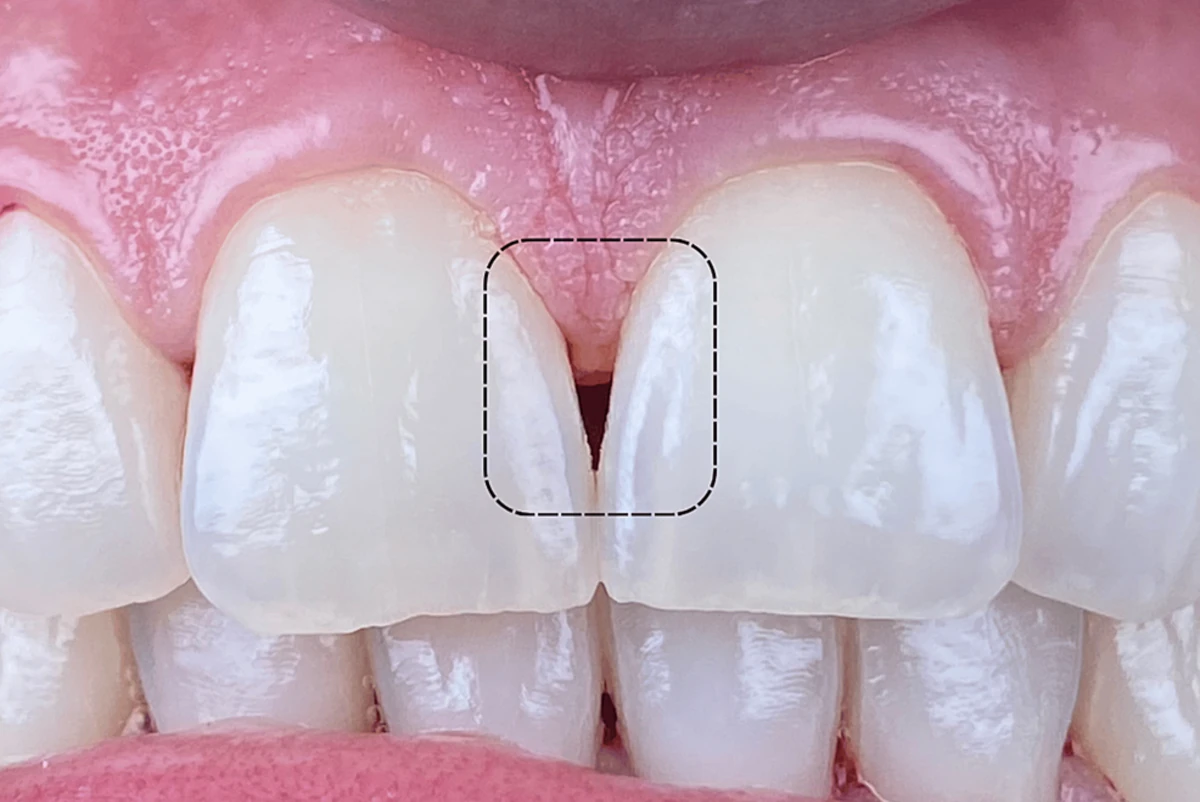
When evaluating black triangle teeth treatment options, modern dentistry prioritizes minimally invasive techniques that preserve natural enamel while permanently sealing the open embrasure.
1. Bioclear Matrix Method & Composite Bonding
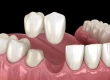
The gold standard for conservative closure is black triangle teeth bonding using injection-molded composite techniques (Bioclear). Clear anatomical matrices are placed around the affected teeth, and liquid-warmed composite resin is injected to wrap around the root surfaces. This reshapes triangular teeth into fuller, more rectangular forms, completely closing the dark void without grinding down natural enamel.
2. Interproximal Reduction (IPR) & Orthodontics
In active orthodontic cases, doctors can perform mild Interproximal Reduction (IPR) (slenderizing the enamel on adjacent wide surfaces) and use black triangle teeth invisalign force to flatten the contact area, moving the teeth closer together to squeeze the papilla upward.
3. Porcelain Veneers or Thin Crowns
For cases involving extensive enamel wear, widespread discoloration, or large gaps, custom porcelain veneers or thin E-Max crowns are crafted to close embrasures and redefine the entire smile line.
Can You Use a Black Triangle Teeth Home Remedy?
A critical question asked by international patients is whether a black triangle teeth home remedy can regrow missing gum papilla or close the gaps naturally.
From a strict biological standpoint: No home remedy, oil pulling, special mouthwash, or massage technique can regrow lost interdental gum tissue. Once the bone foundation drops or the tooth geometry creates a void, the papilla cannot spontaneously expand upward. Attempting aggressive home scrubbing or using non-approved devices will irritate delicate soft tissues, accelerating recession and making the black triangle larger.
Clinical Evaluation: Before and After Black Triangle Teeth Bonding
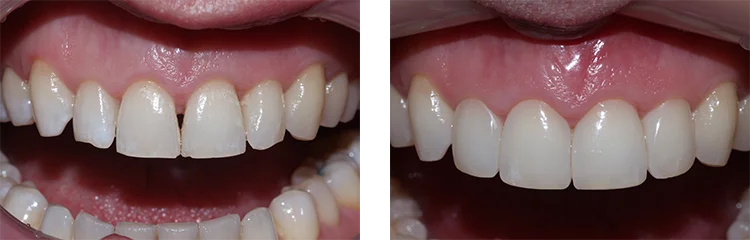
Reviewing a typical database of before and after black triangle teeth bonding outcomes illustrates how closing open embrasures enhances smile aesthetics and improves oral hygiene.
Evaluation Metric | Pre-Treatment Open Embrasure | Post-Bonding Restored State |
Interproximal Space Fill | Dark void visible; light passes through gap | 100% closed gap; smooth composite emergence profile |
Food Impaction Rate | High; food debris routinely trapped between roots | Zero food trapping; self-cleansing contact points |
Tooth Geometry Profile | A-shaped, narrow cervical root structure | Balanced, rectangular emergence profile |
Soft Tissue Health Index | Chronic papilla irritation from food packing | Healthy, firm pink tissue hugging composite border |
Frequently Asked Questions
Why do black triangles appear after Invisalign or braces treatment?
Black triangles appear after black triangle teeth after braces or Invisalign because severe crowding previously squeezed the teeth together, hiding missing gum tissue. Once orthodontics aligns the teeth into proper straight positions, the underlying lack of interdental papilla becomes visible as a dark gap.
How long does black triangle teeth bonding last?
High-quality composite bonding using injection-molded techniques (like Bioclear) typically lasts 7 to 10+ years. Maintaining excellent oral hygiene, avoiding hard biting habits, and attending routine professional cleanings will maximize its lifespan.
Is black triangle teeth bonding painful?
No. Bioclear matrix bonding is completely non-invasive and painless. Because no healthy tooth structure is removed with a drill, the procedure is performed without the need for local anesthesia or needles.
What is the average black triangle teeth treatment cost?
The cost depends on the procedure selected. Composite bonding (Bioclear) ranges from £250 to £500 per tooth gap. Complete porcelain veneers range from £600 to £1,200 per unit, while IPR combined with Invisalign is included within overall orthodontic packages.
Can black triangle teeth cause health problems if left untreated?
While black triangles are primarily an aesthetic concern, they act as food traps that collect bacterial plaque and debris. If not cleaned carefully with interdental brushes, this accumulation can lead to localized gum inflammation, bad breath, and localized decay on exposed root surfaces.
O autorovi