




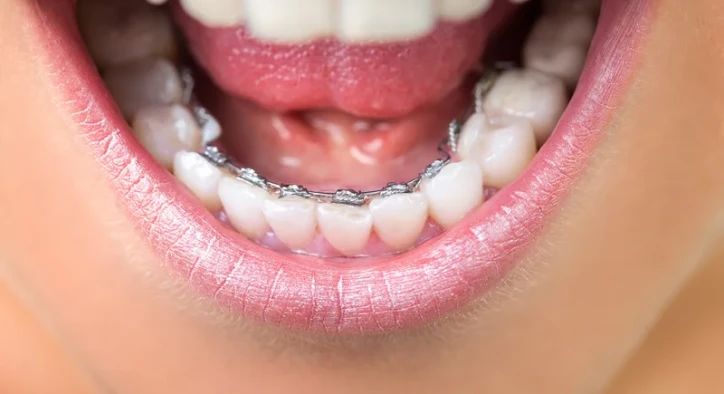

The pursuit of an aligned dental arch without visible metal brackets or plastic aligner attachments has made lingual orthodontics a premier choice in adult aesthetic dentistry. When evaluating truly invisible teeth straightening, understanding the unique mechanics of lingual braces is the fundamental first step. Unlike conventional labial systems placed on the front surfaces of the teeth, lingual appliances are custom-bonded to the internal, tongue-facing surfaces, concealing treatment from view.
For patients exploring orthodontic care, questions frequently arise regarding clinical capability and financial investment. Many wonder are lingual braces effective, ask can lingual braces fix overbite, evaluate braces vs lingual braces for daily comfort, and inquire are lingual braces faster than traditional options. Furthermore, understanding the technical laboratory process clarifies why are lingual braces more expensive and what factors drive overall lingual braces cost. This comprehensive clinical guide explores the biomechanics of internal brackets, analyzes treatment speed, reviews complex bite correction protocols, and outlines long-term oral stability.
Table Of Contents
- What Are Lingual Braces and How Does Palatal Biomechanics Work?
- Comparative Biomechanics: Braces vs Lingual Braces
- Clinical Performance: Are Lingual Braces Effective and Can They Fix Overbites?
- Treatment Timeline: Are Lingual Braces Faster Than Traditional Systems?
- Financial Analysis: Why Are Lingual Braces More Expensive?
- Frequently Asked Questions
What Are Lingual Braces and How Does Palatal Biomechanics Work?
To understand how internal appliances move teeth, clinicians evaluate the biological force vectors applied from the inside of the dental arch. Lingual braces are custom-engineered orthodontic appliances composed of individually cast gold alloy or titanium brackets and robotically bent archwires fitted to the palatal and lingual surfaces of the dentition.
The biomechanical movement follows a structured sequence:
- [ DIGITAL INTRAORAL SCANNING ]: High-resolution 3D capture of lingual tooth anatomy
- [ CUSTOM BRACKET CASTING ]: Low-profile brackets cast to fit unique tooth curves
- [ INDIRECT BONDING PROTOCOL ]: Custom transfer trays ensure exact bracket placement
- [ ROBOTIC ARCHWIRE FORCE ]: Precise torque vectors move roots closer to resistance centers
Because the lingual surface of each tooth features irregular anatomical ridges, standard pre-manufactured brackets cannot be used. Each bracket base is custom-milled to fit the exact lingual topography of each tooth. The appliance applies targeted force closer to the center of tooth resistance, offering exceptional control over vertical movements and root torque.
Comparative Biomechanics: Braces vs Lingual Braces
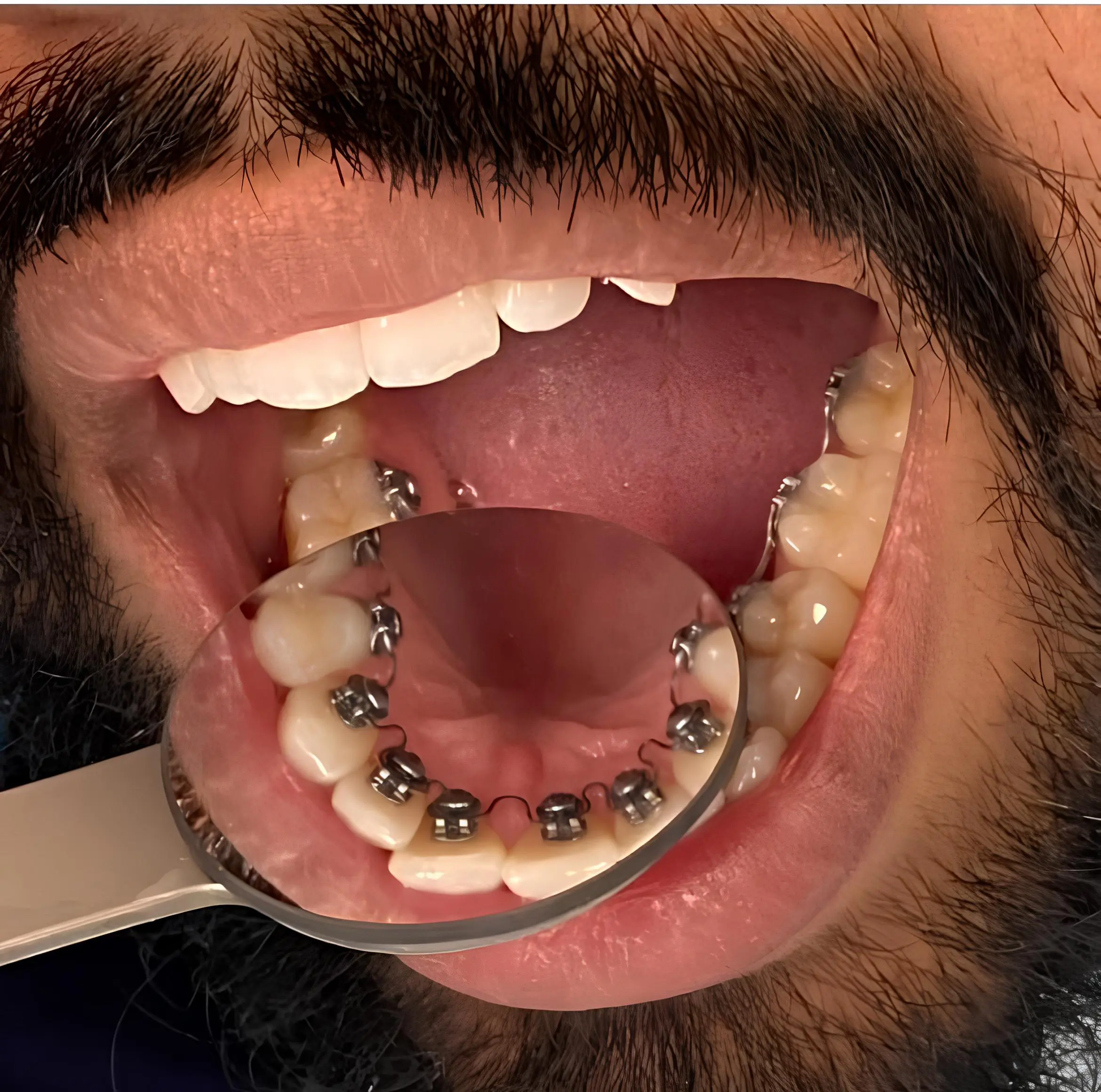
When choosing between external and internal appliances, analyzing braces vs lingual braces highlights important functional, aesthetic, and mechanical differences.
Clinical Parameter | Conventional Labial Braces | Custom Lingual Braces |
Aesthetic Visibility | Highly visible on front enamel surfaces | 100% invisible from frontal view |
Enamel Decalcification Risk | Risk of visible white spots on front enamel | Decalcification risk hidden on tongue side |
Tongue & Speech Adaptation | Minimal tongue irritation; affects lips/cheeks | Temporary lisp; requires tongue adjustment |
Customization Level | Standard pre-fabricated bracket systems | Fully customized CAD/CAM brackets and wires |
Oral Hygiene Access | Direct visual line for brushing and flossing | Requires mirrors and specialized interdental tools |
Biomechanics in Intrusion | Moderate control over deep vertical movements | Superior biomechanical leverage for intrusion |
Clinical Performance: Are Lingual Braces Effective and Can They Fix Overbites?
When considering treatment, patients routinely ask: are lingual braces effective for severe malocclusions? Clinical research confirms that custom lingual appliances achieve outcomes comparable to traditional labial brackets across crowded arches, rotations, and spacing issues.
A major functional inquiry is: can lingual braces fix overbite? Yes, lingual braces are effective in correcting deep overbites.
The clinical advantages for overbite correction include:
- Direct Incisor Intrusion: The force vector applied from the palatal side passes closer to the center of resistance of the anterior teeth, allowing efficient intrusion of upper front teeth to open a deep bite.
- Natural Bite Plane Effect: The upper anterior lingual brackets naturally create a temporary bite turbo effect, disoccluding posterior teeth and allowing molars to erupt and level the dental arch faster.
- Precise Torque Control: Custom robotic archwires provide precise palatal root torque, moving protruding upper teeth backward while balancing overall jaw posture.
Treatment Timeline: Are Lingual Braces Faster Than Traditional Systems?
Patients often ask: are lingual braces faster than external options? In most comprehensive cases, lingual braces work at a similar pace to traditional labial brackets, with overall treatment lasting between 18 and 36 months depending on biological complexity.
While lingual appliances can close anterior extraction spaces and correct deep vertical overbites faster due to direct force vectors, final detailing of root angulations and artistic rotations can require additional appointment time. Because the distance between brackets is shorter on the inside curve of the dental arch, archwires are stiffer, requiring specialized adjustments by a trained orthodontist.
Financial Analysis: Why Are Lingual Braces More Expensive?
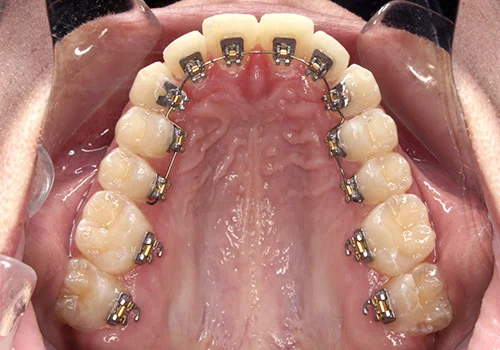
When evaluating treatment budgets, patients observe that are lingual braces more expensive than conventional metal brackets, clear ceramic appliances, and plastic aligners.
Key factors influencing the overall lingual braces cost include:
- Individual CAD/CAM Manufacturing: Every bracket and archwire is custom-cast in specialized orthodontic laboratories using gold or titanium alloys to match each tooth, unlike mass-produced labial brackets.
- Specialized Clinical Training: Placing and adjusting internal brackets requires advanced post-graduate master certification in lingual biomechanics, limiting the number of qualified providers.
- Extended Chairside Time: Adjusting wires behind the teeth demands indirect vision using dental mirrors, specialized instruments, and longer clinical appointments.
- Laboratory Transfer Trays: Indirect bonding protocols require multi-step laboratory setups to fabricate silicone placement trays, increasing custom lab fees.
Frequently Asked Questions
Are lingual braces more difficult to clean than regular braces?
Yes. Because the brackets are placed behind your teeth out of your direct line of sight, food particles and plaque accumulate more easily around the archwire. Maintaining oral hygiene requires dedicated tools, including specialized interdental brushes, angled dental mirrors, orthodontic floss threaders, and daily use of an oral irrigator (water flosser) to keep the gums healthy.
Will lingual braces permanently affect my speech?
No. While lingual brackets initially narrow the space available for your tongue, causing a minor lisp or altered pronunciation for sounds like s, t, and d, this effect is temporary. Most patients adapt within two to three weeks as the tongue muscle adjusts to the appliance. Reading aloud for 10 to 15 minutes each day accelerates this adaptation period.
Do lingual braces hurt more than traditional outside braces?
The overall discomfort is comparable to conventional orthodontics, but the location of irritation differs. While traditional braces rub against the lips and cheeks, lingual brackets can cause mild soreness along the lateral borders and tip of the tongue during the first few weeks. Applying orthodontic relief wax over the brackets and using warm saltwater rinses relieves soft-tissue irritation during adaptation.
Can any orthodontist treat patients with lingual braces?
No. Treating patients with lingual braces requires specialized post-doctoral training and clinical certification in lingual biomechanics. Because the physics of applying force from the inside of the arch differs from conventional labial brackets, you should choose an orthodontist who has completed formal training and routinely manages lingual cases.
Are lingual braces suitable for children and teenagers?
While teenagers can be treated with lingual appliances once all permanent teeth have fully erupted, lingual braces are primarily requested by adults and working professionals who require complete cosmetic invisibility. In growing children with partially erupted crowns, lingual bonding can be challenging due to limited surface area on the back of the teeth.
About the Author