





The restoration of a bounded single-tooth gap without aggressively grinding down two adjacent healthy teeth represents a central goal of minimally invasive prosthodontics. When evaluating restorative options for an edentulous space where an abutment is available on only one side, understanding the mechanics of cantilever bridge teeth provides a predictable clinical solution. Unlike traditional fixed bridges that require supporting crowns on both sides of the gap, a cantilever design suspends a prosthetic replacement tooth (pontic) from a single anchor tooth or a splinted pair of abutments located on one side only.
For patients evaluating options to replace a missing tooth, questions frequently arise regarding structural strength and clinical suitability. Many ask what is a cantilever tooth bridge, investigate what is a cantilever bridge used for, wonder how long does a cantilever dental bridge last, and evaluate whether a simple cantilever bridge dental design is right for them. Furthermore, clinicians must weigh the high success rates of cantilever bridge front teeth against the biomechanical hazards of placing a cantilever bridge posterior teeth restoration, while helping patients understand the factors that shape overall cantilever bridge teeth cost. This clinical guide explores lever-arm biomechanics, patient selection criteria, occlusal design protocols, and long-term maintenance.
Table Of Contents
- What Is a Cantilever Tooth Bridge and What Is It Used For?
- Comparative Anatomy: Cantilever Bridge Front Teeth vs Posterior Teeth
- Engineering Styles: The Simple Cantilever Bridge Dental Framework
- Durability and Financial Overview: How Long Does It Last and What Affects Cost?
- Frequently Asked Questions
- Can a cantilever bridge be used to replace a large back molar tooth?
- Is getting a cantilever bridge painful?
- Why is a single-retainer cantilever bridge preferred over a two-retainer bridge for front teeth?
- How do you clean beneath a cantilever bridge pontic?
- What happens if the cement beneath a cantilever bridge comes loose?
What Is a Cantilever Tooth Bridge and What Is It Used For?
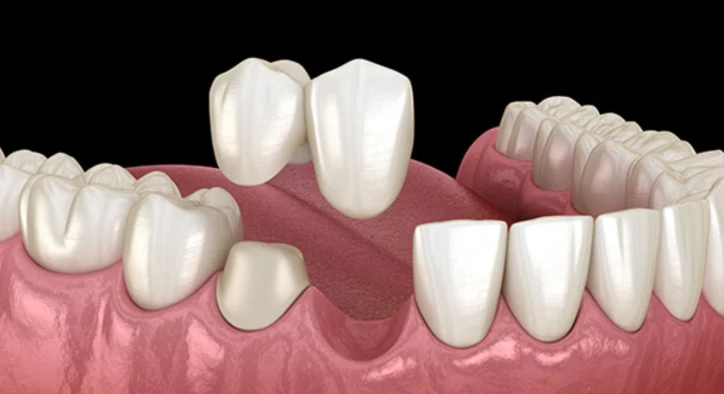
To understand how single-sided prosthetics function, answering what is a cantilever tooth bridge requires analyzing mechanical lever mechanics. A cantilever dental bridge is a fixed prosthetic restoration where the artificial replacement tooth (pontic) is anchored to one or more abutment teeth on one side only, leaving the other end completely unsupported by natural tooth structure.
When patients ask what is a cantilever bridge used for, clinicians highlight specific clinical indications:
- [ EDENTULOUS GAP IDENTIFIED ]: Missing tooth space with healthy neighbor on ONE side only
- [ BIOMECHANICAL ASSESSMENT ]: Lever-arm force calculation to avoid destructive torque
- [ TOOTH PREPARATION ]: Single abutment prepared (crown, inlay, or bonded wing)
- [ PONTIC CANTILEVERING ]: Artificial tooth suspended forward into the gap without distal support
- Congenitally Missing Lateral Incisors: The premier clinical application is replacing missing maxillary lateral incisors by anchoring the pontic to the strong adjacent canine.
- Unilateral Abutment Availability: Situations where only one suitable natural anchor tooth exists adjacent to a space, making a traditional two-sided bridge impossible.
- Preservation of Virgin Tooth Structure: Eliminating the need to cut down a healthy, decay-free natural tooth on the opposite side of the gap.
- Anatomic Restrictions for Implants: Clinical scenarios where narrow interdental roots, inadequate bone width, or nearby nerve structures make dental implant placement risky without extensive bone grafting.
Comparative Anatomy: Cantilever Bridge Front Teeth vs Posterior Teeth
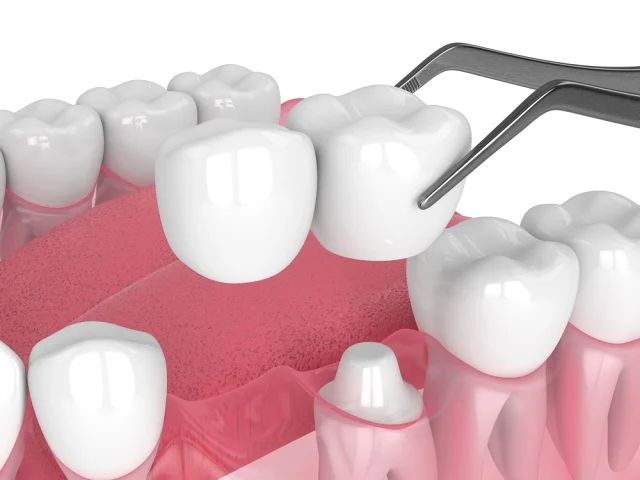
The clinical success of cantilever prosthetics depends entirely on the location within the mouth and the direction of chewing forces.
Clinical Parameter | Cantilever Bridge Front Teeth | Cantilever Bridge Posterior Teeth |
Primary Masticatory Force | Light shear and tensile loading | Heavy axial and crushing forces exceeding 500 N |
Lever-Arm Tipping Risk | Minimal; easily balanced in canine guidance | Severe; creates rotational torque on the anchor |
Long-Term Success Rate | Exceptionally high (over 85% to 90% at 10 years) | Reduced; high risk of debonding or root fracture |
Preferred Abutment Tooth | Maxillary canine (dense bone and long root) | Rarely recommended; requires multiple splinted molars |
Esthetic Demands | Maximum; requires seamless porcelain blending | Moderate; focuses on occlusal clearance |
Evaluating cantilever bridge front teeth shows exceptional success because anterior biting forces are significantly lower than in the back of the mouth. In contrast, placing a cantilever bridge posterior teeth restoration introduces severe vertical and lateral rotational forces. The suspended pontic acts as a class-one lever arm during chewing, generating high torque that can loosen the cement seal, promote recurrent decay beneath the anchor, or fracture the underlying root of the abutment tooth.
Engineering Styles: The Simple Cantilever Bridge Dental Framework
Depending on patient needs and tooth structure, a simple cantilever bridge dental appliance can be crafted using different preparations and materials:
- Full-Coverage Ceramic Cantilever: The anchor tooth is prepared for a full-coverage crown using high-strength zirconia or lithium disilicate (E-Max), with the pontic seamlessly fused to its side.
- Resin-Bonded (Maryland) Cantilever: A minimally invasive approach where the pontic is attached to a single thin ceramic or metal wing bonded to the lingual surface of the anchor tooth with composite resin, requiring virtually zero enamel removal.
- Inlay-Retained Cantilever: The restoration is anchored via a precision-milled ceramic inlay placed into an existing cavity or filling on the adjacent tooth.
Durability and Financial Overview: How Long Does It Last and What Affects Cost?
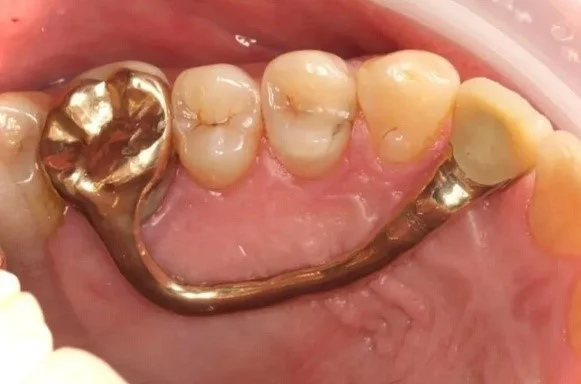
When deciding on treatment, patients routinely ask: How long does a cantilever dental bridge last? Long-term prosthodontic data demonstrates that with proper bite design and daily hygiene, an anterior cantilever bridge has an average lifespan of 10 to 15 years or longer. The most common reasons for restorative revision include cement washout, recurrent decay around the anchor margin, or porcelain chipping under sudden trauma.
When researching cantilever bridge teeth cost, overall financial investment varies widely based on clinical complexity rather than a flat rate. Key factors influencing the price include:
- Restorative Materials: Premium translucent monolithic zirconia and micro-layered E-Max ceramics command different laboratory fabrication fees compared to metal-ceramic frameworks.
- Fixation Style: Full-coverage crown designs involve different clinical preparation and laboratory costs compared to minimally invasive single-wing resin-bonded bridges.
- Pre-Treatment Procedures: The need for preliminary tooth cleanings, core build-ups, or occlusal bite adjustments to eliminate heavy contact points on the pontic.
- Geographic and Clinical Expertise: Specialization of the prosthodontist and digital CAD/CAM technology utilized during fabrication.
Frequently Asked Questions
Can a cantilever bridge be used to replace a large back molar tooth?
Generally, no. Back molars endure tremendous vertical chewing forces that easily exceed the structural tolerance of a single anchor tooth. Using a cantilever pontic to replace a molar creates an intense mechanical lever arm that can pry the anchor loose, cause root fractures, or destroy surrounding bone. Dental implants remain the preferred standard for posterior tooth replacement.
Is getting a cantilever bridge painful?
No. The procedure is performed under local anesthesia, ensuring you feel no pain while the anchor tooth is shaped and prepared. Following preparation, mild gum sensitivity or slight temperature awareness can occur for a few days, which is easily managed with standard over-the-counter pain relievers.
Why is a single-retainer cantilever bridge preferred over a two-retainer bridge for front teeth?
Clinical research shows that single-retainer cantilever bridges often last longer in front teeth than traditional two-sided bridges. Because adjacent teeth naturally flex and move independently during chewing, two-sided bridges experience inter-abutment shear stress that frequently breaks the cement seal on the weaker tooth, leading to undetected decay beneath the loose crown. A single anchor eliminates these inter-tooth stresses.
How do you clean beneath a cantilever bridge pontic?
Daily oral hygiene requires cleaning beneath the suspended pontic where plaque and food particles can accumulate. Patients should use specialized bridge floss threaders, superfloss with a stiffened end, or an interdental brush coated with fluoride toothpaste to sweep under the artificial tooth, combined with daily oral irrigator use to keep the gum tissue healthy.
What happens if the cement beneath a cantilever bridge comes loose?
If a cantilever bridge loosens, contact your dentist immediately and avoid chewing on that side. Do not attempt to force the bridge back into place or use household glues. Your dentist will gently remove the restoration, examine the underlying anchor tooth for decay or cracks, clean the surfaces, and securely recement the bridge if the foundation remains sound.
About the Author