




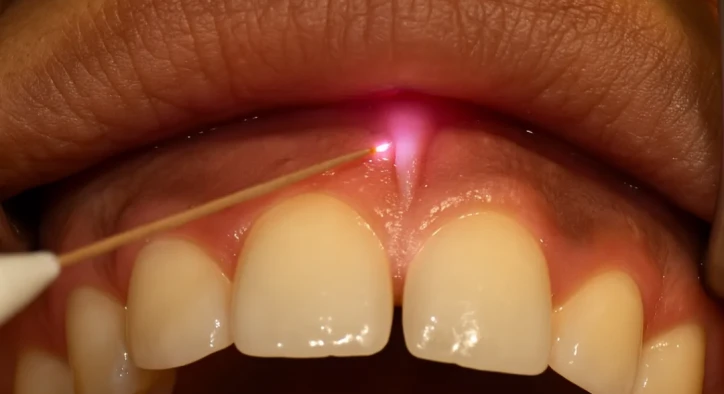

Restricted oral tissue movement caused by an abnormally short, thick, or tight band of mucosal tissue presents functional challenges across speech, chewing, and oral hygiene. In contemporary oral surgery and periodontics, evaluating a laser frenectomy represents a precise, minimally invasive standard for releasing restrictive labial and lingual frenula. Unlike traditional scalpel surgery requiring incisions, heavy bleeding, and sutures, laser energy gently vaporizes fibrous connective tissue attachments while instantly sealing micro-vessels and nerve endings.
For patients experiencing restricted tongue movement or researching corrective surgery for ankyloglossia, understanding the clinical pathway of a laser frenectomy tongue tie release provides clarity and comfort. Adults often wonder about the specific timeline of laser frenectomy recovery for adults, examine modern approaches like a water laser frenectomy, and seek detailed guidelines regarding laser frenectomy after care. Furthermore, understanding the scope of the procedure helps clarify what influences the overall laser frenectomy cost and explains how much is a laser frenectomy based on individual clinical variables. This comprehensive clinical guide explores photothermal tissue ablation, recovery protocols, daily rehabilitation exercises, and long-term functional benefits.
Table Of Contents
- What Is a Laser Frenectomy and How Does the Technology Function?
- Clinical Indications: When Is a Laser Frenectomy Tongue Tie Release Recommended?
- Recovery Protocol: Laser Frenectomy Recovery for Adults
- Essential Rehabilitation: Laser Frenectomy After Care and Stretching Exercises
- Cost Considerations: How Much Is a Laser Frenectomy?
- Frequently Asked Questions
What Is a Laser Frenectomy and How Does the Technology Function?
To understand how modern periodontists release restrictive tissue bands, evaluating a laser frenectomy requires examining focused light energy interactions with oral mucosa. A frenectomy is the surgical release of a fold of tissue (the frenulum) that connects the tongue to the floor of the mouth (lingual frenulum) or the upper lip to the gum tissue above the front teeth (labial frenulum).
The laser ablation process follows a structured sequence:
- [ CLINICAL TISSUE MAPPING ]: Assessment of mobility, speech impact, and gingival pull
- [ CONCENTRATED LIGHT DELIVERY ]: Target water and chromophores in mucosal tissue
- [ INSTANT PHOTO-COAGULATION ]: Blood vessels seal immediately, eliminating bleeding
- [ DIAMOND-SHAPED HEALING BED ]: Clean surgical site heals via secondary intention without sutures
Traditional surgery involves scissors or scalpels that sever mucosal fibers, causing bleeding and requiring sutures that irritate the tongue or lips. In contrast, dental lasers (such as soft-tissue diode or Erbium systems) vaporize connective tissue cell by cell. Advanced hydro-photonics found in a water laser frenectomy combine laser energy with a gentle water spray to cool the tissue, eliminating heat transfer, reducing post-operative swelling, and accelerating cellular regeneration.
Clinical Indications: When Is a Laser Frenectomy Tongue Tie Release Recommended?
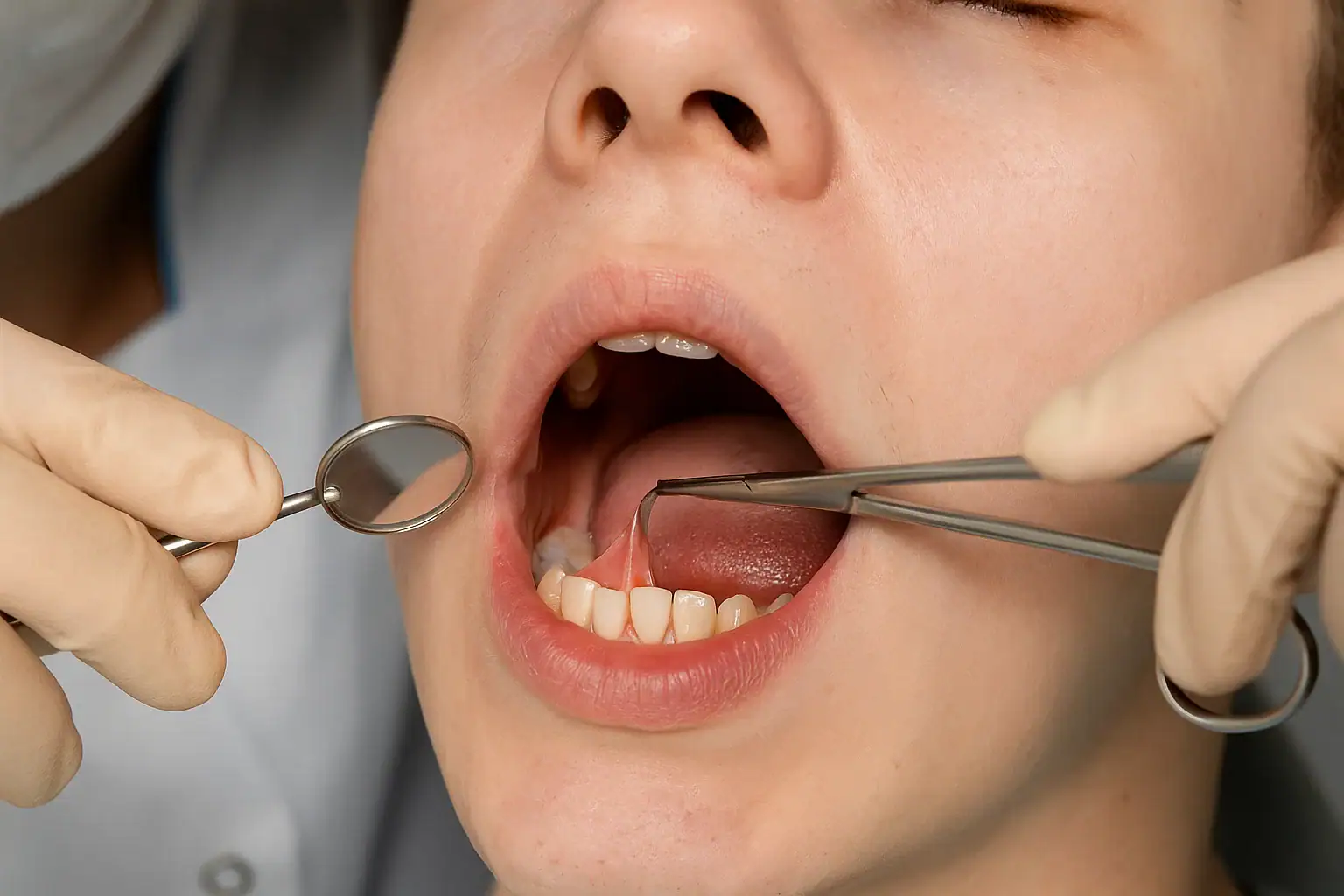
A tight lingual frenulum (ankyloglossia or tongue-tie) restricts the tongue's upward and forward range of motion, creating diverse functional limitations across age groups:
- Speech Articulation Difficulties: Difficulty producing sounds that require elevating the tip of the tongue to the roof of the mouth, such as d, t, l, r, and s.
- Mechanical and Swallowing Constraints: Inability to sweep food particles away from the teeth, difficulty swallowing, or challenges with normal chewing mechanics.
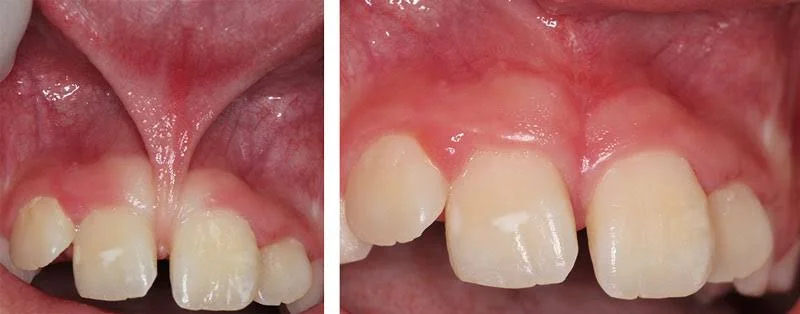
- Gingival Recession from Labial Pull: An abnormally thick upper labial frenulum pulls on the gingival margin of the front teeth, contributing to gum recession and widening gaps between central incisors.
- Orthodontic Relapse: Tight tissue bands pulling on dental arches can cause teeth to shift after braces or aligner treatment.
Recovery Protocol: Laser Frenectomy Recovery for Adults
Understanding what to expect during laser frenectomy recovery for adults ensures smooth healing and helps patients plan their daily routines. Because laser ablation cauterizes tissues on contact, post-operative recovery is significantly faster and more comfortable than conventional scalpel surgery.
The typical clinical healing timeline:
- First 24 to 48 Hours: Mild soreness, slight swelling, and a sensation similar to a minor warm-food burn on the surgical site. The surgical area will develop a soft, yellowish-white film called a fibrin clot, which represents a normal biological dressing rather than an infection.
- Day 3 to Day 7: Discomfort diminishes substantially. The diamond-shaped wound begins contracting as healthy new epithelial cells migrate inward from the borders.
- Week 2 to Week 3: The superficial wound is fully covered by smooth, pink mucosal tissue. Complete deep myofascial healing and remodeling continue over four to six weeks.
- [ DAYS 1 TO 2 ]: Fibrin clot forms, mild soreness, soft non-irritating diet
- [ DAYS 3 TO 7 ]: Rapid epithelial closure, minimal discomfort, active stretches
- [ WEEKS 2 TO 3 ]: Complete mucosal re-epithelialization and full functional mobility
Essential Rehabilitation: Laser Frenectomy After Care and Stretching Exercises
Achieving optimal functional results following a laser frenectomy depends heavily on proper post-operative management. Oral tissues heal rapidly, creating a natural tendency for the edges of the diamond-shaped wound to re-adhere and heal together prematurely.
Diligent laser frenectomy after care must include gentle stretching exercises performed several times a day for two to three weeks:
- Upward Tongue Lift: Lift the tip of the tongue toward the roof of the mouth with the mouth wide open, holding for five seconds.
- Forward Extension: Stick the tongue straight out past the lower lip toward the chin.
- Lateral Sweeps: Move the tongue smoothly from the left corner of the mouth to the right corner.
- Gentle Wound Massage: For labial frenectomies, gently lift the lip upward and away from the gumline to prevent scar tissue from re-attaching at the base.
- Oral Hygiene: Rinse gently with warm salt water or an alcohol-free chlorhexidine mouthwash starting 24 hours after surgery.
Cost Considerations: How Much Is a Laser Frenectomy?
When researching overall expenses, patients evaluate the factors that determine laser frenectomy cost and ask how much is a laser frenectomy based on their treatment needs. Because every patient presents different tissue thicknesses and varying clinical requirements, fees are calculated individually rather than through fixed pricing.
Key clinical variables influencing cost include:
- Type of Laser Technology: Procedures utilizing specialized Er:YAG water laser systems involve different equipment overhead compared to standard soft-tissue diodes.
- Anatomic Complexity: Releasing an anterior tongue tie requires different surgical time compared to a deep posterior tongue tie or combined labial and lingual releases.
- Anesthesia Requirements: The choice between topical numbing gel, local infiltration, or conscious dental sedation for anxious patients.
- Post-Operative Follow-Up: Inclusion of wound evaluations, myofunctional speech therapy evaluations, and clinical reviews.
Frequently Asked Questions
Is a laser frenectomy painful during the procedure?
No. The procedure is performed using a strong topical numbing gel or a minor local anesthetic injection, ensuring you feel no pain during the treatment. Most patients report feeling only a light touch or mild warmth from the laser tip.
Why does the frenectomy wound look yellowish-white during healing?
The appearance of a soft, yellowish-white diamond patch over the surgical site is a normal and healthy biological process. In the moist environment of the oral cavity, the body forms a wet scab made of fibrin and healing proteins rather than a dry crust. As long as there is no severe throbbing pain or persistent bleeding, this is a sign of proper tissue regeneration.
Can the tongue-tie reattach after a laser frenectomy?
Reattachment is possible if the patient does not perform the recommended post-operative stretching exercises. Because oral mucosa heals rapidly, the severed edges naturally try to knit back together. Performing gentle tongue stretches three to four times a day for the first two to three weeks keeps the wound margins open until the tissue heals cleanly.
What foods should I eat after a laser frenectomy?
Stick to soft, cool, or lukewarm foods for the first three to five days, such as smoothies, yogurt, scrambled eggs, mashed potatoes, pasta, and mild soups. Avoid spicy seasonings, acidic citrus juices, crunchy chips, and crusty bread that could mechanically scrape or chemically irritate the healing site.
Can a laser frenectomy improve sleep apnea or breathing?
Yes, in many adult cases. A tongue tie forces the tongue into a low resting posture on the floor of the mouth rather than against the roof of the palate. Releasing the restriction allows the tongue to rest naturally against the hard palate, expanding the upper airway and reducing the risk of the tongue collapsing backward into the throat during sleep.
Über den Autor