




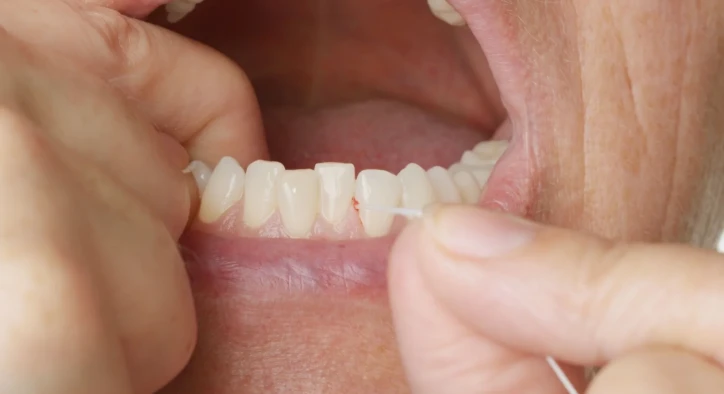

Maintaining healthy interdental contacts is an indispensable cornerstone of daily oral hygiene and systemic wellness. However, when patients slide thread between tight teeth and discover pink or red staining on the strand, widespread concern arises. Experiencing bleeding gums when flossing is one of the most frequent clinical symptoms reported in general dentistry. Far from being a reason to abandon interdental cleaning, this visible bleeding serves as an early biological distress signal from the microvasculature within the gingival sulcus, revealing underlying bacterial accumulation or incorrect mechanical execution.
Many patients troubled by pink saliva ask is bleeding gums when flossing normal during a daily routine. Understanding what causes bleeding gums when flossing allows individuals to distinguish temporary mechanical trauma from progressive inflammatory diseases. Whether an individual is seeking clinical tips on how to stop bleeding gums when flossing, searching for proven steps on how to fix bleeding gums when flossing, dealing with tender and sore bleeding gums when flossing, or experiencing hormonal sensitivity due to bleeding gums when flossing pregnant, this clinical guide provides actionable medical clarity.
Table Of Contents
- Is Bleeding Gums When Flossing Normal or a Sign of Disease?
- What Causes Bleeding Gums When Flossing?
- Hormonal Influences: Bleeding Gums When Flossing Pregnant
- Clinical Solutions: How to Fix and How to Stop Bleeding Gums When Flossing
- Comprehensive Comparison: Gingival Health vs. Inflammatory Progression
- Frequently Asked Questions
- Is bleeding gums when flossing normal if I just started cleaning between my teeth?
- What causes bleeding gums when flossing in people with great oral hygiene?
- How to stop bleeding gums when flossing quickly and effectively at home?
- Why are my gums swollen, sore, and bleeding gums when flossing?
- Why are my bleeding gums when flossing pregnant so pronounced?
Is Bleeding Gums When Flossing Normal or a Sign of Disease?
When blood appears during evening oral care, a primary question patients ask is: is bleeding gums when flossing normal? From a strict periodontological perspective, healthy gingival tissues never bleed upon gentle mechanical contact. Healthy gums are firm, coral pink, stippled like an orange peel, and tightly adhered to the underlying alveolar bone.
- [ BACTERIAL BIOFILM ACCUMULATION ]: Plaque sits undisturbed in the interdental gingival sulcus
- [ CAPILLARY RUPTURE UNDER FLOSS ]: Bleeding on probing or flossing occurs upon mechanical contact
However, if a person has neglected interdental cleaning for weeks or months and suddenly begins flossing again, mild bleeding over the first five to seven days is clinically typical. This transient bleeding occurs because chronic plaque accumulation has already triggered localized microscopic ulcerations in the inner lining of the gum pocket. Once disciplined interdental cleaning removes this toxic bacterial layer every single day, the tiny blood vessels heal, the pocket lining keratinizes, and bleeding resolves completely within one to two weeks. If bleeding persists beyond ten days of consistent flossing, it indicates established periodontal pathology requiring professional in-office intervention.
What Causes Bleeding Gums When Flossing?
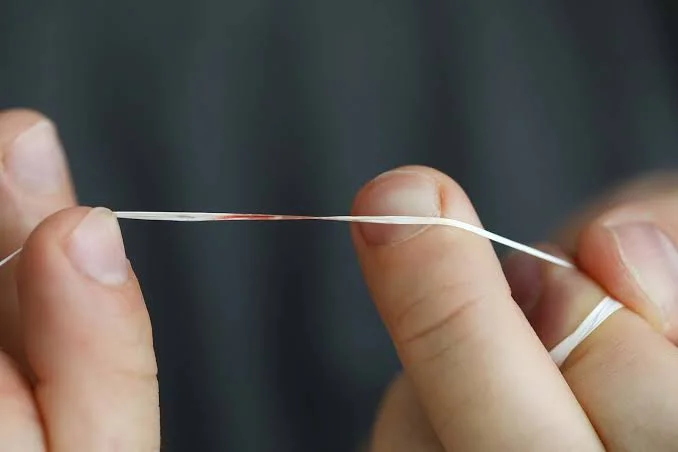
To implement an effective oral recovery protocol, one must analyze what causes bleeding gums when flossing. Bleeding does not happen spontaneously without biological or physical triggers; it stems from a defined spectrum of microbial, mechanical, and systemic causes.
- Biofilm-Induced Gingivitis: The leading cause worldwide. More than seven hundred species of oral bacteria thrive in stagnant interdental spaces. When left undisturbed, these microbes secrete lipopolysaccharides, enzymes, and endotoxins that provoke the immune system. Neutrophils and macrophages flood the gingival sulcus, dilating local capillaries until the fragile vessels rupture under slight pressure.
- Mechanical Trauma (The Snapping Technique): Forcing dental floss aggressively between tight contact points causes it to snap violently against the delicate interdental papilla. This physical laceration slices through healthy gingival tissue, producing acute mechanical bleeding rather than inflammatory bleeding.
- Calculus (Tartar) Accumulation: When bacterial biofilm remains undisturbed for more than forty-eight hours, minerals from saliva calcify it into hard tartar. Calculus possesses a porous, razor-sharp micro-architecture that mechanically grates against the adjacent gum tissue with every bite and floss movement.
- Subgingival Cavities and Defective Fillings: Overhanging edges of old fillings, ill-fitting crowns, or interdental cavities trap bacteria and irritate the gingiva continuously, leading to chronic localized inflammation.
Understanding these mechanisms is crucial when diagnosing persistent, sore bleeding gums when flossing, as addressing the specific root cause is necessary for lasting resolution.
Hormonal Influences: Bleeding Gums When Flossing Pregnant
A substantial percentage of expectant mothers experience sudden gingival bleeding, searching for insights into bleeding gums when flossing pregnant. This phenomenon is a recognized medical condition termed pregnancy gingivitis, which typically manifests during the second month and peaks in the third trimester.
- [ ELEVATED PROGESTERONE & ESTROGEN ]: Increases gingival vascular permeability and hyper-responsiveness
- [ PRONOUNCED PREGNANCY GINGIVITIS ]: Profuse bleeding, gingival edema, and sensitive interdental papillae
During pregnancy, skyrocketing levels of progesterone and estrogen increase blood flow to the gingival tissues by up to fifty percent while simultaneously increasing the permeability of sulcular capillaries. Furthermore, these hormonal shifts alter the oral microbiome, encouraging the rapid growth of inflammatory bacteria such as Prevotella intermedia. Consequently, even minute amounts of dental plaque that would cause no symptoms in a non-pregnant individual provoke an exaggerated inflammatory response during gestation. Maintaining thorough interdental hygiene during pregnancy is vital, as chronic periodontal inflammation has been clinically linked in obstetric studies to preeclampsia, low birth weight, and preterm labor.
Clinical Solutions: How to Fix and How to Stop Bleeding Gums When Flossing
Patients encountering pink foam in the sink routinely ask dentists how to stop bleeding gums when flossing and look for practical protocols on how to fix bleeding gums when flossing. Halting gingival bleeding requires shifting from erratic flossing habits to an anatomically correct, non-traumatic hygiene regimen.
- [ PROPER FLOSS WRAPPING ]: Gently guide floss through contact point without aggressive snapping
- [ SULCULAR WIPING ]: Glide vertically down beneath the gumline, then up to dislodge biofilm
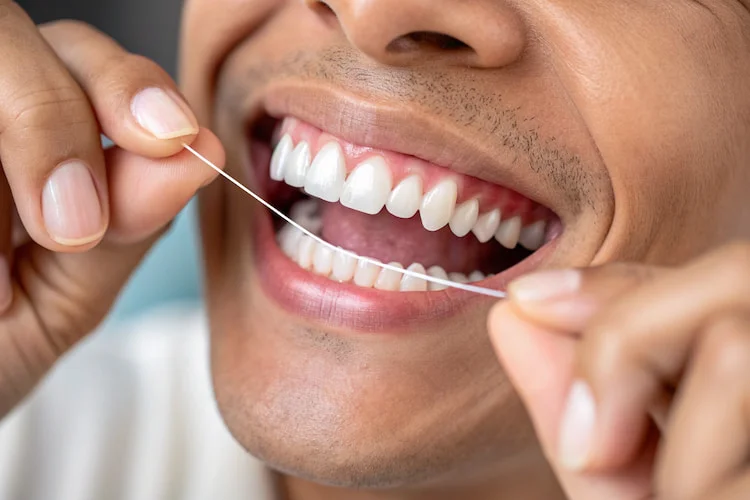
- Adopt the Gentle C-Shape Technique: Cut approximately eighteen inches of floss and wrap the ends securely around your middle fingers. Guide the strand gently through the tight contact point with a back-and-forth sawing motion; never snap it downward. Once past the contact, wrap the floss in a C-shape around the side of the tooth and slide it gently beneath the gum margin until light resistance is met. Wipe the tooth surface upward away from the gum. Repeat the motion on the neighboring tooth using a fresh segment of floss.
- Never Stop Flossing Due to Blood: The most common mistake patients make when noticing blood is to stop flossing that area out of fear. Abandoning flossing allows bacteria to multiply unimpeded, worsening the vascular fragility. You must continue cleaning the area gently every single evening to remove the infection causing the bleeding.
- Incorporate Interdental Brushes and Water Flossers: If you possess larger spaces between teeth, root concavities, or fixed braces, traditional string floss may leave biofilm behind. Calibrated interdental brushes remove significantly more plaque than string alone, while oral irrigators flush away subgingival toxic byproducts through pulsating hydrostatic pressure.
- Utilize Therapeutic Antiplaque Mouthwashes: In conjunction with mechanical flossing, short-term rinses containing chlorhexidine digluconate or daily formulations with cetylpyridinium chloride (CPC) and essential oils suppress microbial re-colonization and soothe tender tissues.
- Schedule an In-Office Ultrasonic Debridement: If hardened calculus has formed along the tooth root, no amount of home flossing or brushing can dislodge it. A dental hygienist or periodontist must utilize ultrasonic scalers to remove the subgingival bacterial deposits and smooth the root surfaces.
Comprehensive Comparison: Gingival Health vs. Inflammatory Progression
Evaluating the structural differences across stages of gingival conditions highlights why bleeding must never be ignored.
Clinical Parameter | Pristine Healthy Gums | Plaque-Induced Gingivitis | Established Periodontitis |
Bleeding on Flossing | Zero bleeding or pink staining | Immediate bleeding upon light touch | Profuse spontaneous and contact bleeding |
Tissue Architecture | Firm, stippled, pink, sharp knife-edge | Puffy, swollen, smooth, rolled margins | Blunted papillae, deep pockets, recession |
Sulcus Depth | Normal 1 to 3 mm physiological depth | Pseudopockets (3 to 4 mm from swelling) | True periodontal pockets exceeding 4 to 9 mm |
Bone & Ligament Status | Alveolar bone and ligament 100% intact | Zero alveolar bone or ligament loss | Progressive, irreversible bone and ligament loss |
Reversibility | Maintenance phase | 100% reversible in 7 to 14 days | Manageable, but lost bone cannot regrow naturally |
Frequently Asked Questions
Is bleeding gums when flossing normal if I just started cleaning between my teeth?
Yes. Mild bleeding during the first five to seven days is normal if you are flossing for the first time or restarting after a long hiatus. The bleeding occurs because stagnant plaque has created tiny microscopic ulcers in the inner gum pocket lining. With consistent, gentle daily flossing, the infection clears and bleeding ceases within one to two weeks.
What causes bleeding gums when flossing in people with great oral hygiene?
If you brush and floss regularly yet still bleed, the causes frequently include using aggressive snapping motions that cut the gums, having hardened subgingival calculus that requires ultrasonic cleaning, using the incorrect floss size, dealing with ill-fitting crown margins, or experiencing systemic factors like vitamin deficiencies, pregnancy hormones, or blood-thinning medications.
How to stop bleeding gums when flossing quickly and effectively at home?
To stop bleeding quickly, never quit flossing; instead, clean interdentally every evening using the proper gentle C-shape technique. Pair this with brushing twice daily using a soft-bristled electric toothbrush, rinse with warm salt water or an antibacterial mouthwash, and avoid aggressive snapping forces that slice the tissue.
Why are my gums swollen, sore, and bleeding gums when flossing?
Sore bleeding gums when flossing indicate that active inflammatory swelling is present. When bacteria linger along the gumline, your immune system rushes excess blood and defense cells to the site, creating pressure, redness, and nerve tenderness. Once the plaque is mechanically removed each day, the inflammation and soreness subside.
Why are my bleeding gums when flossing pregnant so pronounced?
Bleeding during pregnancy is caused by elevated estrogen and progesterone levels that dramatically increase vascular permeability and blood flow to the gingival tissues. This hormonal surge causes the gums to react aggressively with swelling and bleeding to even tiny amounts of plaque. Gentle, thorough daily flossing combined with professional prenatal cleanings is essential to safeguard both maternal and fetal health.
About the Author