



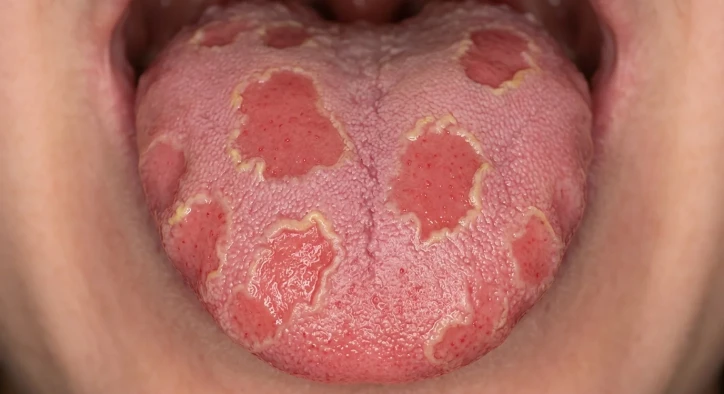

Observing irregular, map-like red patches bordered by raised white or cream margins across the dorsum of the tongue often triggers immediate health anxiety. When discovering these dynamic mucosal lesions, understanding what is geographic tongue provides the clinical reassurance needed to distinguish harmless inflammatory shedding from serious oral malignancies. Clinically designated as benign migratory glossitis or erythema migrans, geographic tongue is a recurrent, non-contagious oral inflammatory condition characterized by localized loss of the tiny hair-like projections known as filiform papillae.
For individuals startled by rapid changes on their tongue, identifying underlying geographic tongue causes helps clarify why patches move from one area to another within days. Patients frequently evaluate prominent geographic tongue symptoms, investigate what foods cause geographic tongue flare-ups, and ask their dentist does geographic tongue go away permanently. Online discussion forums are filled with anecdotal accounts titled how i cured my geographic tongue, yet understanding true medical pathways on how to get rid of geographic tongue requires evidence-based geographic tongue treatment strategies. This comprehensive clinical guide explores epithelial histology, neurovascular triggers, nutritional associations, and soothing therapeutic protocols.
Table Of Contents
- What Is Geographic Tongue and How Does Papillary Shedding Occur?
- Etiological Factors: What Causes Geographic Tongue?
- Dietary Triggers: What Foods Cause Geographic Tongue Flare-Ups?
- Clinical Picture: Recognizing Geographic Tongue Symptoms
- Therapeutic Pathways: Geographic Tongue Treatment and Finding Relief
- Prognosis: Does Geographic Tongue Go Away?
- Frequently Asked Questions
What Is Geographic Tongue and How Does Papillary Shedding Occur?
To understand why mucosal patches constantly change shape and location, explaining what is geographic tongue requires analyzing the surface anatomy of the lingual mucosa. The top surface of a healthy tongue is densely carpeted with thousands of microscopic keratinized filiform papillae, which give the tongue its velvety pink texture and assist in manipulating food.
The microscopic biological cycle follows a recurring sequence:
- [ INFLAMMATORY IMMUNE CASCADE ]: T-lymphocytes infiltrate the upper lingual epithelium
- [ DESQUAMATION OF PAPILLAE ]: Keratinized filiform papillae shed faster than replacement rate
- [ SMOOTH ERYTHEMATOUS PATCH ]: Red, raw, exposed mucosal areas emerge with raised white borders
- [ EPITHELIAL REGENERATION ]: Papillae regrow in the affected site while new patches migrate nearby
During an active flare-up, neutrophilic and lymphocytic micro-abscesses develop within the upper epithelial layers. This accelerated inflammatory shedding causes the filiform papillae to slough away prematurely, exposing smooth, erythematous patches of red lamina propria that resemble islands on a physical map. Because the surrounding fungiform papillae (which house taste buds) remain intact, the sense of taste is generally preserved, although the denuded red zones become temporarily sensitive to external chemical and thermal irritants.
Etiological Factors: What Causes Geographic Tongue?
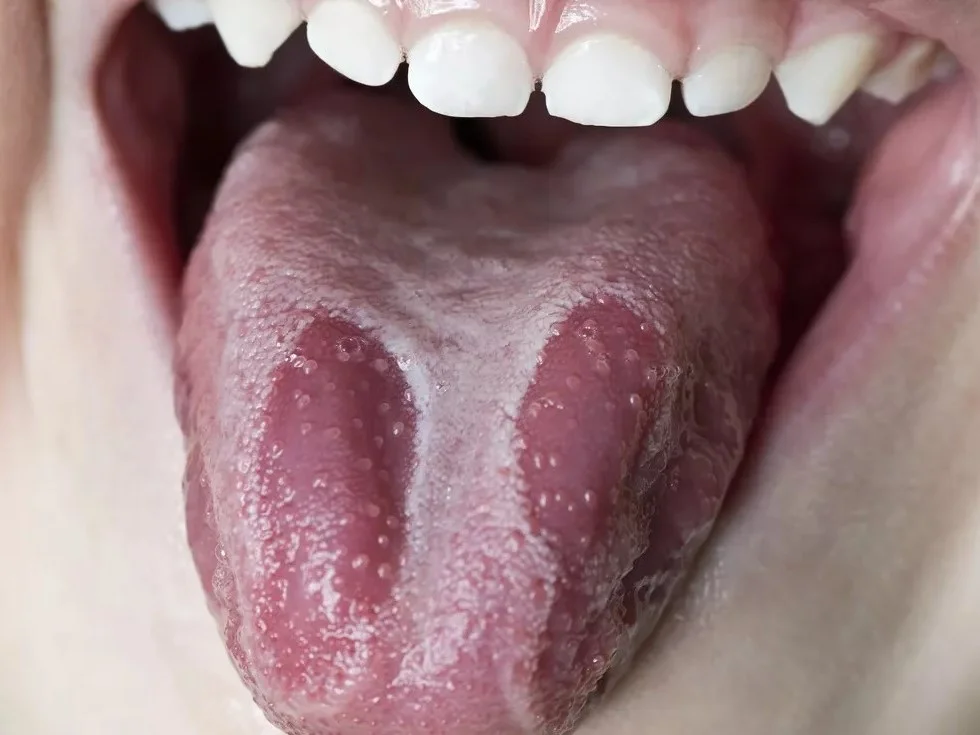
Patients distressed by recurrent episodes frequently ask what triggers geographic tongue causes. While medical research classifies the condition as idiopathic (having no single isolated origin), multiple genetic, immunologic, and environmental variables directly influence mucosal inflammation.
The primary predisposing factors include:
- Psoriasis and Genetic Susceptibility: A significant genetic overlap exists between human leukocyte antigens (such as HLA-Cw6 and HLA-B13) and generalized psoriasis; geographic tongue is widely regarded by dermatologists as an oral manifestation of psoriasis.
- Nutritional and Micronutrient Deficiencies: Low systemic levels of vitamin B12, folate (vitamin B9), iron, and zinc impair rapid mucosal cell turnover, predisposing the tongue to epithelial shedding.
- Hormonal Fluctuations and Emotional Stress: Elevated psychological stress, anxiety, and surges in female reproductive hormones (often fluctuating during menstrual cycles or pregnancy) frequently trigger new inflammatory episodes.
- Atopy and Systemic Allergies: Patients with asthma, eczema, hay fever, or elevated immunoglobulin E (IgE) levels display significantly higher rates of migratory glossitis.
- Fissured Tongue (Scrotal Tongue): Deep groves or clefts across the dorsal surface of the tongue frequently coexist with geographic patterns, creating micro-environments where food debris and bacteria aggravate local tissues.
Dietary Triggers: What Foods Cause Geographic Tongue Flare-Ups?
While food allergies do not initiate the underlying genetic condition, specific foods provoke acute burning sensations and stinging pain across raw, denuded mucosal patches. Identifying what foods cause geographic tongue discomfort allows patients to avoid unnecessary irritation.
Common dietary aggravators include:
- Acidic Fruits and Juices: Citrus fruits (lemons, limes, grapefruits, oranges), pineapples, kiwi, and raw tomatoes contain citric and ascorbic acids that directly sting exposed underlying nerve endings.
- Spicy Seasonings and Capsaicin: Hot peppers, chili powder, curry, black pepper, and horseradish trigger intense neuropathic burning across areas lacking protective keratin.
- Salty and Brined Foods: Salted chips, soy sauce, and heavily salted nuts draw moisture out of denuded tissues, causing localized throbbing.
- Astringent Flavorings: Toothpastes containing high concentrations of sodium lauryl sulfate (SLS), cinnamon flavoring, or intense menthol mouthwashes chemically irritate raw patches.
- Extreme Temperatures and Carbonation: Scalding hot beverages and highly carbonated sodas mechanically and thermally aggravate sensitive mucosal beds.
Clinical Picture: Recognizing Geographic Tongue Symptoms
The clinical presentation of migratory glossitis varies widely from entirely asymptomatic visual curiosities to painful, burning episodes.
Clinical Parameter | Asymptomatic Presentation | Active Symptomatic Flare-Up |
Visual Appearance | Well-demarcated red patches with creamy white borders | Intense crimson erythematous patches with thick white halos |
Pain & Sensation | Zero discomfort; discovered accidentally during brushing | Burning, stinging, or raw soreness during mastication |
Lesion Dynamics | Slow migration over several weeks or months | Rapid shape changes, healing, and re-emerging within days |
Taste Function | Completely unaltered sweet, salty, sour, bitter recognition | Normal taste, but spicy foods cause sharp discomfort |
Mucosal Texture | Smooth red bald patches surrounded by normal papillae | Tender, inflamed surface sensitive to dry air and rough food |
Recognizing typical geographic tongue symptoms helps patients avoid unnecessary biopsies or cancer anxiety, as the condition is entirely benign and carries zero malignant transformation potential.
Therapeutic Pathways: Geographic Tongue Treatment and Finding Relief
Because the condition is a benign genetic-inflammatory variation rather than an infectious bacterial disease, there is no single permanent cure that eradicates it forever. Many online personal testimonies headlined as how i cured my geographic tongue simply reflect natural spontaneous remission. However, structured clinical protocols provide reliable answers for patients seeking geographic tongue treatment and wanting to know how to get rid of geographic tongue discomfort during painful episodes.
- [ ELIMINATE EXTERNAL IRRITANTS ]: Discontinue SLS toothpastes, acidic foods, and hot spices
- [ TOPICAL SYMPTOMATIC RELIEF ]: Anesthetic rinses (viscous lidocaine) and antihistamine washes
- [ INFLAMMATION REDUCTION ]: Topical corticosteroid gels (triamcinolone) for severe pain
- [ NUTRITIONAL SUPPLEMENTATION ]: Optimize zinc, vitamin B12, and folate systemic levels
- Topical Anesthetic and Coating Solutions: Swishing with alcohol-free mouth rinses containing diphenhydramine mixed with antacids, or applying 2% viscous lidocaine gel before meals, numbs exposed nerve endings and allows comfortable eating.
- Topical Corticosteroid Pastes: During severe, painful flare-ups, applying a thin dab of 0.1% triamcinolone acetonide dental paste directly onto raw red patches twice daily suppresses local T-lymphocyte activity and speeds up epithelial healing.
- Sodium Lauryl Sulfate-Free Dentifrices: Switching to gentle, non-foaming toothpastes free of harsh detergents (SLS) significantly reduces daily chemical stinging.
- Targeted Nutritional Therapy: Correcting underlying deficiencies through daily supplementation of zinc gluconate, sublingual methylcobalamin (vitamin B12), and active folate helps restore normal mucosal renewal.
- Topical Calcineurin Inhibitors: In rare, therapy-resistant cases accompanied by severe burning, specialized dermatologists may prescribe topical tacrolimus ointment to settle recalcitrant inflammation.
Prognosis: Does Geographic Tongue Go Away?
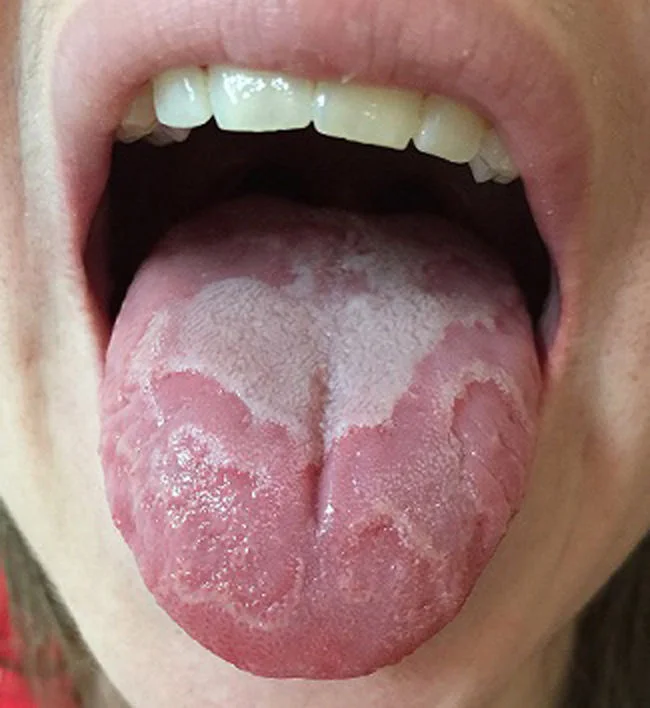
A paramount question among concerned individuals is: does geographic tongue go away? The natural history of benign migratory glossitis is characterized by unpredictable waxes and wanes:
- Spontaneous Remission: Lesions often heal completely on their own without scarring, leaving the tongue smooth and uniform for weeks, months, or even years.
- Recurrent Cycles: The condition frequently resurfaces during periods of acute physical exhaustion, emotional stress, systemic illness, or hormonal shifts.
- Long-Term Outlook: For many individuals, episodes gradually decrease in frequency and intensity with age, eventually stabilizing without causing long-term structural tissue damage.
Frequently Asked Questions
Can geographic tongue turn into oral cancer?
No. Geographic tongue is completely benign and never transforms into oral cancer. It is a chronic superficial inflammatory condition that affects only the outermost epithelial layer of the tongue, carrying zero risk of malignant changes or tumor development.
Is geographic tongue contagious to family members or partners?
No. You cannot catch or transmit geographic tongue through kissing, sharing drinks, food utensils, or intimate contact. It is not caused by a virus, fungus, or pathogenic bacterium; it is an internal immune-mediated and genetic predisposition.
Can children develop geographic tongue?
Yes. Geographic tongue can appear in young children, toddlers, and infants, frequently coexisting with childhood eczema, allergies, or an inherited fissured tongue. In children, parents typically notice the patches when the child complains that mild toothpaste or fruit juice suddenly stings.
Why does geographic tongue change its pattern so rapidly?
The pattern changes rapidly because the cells lining the tongue have one of the fastest turnover rates in the human body. As the immune-driven inflammation resolves in one microscopic area, the filiform papillae quickly regrow, while adjacent areas simultaneously begin shedding, creating the illusion of moving continents.
What home remedies provide immediate soothing relief?
Immediate relief can be achieved by swishing with cold milk, sucking on smooth ice chips, avoiding crunchy or acidic foods, and rinsing with a mild solution of baking soda dissolved in warm water to neutralize oral acidity.
O autorovi