





The uneventful healing of an extraction wound relies entirely on the formation, stabilization, and maturation of a vital intra-alveolar blood clot. When this primary biological seal dislodges or dissolves prematurely, the underlying alveolar bone and delicate nerve endings are left bare and vulnerable to mouth fluids, food debris, and bacterial contamination. In modern oral surgery and periodontics, understanding what is dry socket (clinically diagnosed as alveolar osteitis) represents a fundamental step toward preventing and managing severe post-surgical complications.
For patients experiencing intense, radiating jaw pain two to four days after a tooth extraction, identifying dry socket symptoms early is critical to receiving prompt relief. Leaving bare alveolar bone exposed to the oral environment leads to agonizing throbbing discomfort that cannot be resolved with standard over-the-counter painkillers alone. This comprehensive clinical guide explores the pathophysiology of the condition, details early signs of an early stage dry socket, provides evidence-based rules on how to prevent dry socket, reviews clinical options explaining how to treat dry socket, answers whether will dry socket heal on its own, and addresses safety concerns like is dry socket dangerous.
Table Of Contents
- What Is Dry Socket and Why Does the Blood Clot Dislodge?
- What Are the Symptoms and How Long Does Dry Socket Last?
- Clinical Protocols: How to Treat Dry Socket Effectively
- Is Dry Socket Dangerous and What Are the Structural Risks?
- Prevention Protocols: How to Prevent Dry Socket After Extraction
- Frequently Asked Questions
What Is Dry Socket and Why Does the Blood Clot Dislodge?
To establish an accurate diagnosis, oral surgeons examine the physical and biological mechanisms that govern the initial healing of an extraction site. When explaining what is dry socket, clinicians describe a localized complication where the initial blood clot within the socket dissolves (fibrinolysis) or mechanically dislodges before the bone tissue has a chance to cover itself with healthy granulation tissue.
The biological progression follows a distinct pathological sequence:
- [ TOOTH EXTRACTION ]: Natural bleeding fills empty socket, forming a protective clot
- [ FIBRINOLYTIC BREAKDOWN ]: Bacterial enzymes or physical suction dissolve or dislodge the clot
- [ BARE BONE EXPOSURE ]: Alveolar walls and nerve endings lose biological protection
- [ RADIATING NERVE PAIN ]: Air, food, and fluids trigger severe localized neurogenic pain
When evaluating a compromised dry socket tooth site, doctors look for the primary triggers behind clot failure:
- Mechanical Negative Pressure: Sucking actions from drinking through straws, smoking, or vigorous spitting create a physical vacuum that pulls the delicate clot out of the socket.
- Bacterial Contamination & Fibrinolysis: Oral bacteria release chemical substances (plasminogen activators) that break down the fibrin mesh of the clot prematurely.
- Poor Initial Vascularization: Denser areas of the jaw, particularly the lower molar and wisdom tooth zones, have lower baseline blood supply, increasing susceptibility to clot breakdown.
- Estrogen Levels & Oral Contraceptives: Elevated estrogen levels can stimulate localized fibrinolytic enzymes, making women taking oral contraceptives statistically more vulnerable.
What Are the Symptoms and How Long Does Dry Socket Last?
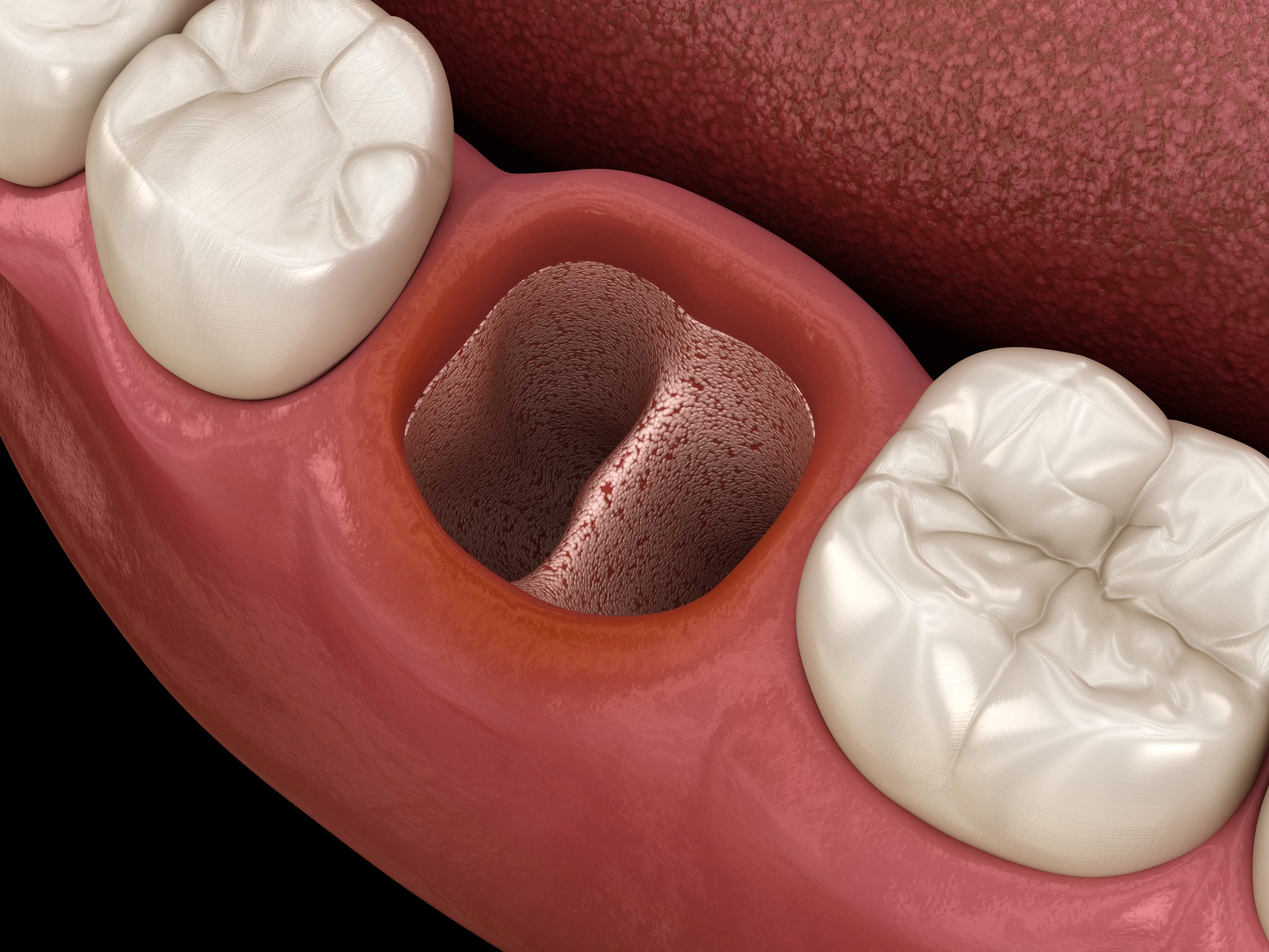
Recognizing an early stage dry socket allows patients to seek professional soothing dressings before tissue inflammation escalates. Symptoms typically emerge 48 to 72 hours after an extraction rather than immediately post-op.
The condition presents with distinct diagnostic markers:
- Severe Radiating Pain: Intense, throbbing pain that radiates from the empty socket outward toward the ear, eye, temple, or neck on the same side of the face.
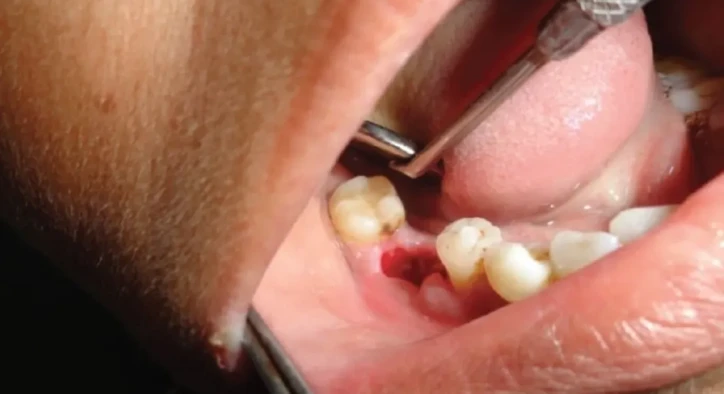
- Visible Empty Socket: Looking into the mouth reveals a dark, empty hole with visible, yellowish-white exposed bone rather than a healthy dark-red blood clot.
- Foul Breath and Unpleasant Taste: Bacterial decomposition of trapped food particles inside the bare socket creates persistent bad breath (halitosis) and a sour taste.
- Lack of Relief from Analgesics: Standard over-the-counter pain medications provide little to no relief against the intense nerve pain.
When patients ask how long does dry socket last, clinical studies show that without professional intervention, acute pain typically persists for 7 to 10 days until new granulation tissue slowly crawls over the exposed bone walls. With proper clinical treatment and medicated dressings, severe pain is often relieved within 30 to 60 minutes.
Clinical Protocols: How to Treat Dry Socket Effectively
Understanding how to treat dry socket requires a clear distinction between natural biological healing and clinical pain management. When patients wonder will dry socket heal on its own, the answer is yes: the body will eventually cover the bare bone with new soft tissue over several weeks. However, enduring the severe pain without treatment is unnecessary and puts the patient at risk of prolonged inflammation.
- [ WOUND IRRIGATION ]: Gentle warm saline or chlorhexidine rinse to clear debris
- [ MEDICATED DRESSING ]: Eugenol-impregnated sedative paste placed into socket
- [ HOME CARE MAINTENANCE ]: Monitored healing until granulation tissue covers the bone
Modern dry socket treatment protocols include:
- Gentle Socket Irrigation: The surgeon flushes the socket with warm sterile saline or an antimicrobial chlorhexidine solution to clear out trapped food particles and bacteria.
- Sedative Medicated Dressings: An analgesic, antiseptic dressing (such as Alveogyl or eugenol-based paste) is placed directly over the exposed bone walls. This immediately numbs exposed nerve endings, dropping pain levels dramatically within minutes.
- Prescription Pain Management: Targeted non-steroidal anti-inflammatory drugs (NSAIDs) are prescribed to control background bone inflammation.
- Dressing Changes: The patient returns every 24 to 48 hours for cleaning and fresh dressing placement until the bone surface is covered by healthy tissue.
Is Dry Socket Dangerous and What Are the Structural Risks?
Addressing the common patient concern (is dry socket dangerous) oral surgeons clarify that while alveolar osteitis is extremely painful, it is rarely life-threatening. However, leaving an infected or contaminated socket unmanaged can lead to localized secondary complications.
Clinical Parameter | Normal Post-Op Healing Socket | Untreated Dry Socket State |
Pain Level | Mild to moderate; decreases after 48 hours | Severe, throbbing, radiates to ear/temple |
Socket Appearance | Filled with dark-red or whitish-fibrin clot | Empty void with visible yellowish-white bone |
Breath & Taste | Normal; minor metallic taste | Strong foul odor and sour/bitter taste |
Healing Duration | Primary closure in 7 to 14 days | Delayed healing; 2 to 3+ weeks for closure |
If left untreated in vulnerable individuals, the localized inflammation can rarely spread into deeper alveolar bone spaces, developing into acute osteomyelitis or localized soft-tissue abscesses that require antibiotic therapy.
Prevention Protocols: How to Prevent Dry Socket After Extraction
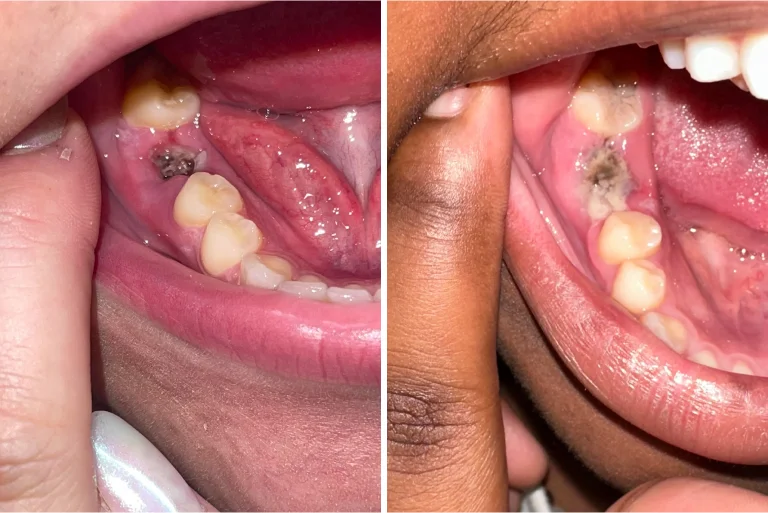
Learning how to prevent dry socket is the most reliable way to ensure smooth recovery after wisdom tooth or molar removal:
- Avoid Straws and Sucking Actions: Do not use straws or create negative pressure in your mouth for at least 7 days post-surgery.
- Do Not Smoke or Vape: Refrain from smoking tobacco, vaping, or using nicotine pouches for at least 72 hours, as suction and nicotine severely restrict blood flow.
- Avoid Vigorous Spitting and Rinsing: Gently let water fall out of your mouth rather than forcefully spitting during the first 48 hours.
- Stick to a Soft-Food Diet: Eat lukewarm, soft foods (soups, yogurt, mashed potatoes) and avoid crunchy, spicy, or sticky foods that could dislodge the clot.
- Maintain Gentle Oral Hygiene: Brush surrounding teeth carefully, avoiding the surgical site directly, and use gentle saltwater rinses starting 24 hours after surgery.
Frequently Asked Questions
What does dry socket pain feel like compared to normal extraction pain?
Normal extraction pain is a dull ache that peaks within 24 hours and steadily improves. Dry socket pain begins 2 to 4 days later as a severe, sharp, throbbing ache that radiates across the jaw, ear, and temple, and does not respond to standard painkillers.
Will dry socket heal on its own without going to the dentist?
Yes, the body will eventually heal the socket by slowly growing granulation tissue over the bone, but this takes 2 to 3 weeks of severe, unnecessary pain. Visiting a dentist allows them to place a sedative dressing that relieves the agony almost instantly.
Is dry socket dangerous if left untreated?
Dry socket itself is a localized non-infectious inflammation, but if left untreated, bacteria and food debris trapped in the bone can trigger localized infections, delayed healing, or, in rare cases, osteomyelitis (bone infection).
When can I stop worrying about getting a dry socket?
The risk of dry socket drops dramatically after the first 4 to 5 days post-extraction. Once you pass day 7, granulation tissue has formed over the socket base, making clot dislodgement virtually impossible.
Can mouthwash cause dry socket?
Yes, using commercial alcohol-based mouthwashes or vigorously swishing any liquid during the first 24 to 48 hours can chemically irritate the wound or mechanically wash away the fragile blood clot.
About the Author