





The loss of hard tooth structure near the gumline without the presence of bacterial decay represents a significant challenge in modern restorative dentistry. When evaluating notches or grooves along the cervical neck of a tooth, answering what is tooth abfraction is the critical first step toward preserving structural dental integrity. Unlike erosion (chemical breakdown from acids) or abrasion (mechanical friction from aggressive toothbrushing), abfraction occurs primarily due to heavy biomechanical biting forces that cause micro-flexure of the tooth structure along its cementoenamel junction.
For patients experiencing sharp sensitivity to cold air or noticing deep V-shaped notches near their gums, understanding what causes tooth abfraction is essential for preventing structural tooth fracture. Without timely clinical management, persistent bending stresses can cause enamel prisms to pop out at the gumline, exposing the yellowish dentin underneath and triggering sharp tooth abfraction pain. This comprehensive clinical guide explores the pathology of a tooth abfraction lesion, is tooth abfraction common, details modern tooth abfraction treatment pathways, reviews the application of a tooth abfraction filling, evaluates before and after tooth abfraction outcomes, outlines how to fix tooth abfraction, and provides a transparent breakdown of tooth abfraction repair cost.
Table Of Contents
What Is Tooth Abfraction and What Causes the Cervical Lesion?
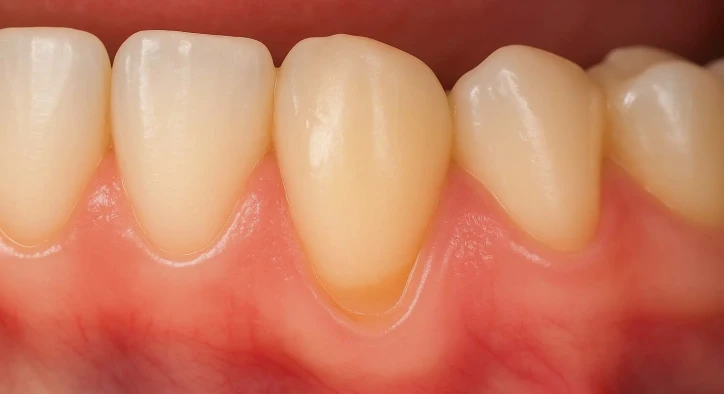
To establish an accurate diagnosis and treatment plan, clinicians must distinguish between different forms of non-carious cervical lesions (NCCLs). When explaining what is tooth abfraction, dentists define it as a micro-structural loss of mineralized tooth substance near the gumline caused by biomechanical loading forces during chewing, clenching, or grinding.
To understand what causes tooth abfraction, it helps to examine how teeth handle heavy biting stress:
- [ HEAVY OCCLUSAL / BRUXISM FORCES ]: Severe vertical and lateral stress applied during chewing
- [ CROWN FLEXURE AT GUM LEVEL ]: Tooth microscopically flexes like a tree in strong wind
- [ ENAMEL PRISM DISRUPTION ]: High tensile stress ruptures crystalline enamel rods at cervix
- [ V-SHAPED LESION FORMATION ]: Notch chips away, creating a deep wedge-shaped cavity
The primary factors driving this biomechanical breakdown include:
- Nocturnal Bruxism & Clenching: Involuntary nighttime teeth grinding exerts forces well beyond normal chewing limits, creating intense micro-bending at the cervical margins.
- Premature Occlusal Contacts & Malocclusion: Misaligned teeth or uneven biting planes concentrate excessive lateral forces on specific teeth, accelerating enamel prism breakdown.
- Synergistic Abrasion and Erosion: Once abfraction cracks the fragile enamel crystals, daily toothbrush friction (abrasion) and acidic foods (erosion) speed up the deepening of the tooth abfraction lesion.
Patients frequently ask: are tooth abfraction common? Clinical studies show that non-carious cervical lesions affect between 30% and 60% of adults worldwide, with prevalence rising significantly in patients over 40 and those who grind their teeth.
What Are the Symptoms and How to Fix Tooth Abfraction?
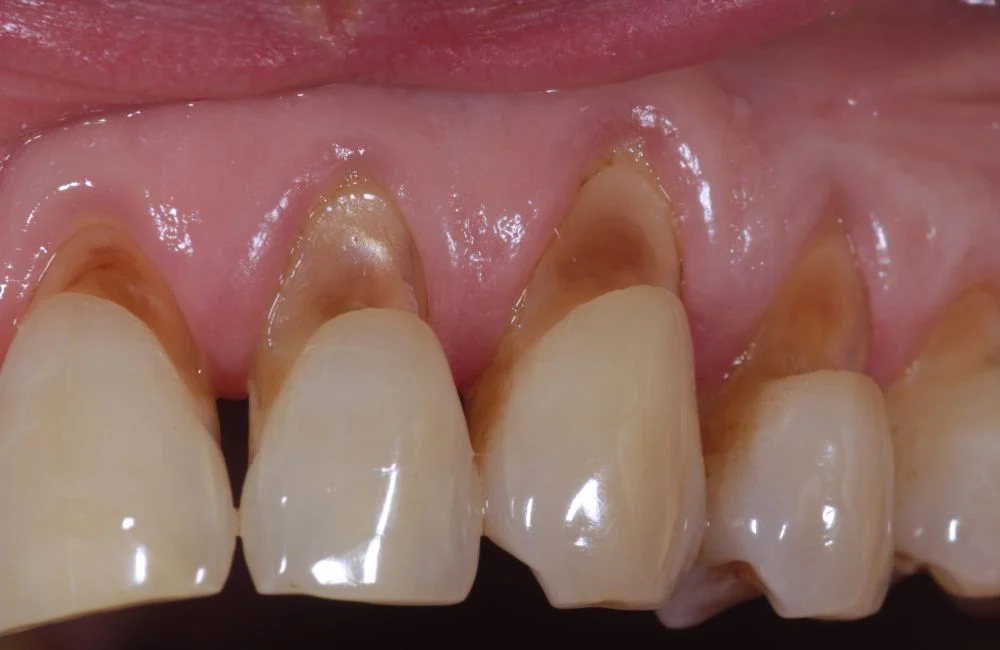
Recognizing the early warning signs allows patients to seek treatment before the defect reaches the sensitive dental pulp. Symptoms typically include sharp tooth abfraction pain triggered by cold air, acidic drinks, or direct touch, as well as a visible notch near the gumline that catches food or fingernails.
When determining how to fix tooth abfraction, modern restorative dentistry uses a multi-step protocol:
- Occlusal Adjustment & Bite Equilibration: The dentist gently refines premature biting points to distribute chewing forces evenly across the entire dental arch, removing the bending stress.
- Tooth Abfraction Filling (Restorative Bonding): The exposed notch is sealed using flexible micro-hybrid composite resin or resin-modified glass ionomer (RMGI). These materials match the natural tooth color and have an elasticity module that flexes with the tooth, preventing the filling from popping out.
- Nightguard Splint Therapy: A custom-milled hard acrylic nightguard is prescribed to protect the teeth and restorations from nocturnal bruxism forces.
- Periodontal Soft-Tissue Grafting: In cases where gum recession has exposed the root surface alongside the notch, a connective tissue graft can cover the defect and rebuild healthy pink margins.
- [ 1. OCCLUSAL BALANCING ]: Eliminate premature biting contacts and lateral stress
- [ 2. BONDING / FILLING ]: Seal exposed dentin with flexible composite/RMGI material
- [ 3. NIGHTGUARD THERAPY ]: Protect restored margins against nocturnal grinding forces
Structural Evaluation: Before and After Tooth Abfraction Treatment
Analyzing clinical outcomes in before and after tooth abfraction cases demonstrates how composite bonding and bite balancing restore both oral health and aesthetics.
Clinical Parameter | Pre-Treatment Abfraction State | Post-Treatment Restored State |
Cervical Tooth Anatomy | Deep, sharp V-shaped wedge notch near gumline | Smooth, anatomically restored natural contour |
Dentin Sensitivity & Pain | Sharp pain with cold, sweet, or touch | Zero sensitivity; dentinal tubules fully sealed |
Risk of Tooth Fracture | High; weakened tooth neck under heavy flexure | Reinforced structural strength along cervical zone |
Plaque & Food Accumulation | High; food debris routinely trapped in notch | Smooth transition; self-cleansing margin |
What Is the Tooth Abfraction Repair Cost?
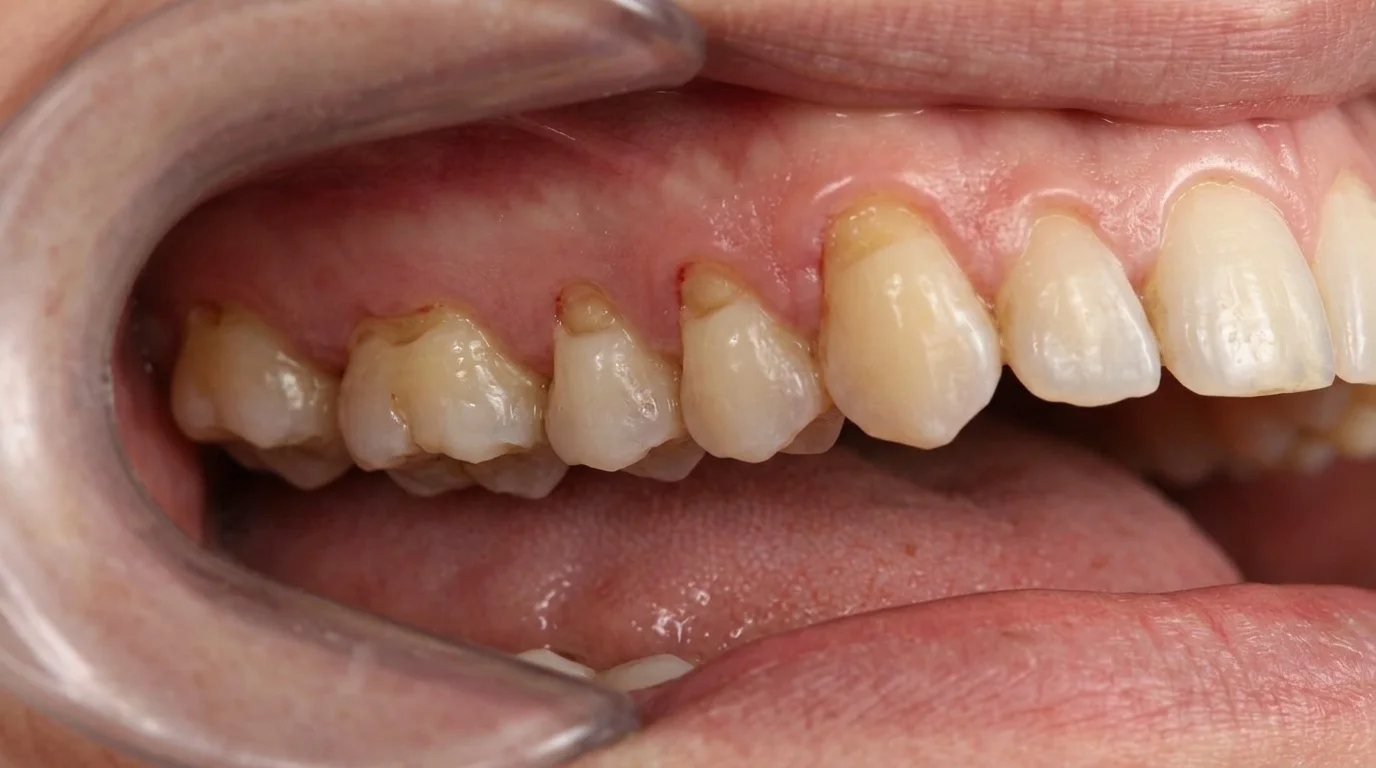
When evaluating tooth abfraction repair cost, total expenses depend on the number of teeth affected, the restorative material chosen (composite resin vs. glass ionomer), whether occlusal adjustments or nightguards are needed, and the clinic's location.
A review of average global costs for repairing cervical lesions reveals significant geographic differences:
- United Kingdom & Western Europe: £150 to £350 per tooth for a composite tooth abfraction filling, with custom-milled nightguards adding £250 to £500.
- United States: $200 to $500 per tooth for restorative bonding, plus $400 to $800 for an occlusal guard.
- DentPrime Turkey Packages: Through dedicated digital clinics and direct material sourcing, DentPrime offers premium aesthetic tooth abfraction treatment (including micro-hybrid composite bonding and occlusal balancing) for £60 to £120 per tooth, making comprehensive full-mouth care accessible.
Frequently Asked Questions
What is the main difference between tooth abfraction, abrasion, and erosion?
Abfraction is caused by mechanical flexure and bending stress from heavy biting or grinding that pops out enamel prisms at the gumline. Abrasion is physical wear caused by external objects, such as brushing aggressively with a hard toothbrush. Erosion is chemical loss of enamel caused by acidic foods, carbonated drinks, or stomach acid from acid reflux.
Will a tooth abfraction filling pop out over time?
A filling can dislodge if the underlying cause such as teeth grinding or bite misalignment is not addressed. Modern dentists use flexible resin-modified glass ionomer or flowable composite materials that flex naturally with the tooth, paired with a custom nightguard to ensure long-term retention.
Can tooth abfraction heal on its own without dental treatment?
No. Once enamel prisms and dentin break away from the tooth neck, the lost mineralized tissue cannot regenerate naturally. If left untreated, the notch will continue to deepen, increasing the risk of nerve exposure, severe sensitivity, and eventual tooth fracture.
Is tooth abfraction repair painful?
No. Repairing an abfraction lesion with composite bonding is a gentle, minimally invasive procedure. Because dentists typically do not need to cut away healthy enamel with a drill, the treatment is often completed with little to no local anesthesia and zero discomfort.
How can I prevent tooth abfraction from getting worse at home?
To prevent progression, wear a custom nightguard every night if you clench or grind your teeth, switch to an extra-soft toothbrush, avoid aggressive horizontal scrubbing at the gumline, and use a desensitizing remineralizing toothpaste containing fluoride or nano-hydroxyapatite.
About the Author