





hen structural damage from deep dental decay, failed amalgam fillings, or mechanical fractures compromises a posterior tooth, selecting an optimal restorative approach requires preserving natural enamel while restoring masticatory strength. In modern biomimetic dentistry, evaluating an inlay onlay restoration provides an exceptional middle ground between a direct composite filling and an aggressive full-coverage crown. Rather than cutting away healthy tooth walls down to the gumline, this indirect restorative approach replaces only damaged tooth anatomy, bonding a laboratory-crafted solid block directly into the tooth structure.
For patients exploring advanced tooth repair, understanding the terminology of an inlay onlay dental treatment gives clarity when deciding on care. Patients frequently evaluate the aesthetic and mechanical durability of a composite inlay onlay compared to a high-strength ceramic inlay onlay, assess the coverage spectrum of an inlay onlay overlay, review the lifelike aesthetics of a porcelain inlay onlay, and navigate the clinical indications of an inlay onlay crown design. Furthermore, understanding the technical differences in inlay onlay vs crown procedures helps patients choose solutions that preserve living pulp tissue. This clinical guide explores indirect fabrication mechanics, cuspal stress distribution, resin cementation, and long-term restorative durability.
Table Of Contents
- What Is an Inlay Onlay and How Does the Anatomical Spectrum Work?
- Material Selection: Ceramic Inlay Onlay vs Composite Inlay Onlay
- Restorative Decision: Inlay Onlay vs Crown
- Clinical Workflow: The Precision Protocol for Inlay Onlay Placement
- Longevity, Hygiene, and Preventing Failure
- Frequently Asked Questions
What Is an Inlay Onlay and How Does the Anatomical Spectrum Work?
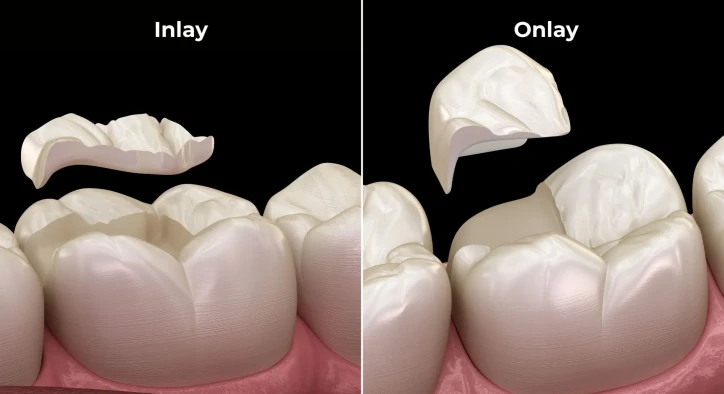
To understand how indirect restorations protect weakened posterior teeth, explaining the mechanical basis of an inlay onlay requires analyzing how much of the tooth chewing surface is replaced. Clinically recognized as indirect laboratory-milled restorations, these restorations are categorized based on their coverage of tooth cusps (the raised points on chewing surfaces of molars and premolars).
The structural hierarchy of the inlay onlay overlay spectrum follows a defined anatomical expansion:
- [ INLAY RESTORATION ]: Fits inside the deep grooves between the cusps without covering any cusp tips
- [ ONLAY RESTORATION ]: Replaces one or more fractured or weakened cusps, shielding them from vertical bite load
- [ OVERLAY RESTORATION ]: Covers all cusps across the entire occlusal chewing table while preserving tooth walls
- [ FULL DENTAL CROWN ]: Encircles the entire tooth 360 degrees, requiring extensive biological reduction
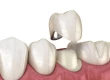
An inlay fits snugly within the central fissures of the tooth, similar to a filling but fabricated as a single monolithic block outside the mouth. An onlay extends further to cap and protect one or more weakened cusps, redirecting destructive chewing forces along the vertical axis of the tooth root. An overlay covers the complete chewing table, reinforcing severely broken teeth while leaving the healthy vertical tooth walls intact.
Material Selection: Ceramic Inlay Onlay vs Composite Inlay Onlay
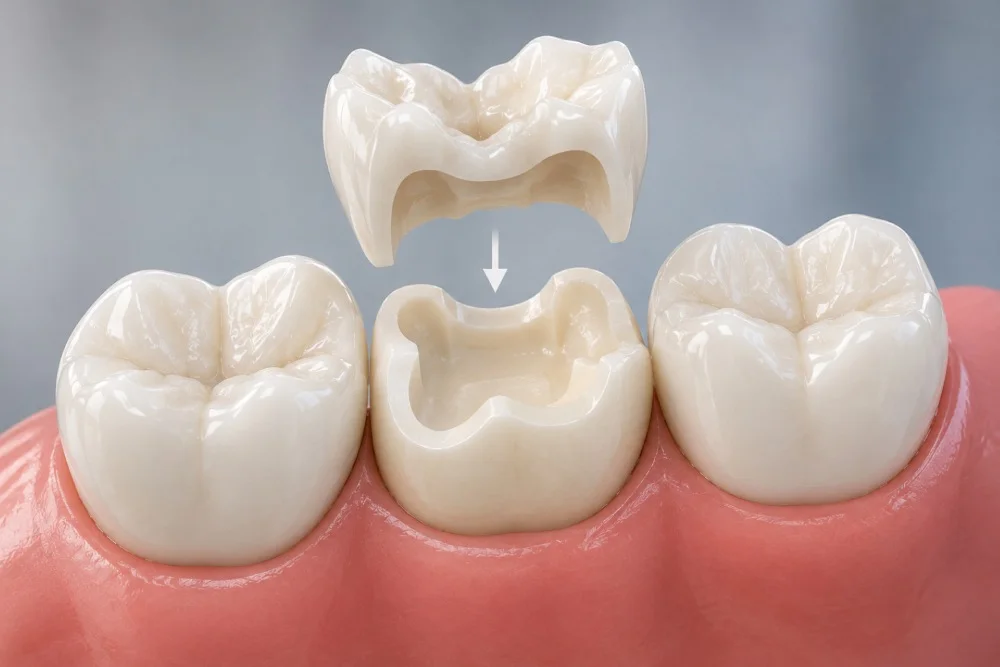
Choosing the right material determines the restoration longevity, wear compatibility, and optical naturalness. Evaluating a ceramic inlay onlay against a composite inlay onlay helps clinicians match materials to individual bite dynamics.
Clinical Parameter | Ceramic / Porcelain Inlay Onlay | Indirect Composite Inlay Onlay | Direct Resin Composite Filling |
Material Base | Milled lithium disilicate or feldspathic | Heat and pressure-cured composite resin | Light-cured paste placed directly by hand |
Polymerization Shrinkage | 0% shrinkage inside the tooth cavity | 0% shrinkage inside the tooth cavity | 2% to 4% shrinkage causing micro-gaps |
Fracture Resistance | Very high; absorbs heavy chewing force | Moderate to high; softer on opposing teeth | Moderate; prone to chipping over time |
Stain Resistance | Glazed ceramic surface resists all stains | Mild staining over years of coffee or tea | Noticeable discoloration at margin borders |
Typical Lifespan | 15 to 20 years or longer | 8 to 12 years | 5 to 7 years |
A porcelain inlay onlay fabricated from CAD/CAM lithium disilicate (E-Max) provides outstanding biocompatibility and light transmission matching natural enamel. In contrast, indirect composite restorations offer slight resilience that can cushion heavy bite forces in patients with mild bruxism, though ceramic remains the international gold standard for long-term aesthetic stability.
Restorative Decision: Inlay Onlay vs Crown
Understanding the biological advantages of an inlay onlay vs crown helps patients understand why conservative dentistry avoids aggressive tooth grinding whenever possible.
Clinical Metric | Conservative Inlay / Onlay / Overlay | Traditional Full-Coverage Crown |
Healthy Tooth Reduction | 10% to 30% tooth structure removed | 60% to 75% healthy tooth enamel ground away |
Margin Position | Supragingival; safely placed above the gums | Subgingival; often encroaches on delicate gums |
Gingival Inflammation Risk | Extremely low; leaves gum tissues untouched | Higher risk of chronic margin redness or irritation |
Pulp Vitality Preservation | High; minimal thermal and mechanical trauma | Higher risk of nerve death requiring a root canal |
Secondary Decay Detection | Margins easily seen and cleaned with floss | Margins hidden beneath the gumline |
When preparing a tooth for a standard inlay onlay crown alternative, the clinician preserves the natural outer enamel shell. Retaining natural enamel margins allows modern adhesive resin cements to form a micro-mechanical bond that restores the natural flexural strength of the original tooth.
Clinical Workflow: The Precision Protocol for Inlay Onlay Placement
Fabricating and placing an indirect restoration requires a precise, two-stage or same-day digital workflow:
- Cavity Preparation and Biological Sealing: The dentist removes old fillings and decayed dentin, creating divergent cavity walls with smooth internal angles. Immediate Dentin Sealing (IDS) is applied to protect the tooth nerve from sensitivity.
- Digital 3D Scanning: Rather than using unpleasant putty trays, a high-precision intraoral scanner captures the exact 3D geometry of the prepared tooth and opposing bite.
- CAD/CAM Milling or Laboratory Crafting: The digital file is sent to an in-office milling unit or master laboratory, where a solid block of ceramic or composite is carved with micron-level margins.
- Try-In and Aesthetic Verification: The clinician verifies contact tightness, marginal adaptation, and natural bite alignment without cement.
- Adhesive Cementation Under Rubber Dam: The tooth is isolated with a rubber dam to prevent saliva contamination. Both the tooth and ceramic surfaces are chemically conditioned (etched and silanated) before bonding under a dual-cure resin cement.
Longevity, Hygiene, and Preventing Failure
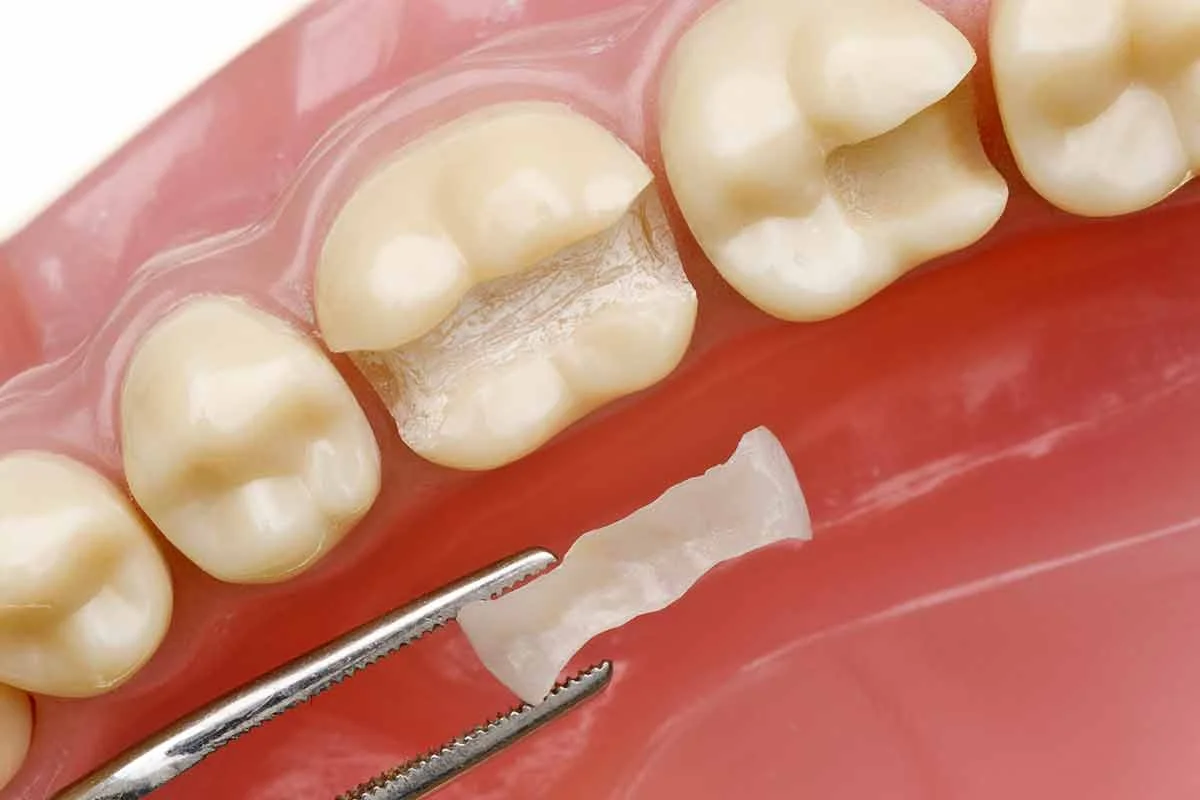
Clinical studies demonstrate that a properly bonded indirect ceramic restoration offers exceptional durability, functioning smoothly for 15 to 20 years. Because these restorations are cured completely outside the oral cavity under high industrial heat or milled from dense prefabricated blocks, they suffer zero polymerization shrinkage stress, eliminating the microscopic marginal gaps that cause recurring tooth decay.
To protect your investment and maintain structural integrity:
- Daily Interdental Hygiene: Floss daily around the bonded margins. Unlike rough direct fillings, polished ceramic margins allow floss to glide smoothly without shredding.
- Non-Abrasive Cleaning: Brush twice daily using fluoride toothpaste and a soft-bristled toothbrush, avoiding abrasive charcoal pastes that could dull restorative gloss.
- Protection Against Clenching: Patients who grind their teeth at night should wear a custom-fitted nightguard to distribute heavy nocturnal biting forces evenly and protect ceramic margins from fracture.
Frequently Asked Questions
What is the main difference between an inlay and an onlay?
An inlay fits entirely within the central contours and grooves of the chewing surface without covering any cusps. An onlay is a larger restoration that extends over one or more cusps to shield weakened tooth walls from breaking under bite pressure.
Does getting an inlay or onlay hurt?
No. The procedure is performed under local anesthesia, ensuring you feel no pain during decay removal and preparation. Because indirect preparations remove far less tooth structure than full crowns, post-operative nerve sensitivity is minimal and resolves within a few days.
Can an inlay or onlay fall out?
While it is rare when properly bonded, an indirect restoration can loosen if the adhesive cement deteriorates over many years, if recurring decay develops beneath the margin, or if severe teeth grinding breaks the bond. If a restoration comes loose, keep it clean and bring it to your dentist immediately for re-cementation.
Why is an onlay considered better than a full crown?
An onlay is more conservative than a crown because it preserves 60% to 75% of your natural, healthy tooth structure. By retaining your natural enamel walls and keeping preparation margins above the gumline, an onlay protects the living dental nerve and avoids gum inflammation.
Is a ceramic inlay onlay noticeable when I open my mouth?
No. Ceramic inlays and onlays are milled from tooth-colored porcelain or lithium disilicate materials that match your natural tooth shade, translucency, and light dynamics. Once bonded with tooth-colored resin cement, the restoration blends seamlessly with your surrounding enamel.
About the Author