





A smile’s aesthetic appeal relies heavily on symmetry, balance, and the subtle contours of the enamel borders. Even minor structural imbalances can draw disproportionate attention and affect your self-confidence.
In modern minimally invasive cosmetic dentistry, tooth shaping (technically known as enameloplasty, dental contouring, or odontoplasty) has emerged as one of the most effective, conservative methods to instantly harmonize your smile without requiring extensive, multi-stage dental work.
Despite its simplicity, modifying the outer crystalline structure of a biological tooth requires strict adherence to anatomical limits, precise diagnostic planning, and a clear understanding of enamel thickness. This comprehensive, 1500-word clinical guide explores the detailed mechanics of the teeth reshaping procedure, analyzes long-term safety profiles, highlights potential tooth contouring side effects, and compares it directly against comprehensive restorative treatments like custom porcelain veneers.
Table Of Contents
- What Is Tooth Shaping? Understanding Enamel Architecture
- Direct Clinical Intentions: What Can Contouring Fix?
- The Step-by-Step Teeth Reshaping Procedure
- Structural Comparison: Tooth Reshaping vs Veneers
- Comprehensive Safety Profile: Is It Safe to Shape Teeth?
- Clinical Realities: Tooth Contouring Side Effects and Limits
- Case Transformations: Tooth Reshaping Before and After Expectation
- Financial Analysis: Is Teeth Reshaping Worth It?
- Frequently Asked Questions
What Is Tooth Shaping? Understanding Enamel Architecture
When patients ask, "What is tooth shaping?" they are exploring a specialized micro-reduction cosmetic treatment designed to alter the physical geometry of a biological tooth. To fully understand how this procedure functions, it is essential to look at the structural anatomy of a human tooth:
Enamel is the highly mineralized, translucent outermost shell of the tooth crown, composed almost entirely of hydroxyapatite crystals. Unlike the underlying dentin layer or the central pulp chamber, enamel contains absolutely no living nerve pathways, vascular tissue, or cellular systems.
Because it lacks nerve endings, a dental professional can meticulously trim away fractional layers of enamel without causing discomfort. The primary goal of cosmetic contouring is to carefully guide the reflection of light across your smile by subtly altering the silhouettes of the front teeth, smoothing away structural defects, and restoring a balanced line to your smile.
Direct Clinical Intentions: What Can Contouring Fix?
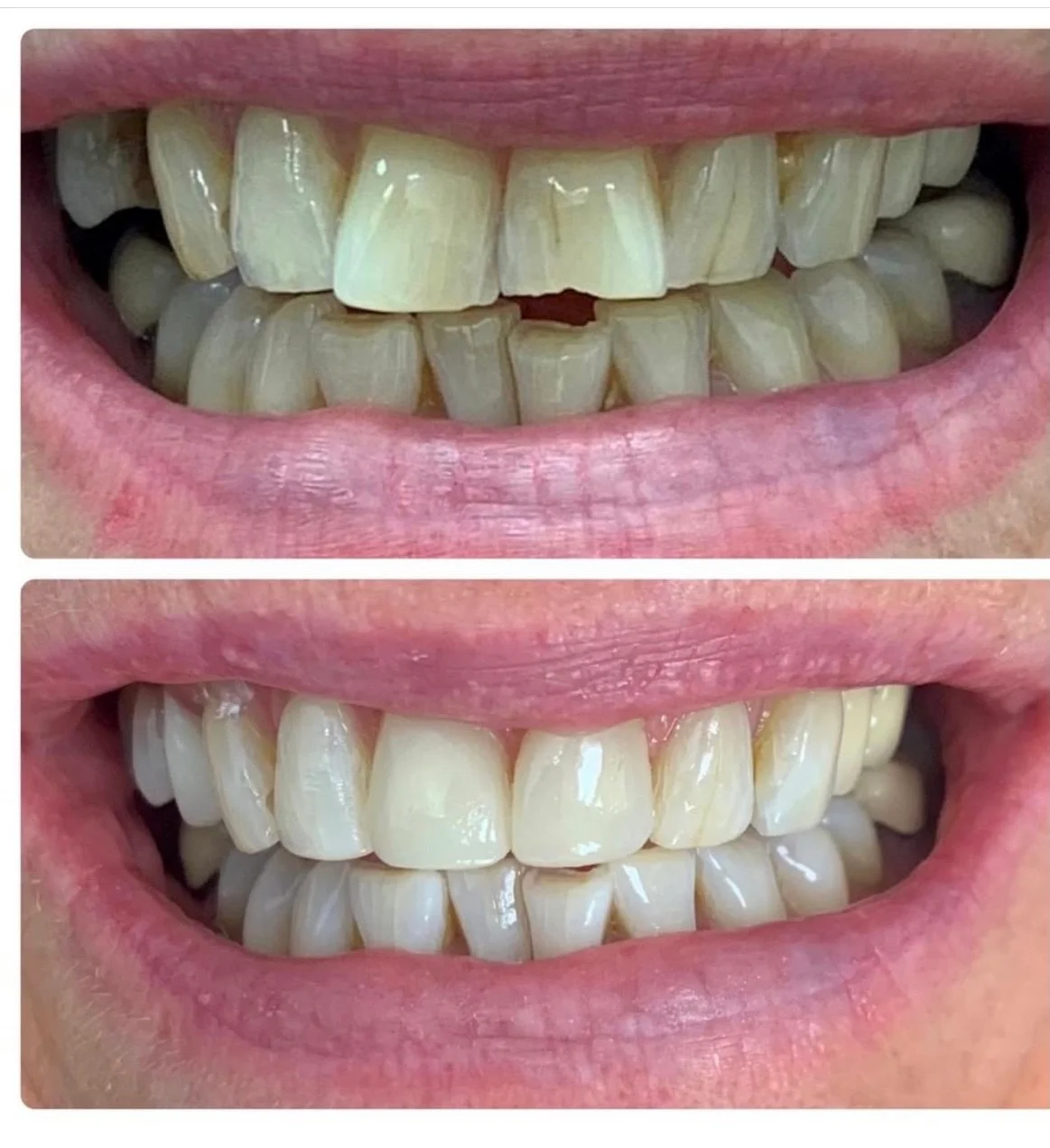
Cosmetic contouring is a precise, subtle treatment. Rather than completely restructuring your bite, it is designed to address specific aesthetic concerns:
- Smoothing Minor Enamel Chips: Resolving superficial fractures along the incisal edges of the front teeth caused by accidental trauma or nail-biting.
- Softening Pronounced Canines: Reducing unusually pointed or elongated canine teeth to create a softer, more balanced smile line.
- Correcting Slight Length Discrepancies: Leveling uneven front teeth when one central incisor sits slightly lower than its counterpart.
- Refining Incisal Angles: Adjusting sharp, boxy angles on front teeth to give them a smoother, more natural-looking roundness.
- Eliminating Micro-Overlaps: Shaving down microscopic surface projections that create shadows and give the false impression of a severe misalignment.
The Step-by-Step Teeth Reshaping Procedure
A professional teeth reshaping procedure is an efficient treatment that is routinely completed within a single clinical visit lasting between 20 and 45 minutes, depending on how many teeth require adjustment.
Step 1: Advanced Digital Radiography and Diagnostics
The procedure must always begin with high-resolution digital x-rays. This diagnostic step allows your cosmetic dentist to measure the exact thickness of your enamel matrix and locate the precise position of the internal pulp chamber. Everyone's anatomy is unique, and verifying that your teeth have a safe amount of outer enamel is essential to protect your oral health.
Step 2: Mapping and Artistic Marking
With the diagnostic data verified, the clinician uses a specialized carbon marker to draw directly onto the enamel surfaces. This step maps out the planned alterations right on your teeth, allowing you to review and discuss the balanced visual changes in a mirror before any modifications begin.
Step 3: High-Precision Micro-Reduction
The dentist uses specialized, ultra-fine-grit diamond burs and a high-speed handpiece to delicately shave away targeted fractions of a millimeter of enamel. The instrument is held at a precise angle to sculpt the edges, remove small chips, and smooth out uneven surfaces safely and evenly.
Step 4: Interproximal Slenderizing (If Required)
If you have tight, overlapping teeth, the clinician may gently guide an ultra-thin diamond-coated abrasive strip between the teeth. This subtle adjustment trims away minor contact points, opening up the space slightly to make the teeth look straighter and less crowded.
Step 5: Advanced Contouring, Polishing and Glazing
Once the structural modifications are complete, the newly contoured edges undergo a multi-stage polishing sequence. Using flexible aluminum oxide discs, specialized rubber cups, and high-gloss diamond polishing pastes, the dentist smooths down every surface. This critical final step ensures the treated enamel matches the natural glossy shine and light-reflecting properties of the rest of your teeth.
Structural Comparison: Tooth Reshaping vs Veneers
When looking for the best way to fix front-tooth asymmetries, patients frequently compare tooth reshaping vs veneers. While both options deliver excellent cosmetic improvements, their clinical applications, procedural timelines, and material costs are fundamentally different.
Evaluation Metric | Micro Tooth Reshaping (Contouring) | Premium Porcelain Veneers (E-Max) |
Primary Mechanism | Superficial reduction of natural enamel layers | Bonding a custom porcelain shell over the tooth |
Anatomical Modification | Subtly removes structural tissue | Preserves structure; requires minimal surface prep |
Shade Alteration Scope | None (retains the tooth's existing color) | Unlimited (completely transforms dark stains) |
Anesthesia Protocol | Completely needle-free; zero local injections | Minimal numbing during the preparation phase |
Treatment Timeline | Completed in a single 30-minute visit | Requires 5 to 7 days for precision lab work |
Structural Longevity | Permanent (the modified enamel shape is stable) | 15 to 25 years (will eventually require updates) |
Financial Investment | Highly cost-effective | Premium cost due to advanced laboratory fees |
Comprehensive Safety Profile: Is It Safe to Shape Teeth?
When patients ask, "Is it safe to shape teeth?" or wonder "is tooth contouring safe for my long-term dental health?", the clinical consensus is clear: Yes, tooth contouring is completely safe, provided the procedure is planned and performed by an experienced cosmetic dentist.
Because the modifications are kept strictly within the non-vital outer enamel layer, the procedure does not compromise the internal health or structural integrity of your teeth. Enamel lacks cellular regenerative capabilities, meaning once it is removed, it does not grow back.
However, as long as the reduction stays within a conservative threshold—typically removing less than 0.5mm—the remaining enamel continues to provide full structural protection against decay, temperature changes, and daily biting forces.
The primary risk to safety occurs if an unqualified individual attempts to aggressively file down teeth at home using unsterilized abrasive tools. Doing so can cause permanent damage, strip away your tooth's protective layer, expose the delicate dentin underneath, and lead to chronic dental issues.
Clinical Realities: Tooth Contouring Side Effects and Limits
While the complication rate for standard micro-contouring is exceptionally low, pushing past safe anatomical limits can lead to certain tooth contouring side effects:
- Increased Thermal Sensitivity: If too much enamel is removed and the reduction sits too close to the dentin matrix, teeth can become sensitive to very hot or cold foods and drinks.
- Thinning of the Protective Layer: Over-preparing a tooth can leave behind a thinner layer of enamel, making it more vulnerable to acid erosion from everyday foods and plaque buildup over time.
- Aesthetic Asymmetries in the Bite: Contouring can only remove structure; it cannot add volume. If you try to correct a significantly smaller or recessed tooth by filing down the healthy teeth next to it, you risk disrupting the natural alignment and balance of your bite.
Case Transformations: Tooth Reshaping Before and After Expectation
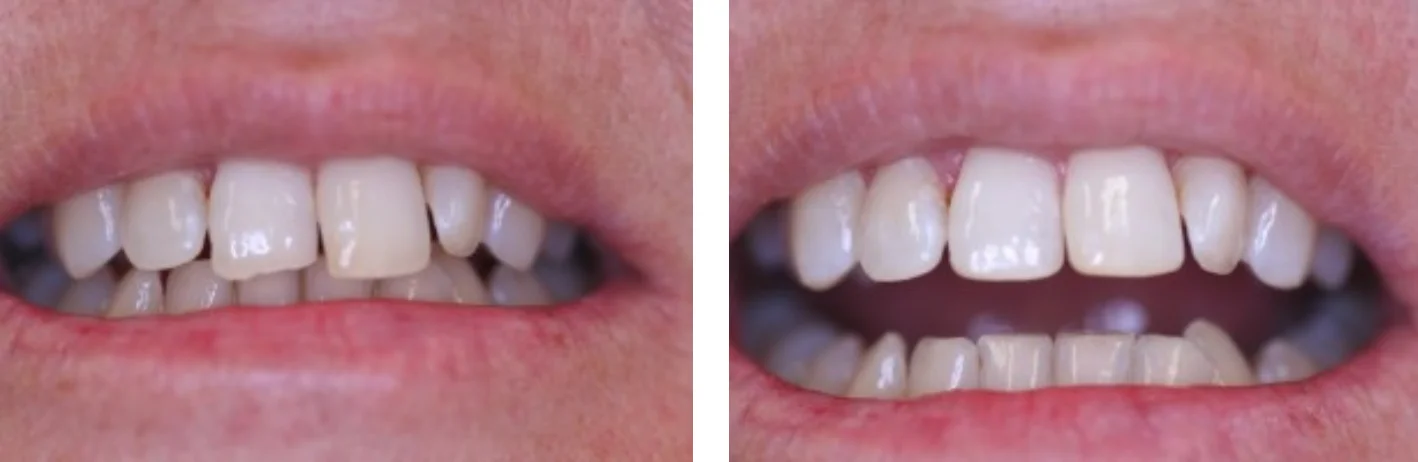
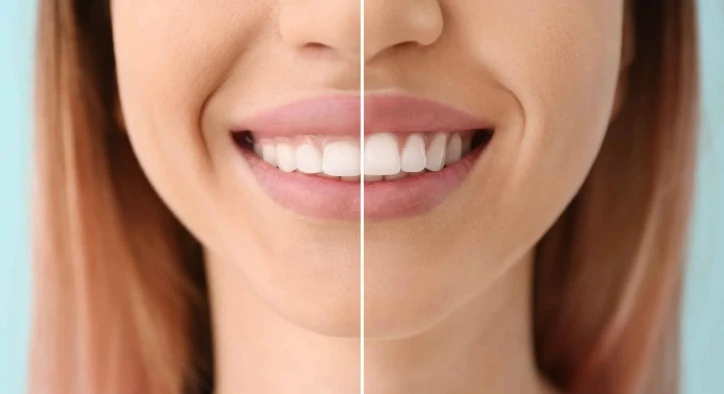
When reviewing real-world results of a tooth reshaping before and after transformation, it helps to have realistic expectations of what a conservative micro-reduction can achieve.
The transformation does not change the core color of your teeth or fix severe structural misalignments. Instead, it subtly refines the details of your smile. After a single appointment, rough edges are smoothed away, pointed teeth look softer, and the overall smile line looks visibly straighter and more uniform.
Financial Analysis: Is Teeth Reshaping Worth It?
When exploring treatment options, patients often ask: Is teeth reshaping worth it? The answer depends entirely on your specific cosmetic goals and the extent of the changes you want to make.
If you are looking to fix major cosmetic concerns contouring alone will not be enough, and investing in porcelain veneers or orthodontic alignment is the better choice.
However, if your teeth are healthy but have small chips or minor length imbalances, contouring is an exceptionally worthwhile option. It delivers immediate, life-changing aesthetic improvements at a fraction of the cost of complex cosmetic restorations, completely free of needles, pain, or temporary mock-ups.
Frequently Asked Questions
Does reshaping a tooth hurt?
No, the procedure is completely painless. Because your cosmetic dentist works exclusively within the outer enamel layer does reshaping a tooth hurt? The answer is a definitive no. The treatment is performed without any local anesthesia, and the only thing you will feel is a mild, harmless vibration from the polishing tools.
Can a tooth grow back its enamel after shaping?
No. Human enamel is a highly mineralized, non-living structure that lacks cellular systems, meaning it cannot regenerate or grow back once it is removed. However, as long as the reduction is kept within conservative limits, the remaining enamel will remain strong and perfectly protective for life.
Can tooth shaping fix overcrowding?
Contouring can be used for very minor adjustments, such as smoothing down a slightly overlapping edge to make teeth look straighter. However, it cannot correct moderate or severe structural crowding. For those issues, orthodontic treatments like clear aligners or custom porcelain veneers are required.
Will contouring make my teeth more prone to cavities?
Not when it is performed correctly by a professional. As long as the reduction stays within a safe, conservative thickness, the polished enamel remains just as resistant to plaque and decay as it was before. Maintaining a good home routine of twice-daily brushing and daily flossing is all you need to keep your smile healthy.
About the Author