




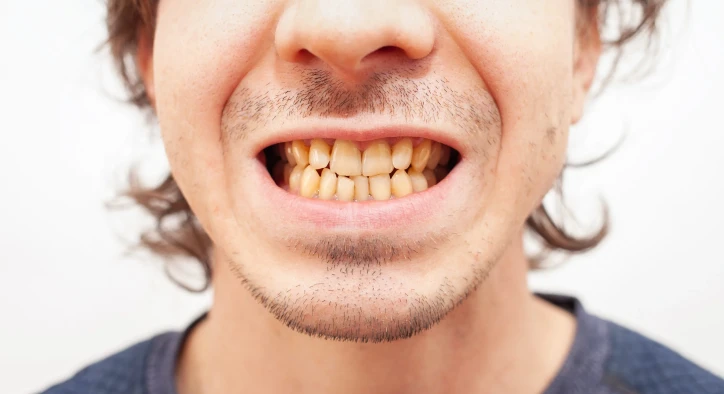

A bright, uniform smile line is universally associated with youth, health, and vitality. However, as time passes, many individuals notice their enamel losing its bright white shade and turning a persistent, dull yellow. When evaluating this cosmetic shift, a comprehensive look at yellow teeth causes requires examining the internal structure of the tooth, daily habits, and changes that happen as we age.
Discoloration is rarely a simple surface issue. To fix the problem permanently, your cosmetic team must differentiate between surface stains and internal changes within the deeper dentin layers. This clinical guide explores the chemistry of enamel thinning, looks at genetic factors, shares advice on how to get rid of yellow teeth safely, and reviews advanced professional treatments.
Table Of Contents
- What Are the Core Structural Yellow Teeth Causes?
- Is Yellow Teeth Normal or an Indicator of Dental Pathology?
- Exploring Unconventional Sources: Yellow Teeth Vitamin Deficiency
- Comprehensive Review: Yellow Teeth Causes and Treatment Matrix
- Professional Clinical Systems: How to Whiten Yellow Teeth Safely?
- Structural Comparison: Home Whitening vs. Professional Systems
- Frequently Asked Questions
What Are the Core Structural Yellow Teeth Causes?
To understand why teeth change color, it helps to review basic dental anatomy. The crown of a tooth consists of two distinct tissue layers: the outer enamel and the internal dentin.
- [ OUTSIDE ENVIRONMENT ] ── Chromogens (Coffee/Tobacco) ── Absorb into porous enamel pores
- [ OUTER ENAMEL SHIELD ] ── Translucent Hydroxyapatite ─── As it thins, transparency increases
- [ INTERNAL DENTIN CORE ] ─ Naturally Dense Yellow Matrix ── Becomes more visible over time
The outer layer, enamel, is made of highly mineralized hydroxyapatite crystals. This shield is naturally translucent and light-reflecting, acting like a clear glass window. Directly underneath sits the dentin, a dense, calcified tissue matrix that is naturally yellow.
When you have very yellow teeth causes are usually linked to a combination of surface staining and enamel thinning. As the clear outer enamel wears down from daily chewing, brushing too hard, or acid exposure, it becomes more transparent. This thinning allows the dark yellow color of the underlying dentin to show through much more prominently, altering your overall smile line.
Is Yellow Teeth Normal or an Indicator of Dental Pathology?
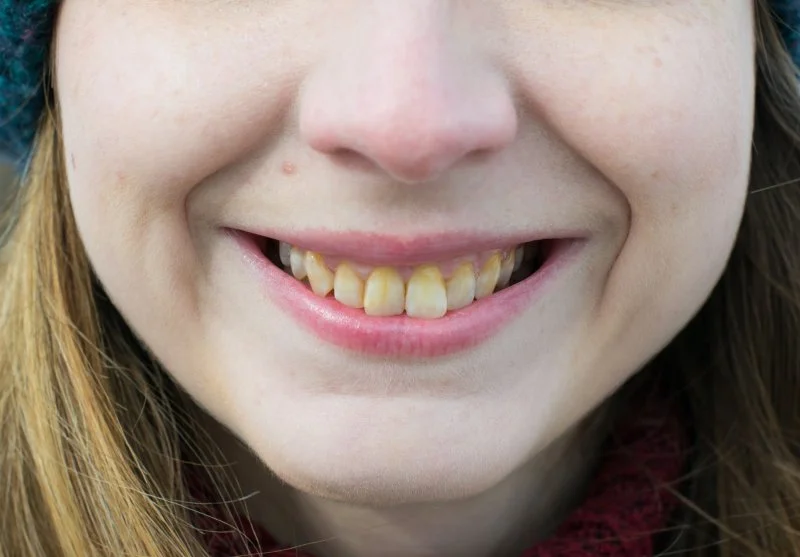
Patients often ask their hygienist: "is yellow teeth normal?" and "are yellow teeth healthy?" From a biological perspective, a mild yellowish tint is entirely normal and healthy.
Natural enamel is not a solid, opaque white paper sheet; its translucency means a healthy tooth will always show some of the warm, underlying dentin color. In fact, slightly yellowish teeth that have thick, intact enamel can be structurally stronger than teeth that are bleached to an artificial, opaque white.
However, if your teeth turn a deep, sudden, or uneven dark yellow, it usually points to an underlying issue. Severe discoloration can indicate chronic enamel erosion, subgingival plaque buildup, or internal nerve trauma, meaning a checkup is needed to protect your oral health.
Exploring Unconventional Sources: Yellow Teeth Vitamin Deficiency
While lifestyle habits like drinking coffee, tea, or smoking are well known surface stain culprits, systemic nutritional changes can also alter enamel density. A persistent yellow teeth vitamin deficiency link usually involves two critical nutrients:
- Vitamin D and Calcium Deficiencies: Vitamin D is essential for helping your body absorb calcium and phosphate minerals. If a child experiences a severe lack of Vitamin D while their permanent teeth are developing, the enamel may fail to mineralize completely. This issue, known as enamel hypoplasia, causes the adult teeth to erupt with a permanently thin, yellowish, and structurally weak outer layer.
- Vitamin C Insufficiency: A lack of ascorbic acid (Vitamin C) weakens the collagen bonds within your gums, leading to bleeding and localized inflammation. When gums are chronically swollen, plaque bacteria accumulate much more rapidly along the root margins, leading to rapid surface staining and accelerated enamel wear.
Comprehensive Review: Yellow Teeth Causes and Treatment Matrix
Resolving discoloration requires matching the right professional treatment to the exact cause of your enamel mineral loss:
1. Extrinsic Surface Stains
Daily habits like drinking black tea, red wine, or using tobacco introduce porous chromogen molecules into your mouth. These pigments bind to the microscopic valleys of your enamel, causing noticeable surface discoloration.
Learning how to clean yellow teeth effectively involves removing these surface stains through professional dental scaling and polishing, or by using a sonic toothbrush with low-abrasive pastes at home.
2. Intrinsic Aging and Thinning
As we age, the internal pulp chamber naturally produces extra layers of dense dentin over time, making the inside of the tooth look darker. Combined with decades of slow enamel wear from chewing, this internal shift creates a deep coloration that surface polishing pastes cannot fix.
3. Structural Enamel Genetic Variations
Conditions like dentinogenesis imperfecta or systemic ameloblast disruptions can cause teeth to develop with atypical internal structures, resulting in a deep amber or dark gray-yellow shade from birth.
Professional Clinical Systems: How to Whiten Yellow Teeth Safely?
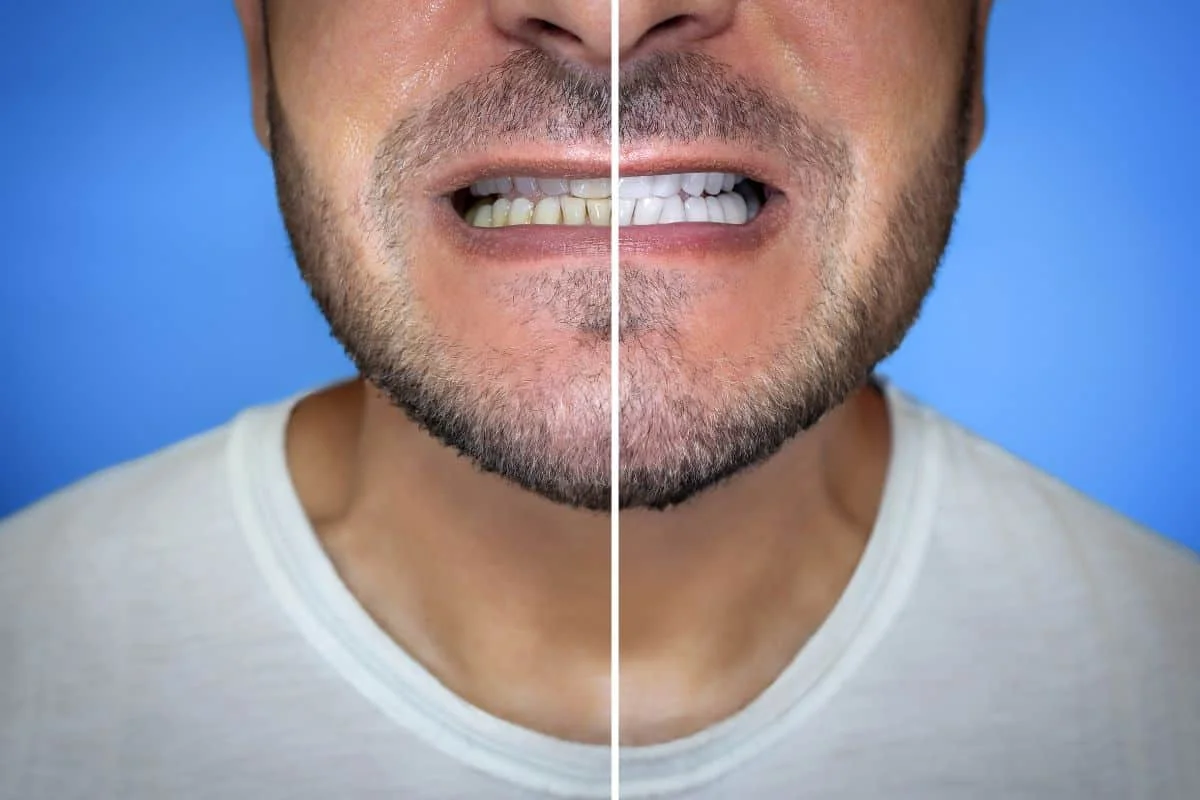
When exploring options for yellow teeth causes and treatment, patients often look for fast, dependable ways explaining how to whiten yellow teeth without damaging their enamel. Modern cosmetic dentistry offers three primary professional options:
1. Professional In-Office Laser Bleaching
This treatment is the gold standard for removing stubborn stains. Your dentist applies a highly concentrated hydrogen peroxide gel to the tooth surfaces, then activates the molecules using a specialized laser light.
The activated oxygen molecules travel deep into the porous enamel matrix, breaking down the chemical bonds of dark pigments without altering the underlying tooth structure. This fast technique can brighten your smile by up to eight shades during a single visit.
2. Custom Home-Bleaching Kits
For a more gradual transformation, your clinician can fabricate custom dental trays that match your teeth perfectly. You fill these trays with a professional grade carbamide peroxide gel and wear them for an hour each day at home. This controlled approach provides beautiful, long-lasting results over a two-week period.
3. Premium Porcelain Veneers and Zirconia Crowns
If your discoloration is driven by severe enamel thinning, deep tetracycline staining, or genetic conditions, chemical bleaching gels may not deliver full cosmetic correction.
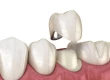
In these advanced cases, learning how to fix yellow teeth permanently involves placing custom porcelain veneers or ultra-thin zirconia crowns. These premium restorations sit flush with your gum line, completely covering deep internal defects and providing a uniform, radiant smile that remains stable for decades.
Structural Comparison: Home Whitening vs. Professional Systems
Treatment Approach | Active Whitening Agent | Enamel Safety Index | Visual Success Rate |
In-Office Laser System | High-concentration Hydrogen Peroxide | Outstanding (dentist monitored) | Exceptional; brightens up to 8 shades |
Custom Dental Trays | Professional Carbamide Peroxide Gel | High (precision fit protects gums) | Great; gradual change over 14 days |
Premium E-Max Veneers | Custom Ceramic Matrix Overlay | Permanent structural replacement | Flawless, uniform color management |
Home Charcoal Pastes | Coarse Abrasive Carbon Micro-particles | Very poor (scratches thinned enamel) | Extremely low; accelerates yellowing |
Frequently Asked Questions
Can natural remedies get rid of yellow teeth safely?
No, attempting to learn how to remove white spots on teeth naturally or whiten yellow teeth using homemade mixtures of baking soda, activated charcoal, or pure lemon juice will cause permanent damage to your smile. Because these kitchen remedies are highly abrasive or acidic, they strip away your remaining clear enamel, exposing the yellow dentin underneath and leading to severe sensitivity and faster staining.
Why do my teeth look yellow again a few days after whitening?
This temporary shift happens because professional bleaching gels slightly dehydrate the outer enamel matrix during treatment. As your saliva naturally rehydrates the teeth over the following 48 hours, the enamel regains its natural translucency, causing the warm color of the underlying dentin to look slightly more visible again.
Does using a hard toothbrush help clean yellow teeth better?
No, brushing with hard bristles or applying too much pressure will not remove deep stains. Instead, aggressive brushing acts like sandpaper, wearing away your protective enamel layer and exposing the yellow dentin underneath. Always use an ultra-soft toothbrush and practice gentle, circular brushing motions.
When should I choose porcelain veneers over chemical bleaching?
You should choose porcelain restorations if your yellow shade is caused by severe enamel loss, deep developmental stains, or internal nerve trauma. In these scenarios, bleaching gels cannot alter the color of the deeper tissues, making custom ceramic crowns or veneers the only reliable way to achieve a uniform, bright appearance.
About the Author