




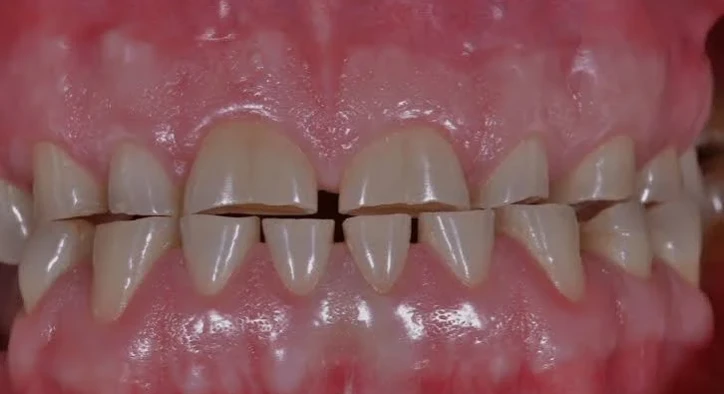

The gradual, non-bacterial wear of dental hard tissues caused by direct tooth-to-tooth friction represents a highly destructive biomechanical disorder. When evaluating occlusal breakdown and enamel loss, answering what is tooth attrition marks a critical first step toward preserving structural oral health. Unlike erosion (acid wear) or abrasion (foreign-object friction), attrition occurs exclusively along biting surfaces when upper and lower teeth repeatedly grind against each other under excessive force.
For patients noticing flattened incisal edges, shortened crowns, or sudden temperature sensitivity, identifying tooth attrition causes early is essential to prevent permanent jaw joint dysfunction and facial height collapse. Without timely clinical management, friction eventually strips away protective enamel, exposing the softer yellowish dentin underneath and dramatically accelerating tissue breakdown. This comprehensive clinical guide explores the pathology of mechanical friction, details the stages of severe tooth attrition, reviews effective steps on how to prevent tooth attrition, and provides a transparent overview of modern tooth attrition treatment options.
Table Of Contents
- What Is Tooth Attrition and What Causes the Condition?
- What Are the Clinical Complications of Severe Tooth Attrition?
- Restorative Strategies: What Are the Tooth Attrition Treatment Options?
- Structural Evaluation: Before and After Treatment Outcomes
- How to Prevent Tooth Attrition and Protect Your Investment
- Frequently Asked Questions
What Is Tooth Attrition and What Causes the Condition?
To establish a proper restorative plan, clinicians must differentiate between physiological (age-related) wear and pathological tissue loss. When answering what is tooth attrition, dentists define it as functional or parafunctional hard-tissue wear resulting exclusively from contact between opposing arch teeth.
The primary tooth attrition causes include several interacting mechanical and systemic factors:
- Nocturnal Bruxism (Involuntary Teeth Grinding): Unconscious, high-force clenching or grinding during sleep generates extreme biting forces, stripping enamel micro-layers night after night.
- Malocclusion and Bite Misalignment: Irregular tooth positioning or crowded arches create uneven contact points, concentrating heavy friction onto a few overloaded teeth.
- Temporomandibular Joint (TMJ) Instability: Jaw joint dysfunction forces surrounding muscles to compensate through involuntary clenching, accelerating friction along biting borders.
- Coarse or High-Friction Diets: Consuming hard, abrasive foods over decades speeds up physical surface friction, particularly in patients with naturally thin enamel.
- [ PARAFUNCTIONAL FRICTION ]: Excessive biting force triggers direct enamel-to-enamel grinding
- [ ENAMEL LAYER STRIPPING ]: Protective outer shell wears down, exposing underlying dentin
- [ ACCELERATED WEAR PHASE ]: Softer dentin wears 5x faster, shortening crown height
- [ OCCLUSAL HEIGHT COLLAPSE ]: Vertical dimension decreases, straining TMJ joints and facial muscles
Because dentin wears down roughly five times faster than enamel once exposed, untreated mechanical friction quickly progresses from minor surface smoothing to widespread structural loss across the arch.
What Are the Clinical Complications of Severe Tooth Attrition?
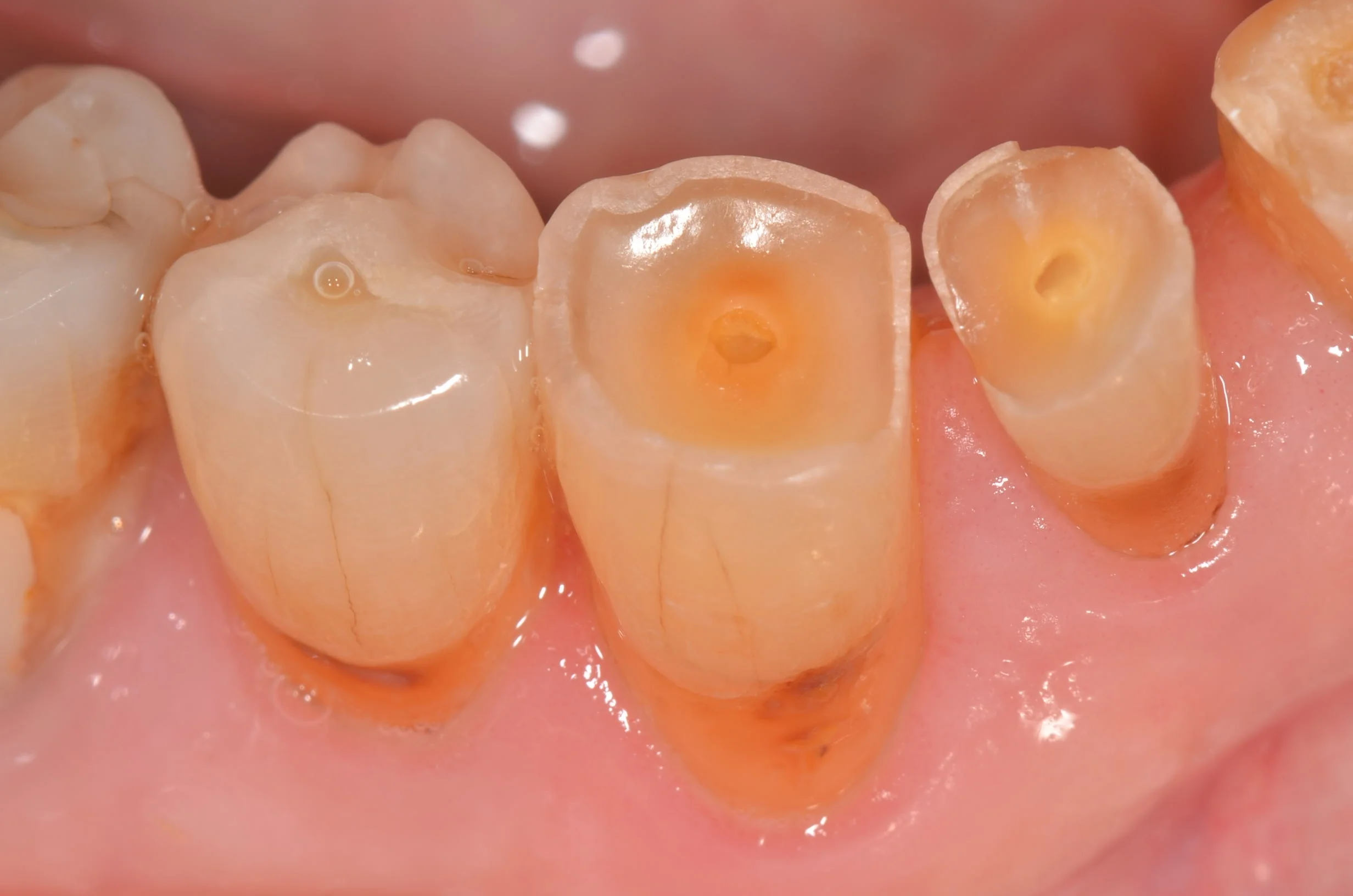
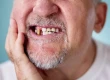
When friction continues unmanaged over several years, the condition transitions into severe tooth attrition, affecting far more than just the cosmetic appearance of your teeth.
Clinical signs of advanced structural loss include:
- Collapse of Vertical Dimension of Occlusion (VDO): Shortened teeth reduce lower facial height, causing deep creases around the mouth, thin lips, and an aged facial profile.
- Dentin Exposure and Sharp Sensitivity: Stripping away enamel leaves dentinal tubules open to hot, cold, and sweet foods, triggering sharp nerve pain.
- TMJ Discomfort and Myofascial Pain: Loss of stable biting support forces jaw joints out of alignment, causing clicking, popping, chronic tension headaches, and neck pain.
- Enamel Fractures and Sharp Borders: Worn, thin incisal edges frequently chip or fracture under normal chewing pressures, creating sharp edges that irritate the tongue and cheeks.
Restorative Strategies: What Are the Tooth Attrition Treatment Options?
Selecting appropriate tooth attrition treatment options depends entirely on the depth of tissue loss and whether the bite height has collapsed.
- [ MILD STAGE ]: Nightguards + Resin Bonding (Preserves native structure)
- [ MODERATE STAGE ]: Onlays & Porcelain Veneers (Restores lost edge shape)
- [ SEVERE COLLAPSE ]: Full-Mouth Restorative Reconstruction (Rebuilds full bite height)
Modern reconstructive dentistry utilizes a step-by-step approach to restore full function and appearance:
- Custom Nightguards (Splint Therapy): For early wear, wearing a high-density, custom-milled acrylic nightguard prevents opposing teeth from grinding together during sleep, completely halting friction.
- Direct Composite Bonding: Minor incisal wear can be restored by bonding tooth-colored composite resin directly onto worn edges, recreating lost tooth height in a single visit.
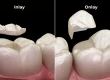
- Custom E-Max Onlays and Veneers: Moderate tissue loss is repaired using lithium disilicate (E-Max) ceramic restorations bonded over worn surfaces to rebuild proper anatomy and translucency.
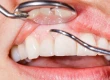
- Full-Mouth Reconstruction with Monolithic Zirconia: For cases of severe tooth attrition with bite height collapse, clinicians cover all worn teeth with monolithic zirconia crowns. This process restores lost facial height, protects exposed nerves, and re-establishes a healthy bite line.
Structural Evaluation: Before and After Treatment Outcomes
Analyzing a clinical comparison of untreated versus fully restored occlusal states shows how rebuilding worn teeth restores both chewing function and facial proportions.
Evaluation Metric | Pre-Treatment Severe Attrition State | Post-Restorative Rebuilt Architecture |
Crown Height & Incisal Length | Shortened, flat, worn edges; yellow dentin visible | Restored natural length, youthful contours, and shape |
Vertical Height (VDO) | Collapsed lower face height; stressed jaw joints | Re-established bite height; TMJ joint strain relieved |
Dentin Sensitivity Index | High sensitivity to hot, cold, and sweet foods | Zero sensitivity; dentin fully sealed by ceramic |
Occlusal Force Balance | Concentrated, destructive wear on a few teeth | Biting forces distributed evenly across all teeth |
How to Prevent Tooth Attrition and Protect Your Investment
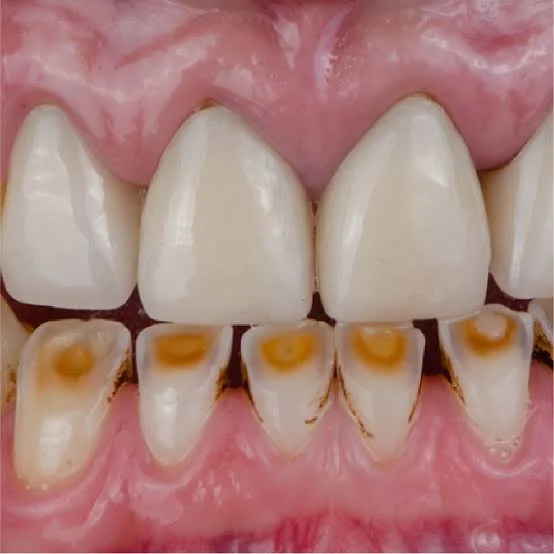
Learning how to prevent tooth attrition is essential for maintaining natural teeth as well as protecting new dental restorations from future damage:
- Wear a Custom Nightguard: Consistently wearing a nightguard protects enamel against involuntary nighttime grinding forces.
- Correct Bite Misalignment Early: Undergoing orthodontic treatment with clear aligners aligns crowded teeth, eliminating destructive contact points.
- Manage Stress Levels: Reducing daytime stress and practicing mindfulness reduces unconscious jaw clenching habits.
- Schedule Routine Dental Cleanings: Regular checkups allow your dentist to catch early wear patterns before dentin is exposed.
Frequently Asked Questions
Is tooth attrition reversible naturally?
No. Enamel and dentin are non-living tissues that cannot regenerate on their own once worn away. However, lost tooth structure can be fully restored and protected using modern dental materials like composite resin, E-Max veneers, or monolithic zirconia crowns.
What is the main difference between attrition, erosion, and abrasion?
Attrition is caused exclusively by direct tooth-to-tooth friction. Erosion is chemical wear triggered by acidic foods, drinks, or stomach acid. Abrasion is mechanical wear caused by foreign objects, such as brushing too hard with a stiff toothbrush.
Can teeth grinding cause severe tooth attrition in young adults?
Yes. Severe nocturnal bruxism can rapidly strip away enamel, even in teenagers and young adults. If left unmanaged, young patients can experience flattened teeth, sharp sensitivity, and bite collapse by their late twenties.
How long do crowns last when used to treat severe attrition?
Monolithic zirconia crowns used for full-mouth reconstruction are extremely durable and can easily last 15 to 25+ years, provided the patient practices good oral hygiene and wears a protective nightguard during sleep.
Does insurance cover tooth attrition treatment options?
Coverage depends on your specific insurance provider. Treatments required to repair functional damage, relieve joint pain, or restore collapsed bite height are often partially covered, whereas purely cosmetic bonding may not be.
About the Author