




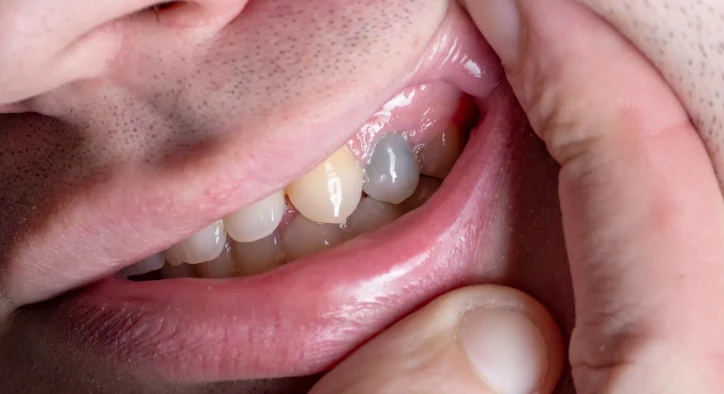

The cessation of blood supply and cellular vitality within the pulp chamber marks a decisive turning point in restorative dentistry. When evaluating a darkened, non-responsive crown, answering what is a dead tooth provides the clinical basis for saving natural dentition. Clinically termed pulp necrosis, a dead tooth occurs when the delicate neurovascular bundle comprising nerves, arterioles, and connective tissue within the inner tooth chamber dies due to deep bacterial decay, physical trauma, or repeated dental procedures.
For patients experiencing sudden tooth discoloration or acute pressure, identifying dead tooth symptoms early is critical for preventing bone infection. Many wonder does a dead tooth hurt, ask why severe dead tooth pain can develop after nerve death, question can a dead tooth be saved, and evaluate options for modern dead tooth treatment. Furthermore, understanding how long can a dead tooth stay in your mouth highlights the urgency of performing a root canal dead tooth procedure to clear bacterial toxins. This comprehensive clinical guide explores the pathophysiology of pulpal gangrene, assesses dead tooth root canal before and after milestones, and details restorative protocols.
Table Of Contents
- What Is a Dead Tooth and How Does Pulpal Necrosis Occur?
- Clinical Signs: Dead Tooth Symptoms and the Pain Paradox
- Restorative Intervention: Can a Dead Tooth Be Saved?
- Long-Term Outlook: Dead Tooth Root Canal Before and After
- Risks of Delay: How Long Can a Dead Tooth Stay in Your Mouth?
- Frequently Asked Questions
What Is a Dead Tooth and How Does Pulpal Necrosis Occur?
To understand how a tooth loses its vitality, answering what is a dead tooth requires analyzing internal tooth anatomy. A tooth is structurally composed of outer enamel, supportive dentin, and an inner chamber housing living pulp tissue.
The biological progression toward necrosis follows a defined sequence:
- [ BACTERIAL INGRESS / BLUNT TRAUMA ]: Carious breach or physical injury severs pulpal blood vessels
- [ ISCHEMIC PULPAL STRANGULATION ]: Micro-vascular swelling inside rigid walls cuts off oxygen
- [ LIQUEFACTIVE / COAGULATIVE NECROSIS ]: Nerve fibers and connective tissues die and decompose
- [ ANAEROBIC CANAL COLONIZATION ]: Bacteria feed on necrotic tissue and migrate to root apex
When bacteria penetrate enamel and dentin, inflammatory swelling increases pressure within the rigid, unyielding dentin walls. This internal compression collapses delicate blood vessels, cutting off the oxygen supply and inducing pulpal strangulation. Without blood circulation, defense cells cannot reach the pulp, allowing anaerobic bacteria to colonize the root canal system.
Clinical Signs: Dead Tooth Symptoms and the Pain Paradox
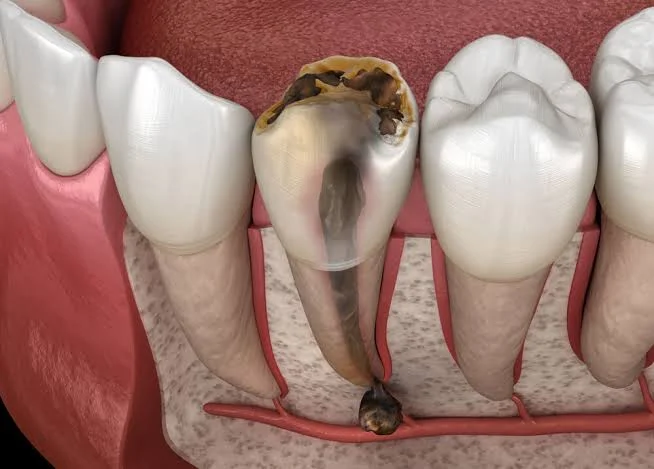
Patients frequently ask: does a dead tooth hurt if the nerve inside is already dead? The answer involves a clinical paradox: while the tooth loses its ability to feel cold or heat, severe discomfort often develops in surrounding structures.
Typical dead tooth symptoms include:
- Extrinsic and Intrinsic Discoloration: The tooth turns yellow, grey, brown, or black as decomposing blood components and bacterial toxins seep into the surrounding dentin.
- Acute Periapical Dead Tooth Pain: Once bacteria migrate through the root apex into the surrounding periodontal ligament and jawbone, biting pressure triggers sharp, throbbing pain.
- Thermal Sensation Loss: The tooth fails to respond to cold or electrical pulp vitality tests because sensory nerves inside the crown are completely non-functional.
- Gingival Abscess or Sinus Tract: A localized pimple-like bump (fistula) develops on the gumline near the root apex, releasing foul-tasting pus and relieving internal pressure.
- Foul Taste and Bad Breath: Decomposing necrotic tissue creates persistent halitosis and an unpleasant metallic or sour taste in the mouth.
Restorative Intervention: Can a Dead Tooth Be Saved?
When diagnosed with pulpal necrosis, a major patient concern is: can a dead tooth be saved? In the vast majority of cases, the answer is yes, provided the root structure remains intact and surrounding bone support is adequate.
- [ DIAGNOSIS & 3D CBCT ]: Identify apical bone lesion and canal anatomy
- [ DISINFECTION & SHAPING ]: Disinfect canal system using sonic irrigation
- [ BIOCERAMIC OBTURATION ]: Hermetically seal canal with MTA/gutta-percha
- [ CORONAL SEAL & CROWN ]: Reinforce brittle tooth with a protective crown
The definitive clinical standard is performing a root canal dead tooth protocol:
- Access Opening: An endodontist creates an opening in the crown to access the pulp chamber.
- Biofilm Debridement: Specialized nickel-titanium rotary instruments and ultrasonic antimicrobial irrigants (sodium hypochlorite) flush out all necrotic pulp and bacterial biofilms.
- Hermetic Bioceramic Filling: The sterilized root canals are sealed with gutta-percha and bioceramic sealers to prevent bacterial recolonization.
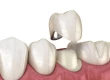
- Full-Coverage Crown Placement: Because non-vital teeth lose internal moisture and become brittle, placing a porcelain or zirconia crown protects the tooth from masticatory fractures.
Long-Term Outlook: Dead Tooth Root Canal Before and After
Analyzing clinical outcomes in dead tooth root canal before and after cases demonstrates how endodontic therapy eliminates infection and restores function.
Clinical Parameter | Pre-Treatment Dead Tooth State | Post-Treatment Restored State |
Pulpal Vitality & Nerve | Fully necrotic; decomposing tissue in canal | Completely disinfected, sealed canal space |
Radiographic Apex | Radiolucent dark shadow indicating bone loss | Bone regeneration and periapical healing |
Biting Discomfort | Sharp throbbing pain on chewing | Normal, comfortable masticatory function |
Crown Color & Esthetics | Dark grey, brown, or purplish appearance | Restored natural shade with internal bleach/crown |
Infection Risk | High; risk of spreading facial cellulitis | Eliminated; sterile root canal system |
Risks of Delay: How Long Can a Dead Tooth Stay in Your Mouth?
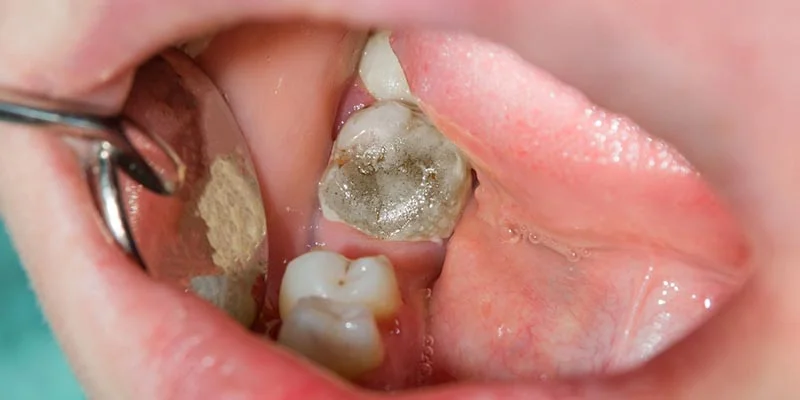
Patients often inquire: how long can a dead tooth stay in your mouth without receiving professional care? While a dead tooth can sit quietly for weeks or months without causing acute pain, leaving it untreated is dangerous.
Delaying dead tooth treatment carries severe systemic and local risks:
- Spreading Facial Abscess: Bacterial colonies at the root apex multiply, eroding jawbone and spreading into the floor of the mouth, neck, or sinus cavities, creating life-threatening Ludwig's angina.
- Progressive Jawbone Destruction: Chronic periapical granulomas or cysts silently dissolve alveolar bone, undermining adjacent teeth.
- Irreversible Tooth Loss: Structural damage may progress to the point where the tooth fractures subgingivally, making extraction and a dental implant the only remaining option.
Frequently Asked Questions
Can a dead tooth heal on its own without professional treatment?
No. Once the neurovascular tissue inside the pulp chamber dies, it cannot regenerate. Because blood circulation to the pulp has stopped, the body's immune cells cannot enter the tooth to eliminate bacteria. Without a root canal or extraction, necrotic tissue remains a permanent source of chronic infection.
Does getting a root canal on a dead tooth hurt?
No. The procedure is performed under local anesthesia, ensuring you feel no pain during treatment. In fact, because the nerve inside the tooth is already dead, the tooth itself cannot feel sensation. Cleaning the infected space relieves periapical bone pressure, providing immediate relief from throbbing pain.
What is the difference between a dying tooth and a dead tooth?
A dying tooth suffers from irreversible pulpitis, meaning the nerve is severely inflamed, swollen, and actively dying, which causes intense lingering pain to cold and hot temperatures. A dead tooth has experienced complete nerve necrosis, losing thermal sensitivity entirely while bacteria begin spreading into the surrounding jawbone.
What happens if a dead tooth cannot be saved with a root canal?
If a dead tooth exhibits extensive vertical root fractures, extreme bone loss, or severe subgingival decay that makes restoration impossible, the tooth must be surgically extracted. The missing space can then be rehabilitated with a dental implant, fixed bridge, or temporary prosthetic to maintain arch stability.
Why does a dead tooth become brittle over time?
A dead tooth loses its internal blood supply, which deprives the surrounding dentin of vital fluid and nutrient exchange. Over time, the collagen matrix within the dentin dries out and loses elasticity, making the tooth vulnerable to vertical cracking under heavy chewing forces unless reinforced with a full-coverage crown.
About the Author