




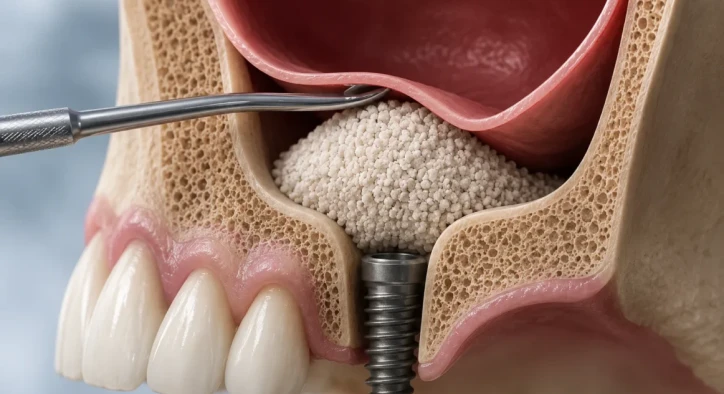

Rehabilitating the posterior maxilla with dental implants frequently requires overcoming severe anatomical constraints caused by alveolar bone resorption and natural maxillary sinus pneumatization. When bone height beneath the sinus floor is insufficient to achieve mechanical implant stability, a sinus floor elevation becomes a surgical necessity. Managing your sinus lift recovery with strict adherence to post-operative guidelines represents the most vital phase in ensuring treatment success. Because this surgical procedure involves elevating the delicate Schneiderian membrane and placing a granular bone matrix, recovery requires understanding tissue regeneration biology and pressure control.
Patients preparing for or recovering from surgery frequently inquire about the overall sinus lift recovery time and what day-to-day healing involves. Gaining clear insight into the phases of dental sinus lift recovery helps alleviate post-operative anxiety and prevents mechanical graft displacement. Whether a patient is concerned about managing sinus lift recovery pain, tracking biological maturation during bone graft sinus lift recovery, asking what to expect after sinus lift in terms of facial swelling, or learning essential sinus lift precautions regarding sneezing and air travel, this clinical guide delivers comprehensive answers.
Table Of Contents
- Biological Foundations: What Happens During Sinus Lift Recovery?
- Timeline and Milestones: How Long Is Sinus Lift Recovery Time?
- Managing Discomfort: Understanding Sinus Lift Recovery Pain and Swelling
- Essential Guidelines: Critical Sinus Lift Precautions
- Comprehensive Comparison: Lateral Window vs. Crestal Approach Recovery
- Frequently Asked Questions
- How long does sinus lift recovery time take before dental implants can be placed?
- Is sinus lift recovery pain severe after the local anesthesia wears off?
- What should I do if I accidentally sneeze after a dental sinus lift recovery?
- Can I blow my nose during bone graft sinus lift recovery?
- Why are my nose and mouth oozing pink fluid after a sinus lift?
Biological Foundations: What Happens During Sinus Lift Recovery?
Understanding the regenerative biology of the maxillary sinus clarifies why post-operative compliance is essential. The maxillary sinus is an air-filled cavity lined with a thin, fragile mucosal tissue known as the Schneiderian membrane, which measures less than one millimeter in thickness.
- [ SCHNEIDERIAN MEMBRANE ELEVATION ]: Membrane gently detached and lifted upward from sinus floor
- [ ANGIOGENESIS & GRAFT OSSIFICATION ]: Capillary ingrowth, woven bone formation, lamellar maturation
During surgery, the oral surgeon creates access to the sinus cavity, gently lifts this membrane upward without perforation, and places particulate bone graft material into the newly created space beneath it. Throughout the first several weeks of healing, the body initiates angiogenesis, forming new capillary networks that penetrate the graft particles. Specialized osteoblasts migrate into the scaffold, gradually replacing the graft material with living, vascularized bone. The delicate mucosal lining acts as a biological ceiling, and any sudden pressure change across the nasal cavity can tear this healing tissue or displace the loose graft granules.
Timeline and Milestones: How Long Is Sinus Lift Recovery Time?
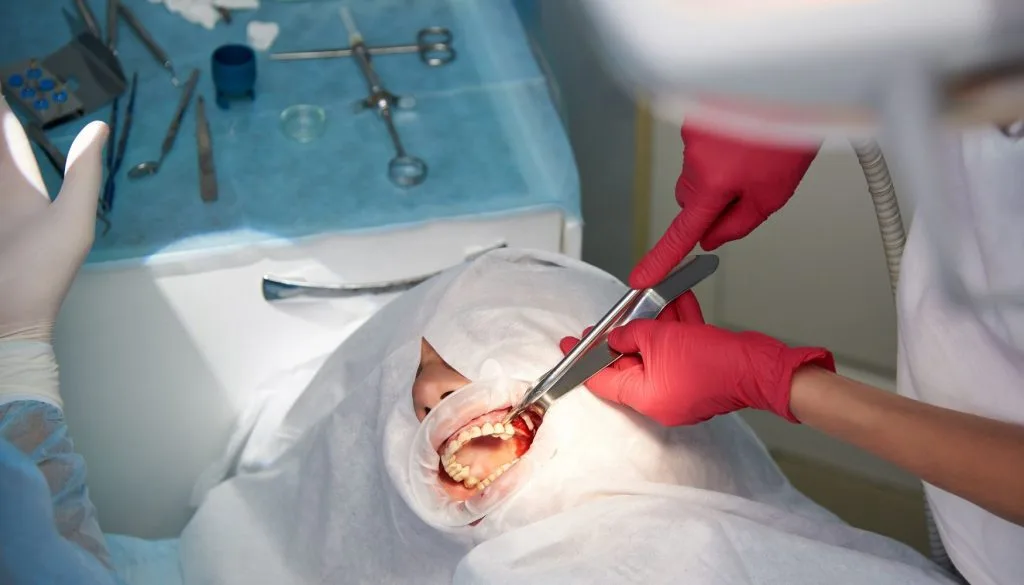
When planning their schedule, patients routinely ask about the expected sinus lift recovery time. Clinical healing occurs on two distinct levels: superficial soft-tissue recovery and deep osseous graft integration.
- First Forty-Eight to Seventy-Two Hours: The acute inflammatory stage. Swelling peaks around day three, accompanied by mild oozing from the surgical site or nostril.
- Days Four to Seven: Facial swelling, skin bruising, and localized soreness begin to subside noticeably as soft tissue margins stabilize.
- Days Ten to Fourteen: Surgical sutures are evaluated and removed by the clinician; superficial mucosal closure over the osteotomy site is largely complete.
- Months Three to Nine: The deep phase of bone graft sinus lift recovery. The particulate matrix matures into dense, lamellar host bone capable of supporting functional masticatory loads under future dental implants.
Depending on whether a closed sinus lift (crestal approach) or open sinus lift (lateral window technique) was performed, final bone density is typically verified with a three-dimensional scan after four to eight months.
Managing Discomfort: Understanding Sinus Lift Recovery Pain and Swelling
Experiencing manageable discomfort is normal following oral surgery, but understanding sinus lift recovery pain helps patients distinguish expected postoperative symptoms from complications.
- [ ACUTE TISSUE TRAUMA ]: Surgical osteotomy and periosteal elevation cause localized inflammation
- [ CLINICAL RESOLUTION ]: Analgesics, cold therapy, systemic antibiotics & decongestants
Most patients report that post-operative pain is mild to moderate and easily managed with prescribed analgesics and non-steroidal anti-inflammatory medications. Pain is often described as a dull, throbbing ache or a sensation of fullness in the cheek and under the eye rather than sharp agony. Facial swelling is a normal physiological response to periosteal reflection, and applying ice packs to the cheek for fifteen minutes on and fifteen minutes off during the first thirty-six hours reduces edema effectively. If severe throbbing pain escalates after day four, it warrants clinical re-evaluation to rule out acute sinusitis or wound infection.
Essential Guidelines: Critical Sinus Lift Precautions
Preventing negative and positive pressure spikes inside the nasal and maxillary sinuses is the single most important rule during early recovery. Following strict sinus lift precautions prevents membrane tearing and graft migration.
- Never Blow Your Nose: For at least two to three weeks after surgery, do not blow your nose under any circumstances. If your nose feels congested or runny, gently dab it with a soft tissue without applying suction or backpressure.
- Sneeze with an Open Mouth: If you feel an inevitable sneeze coming on, keep your mouth wide open and let the air escape freely. Never pinch your nostrils or stifle a sneeze, as suppressed sneezes generate intense pneumatic pressure that can rupture the Schneiderian membrane.
- Avoid Using Straws and Smoking: The suction generated when drinking through a straw or smoking cigarettes creates strong negative intraoral pressure, which dislodges blood clots and disrupts healing tissues.
- Postpone Air Travel and Scuba Diving: Atmospheric pressure fluctuations during commercial flights and deep-water diving stress the healing sinus cavity. Patients must avoid flying for two to three weeks post-surgery unless authorized by their surgeon.
- Sleep with Head Elevated: Resting on two or three pillows during the first four nights keeps the head elevated above the heart, which minimizes capillary leakage, eases facial swelling, and relieves pressure inside the maxillary sinus.
Comprehensive Comparison: Lateral Window vs. Crestal Approach Recovery
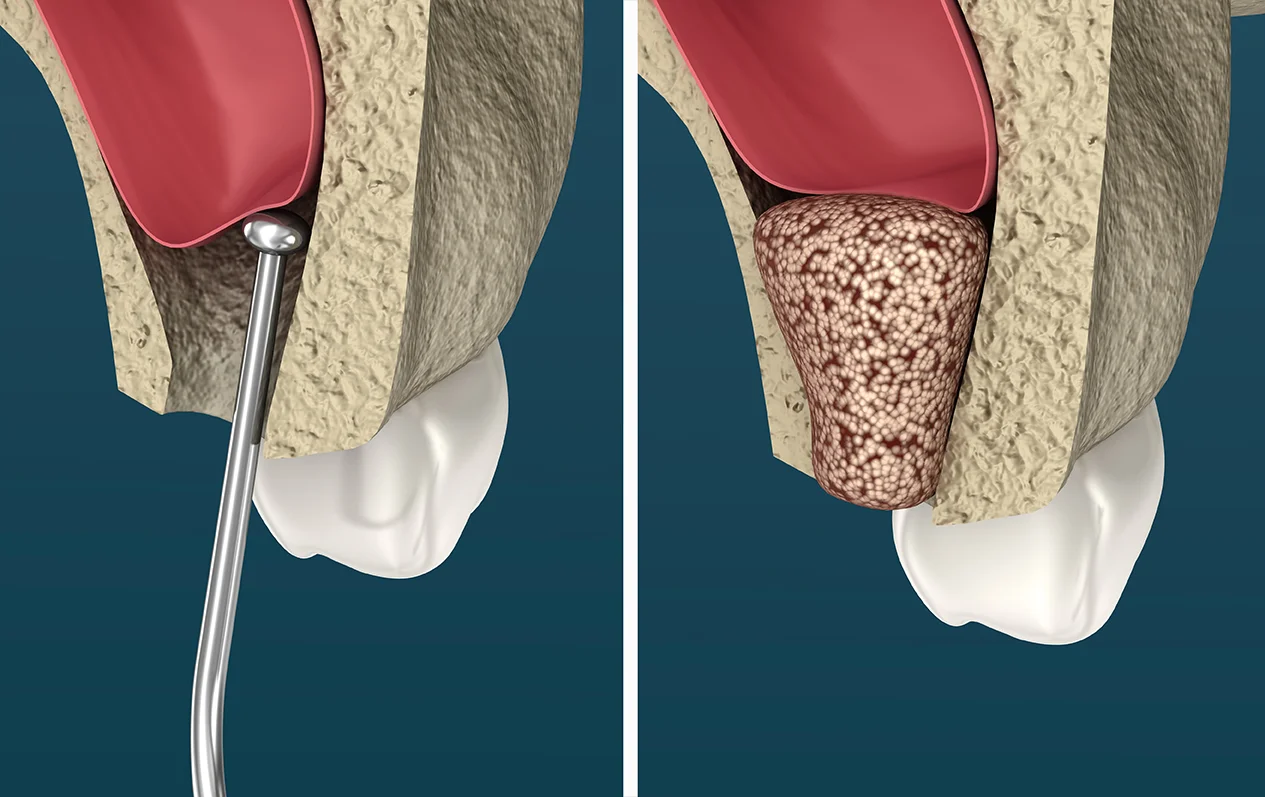
The surgical technique utilized directly influences what to expect after sinus lift procedures regarding recovery speed and post-operative impact.
Clinical Parameter | Lateral Window (Open Sinus Lift) | Crestal Approach (Closed Sinus Lift) |
Surgical Invasiveness | Lateral bony window cut in outer sinus wall | Vertical osteotomy drilled through tooth crest |
Graft Volume Placed | Substantial volume (three to six millimeters plus) | Modest volume (one to three millimeters) |
Swelling & Bruising | Moderate to pronounced cheek swelling | Minimal, localized tissue edema |
Initial Tissue Healing | Ten to fourteen days for gum closure | Five to seven days for surface recovery |
Deep Bone Integration | Six to nine months before implant loading | Four to six months before implant loading |
Implant Placement | Frequently staged; placed after healing | Frequently simultaneous with graft |
Frequently Asked Questions
How long does sinus lift recovery time take before dental implants can be placed?
If the sinus lift was performed as a separate staged procedure, bone graft integration takes between six and nine months before implants can be placed into the matured bone. If implants were placed simultaneously during a crestal or minor lateral lift, the entire complex integrates together over four to six months before permanent crowns are attached.
Is sinus lift recovery pain severe after the local anesthesia wears off?
No. Most patients find that sinus lift recovery pain is mild to moderate and well controlled with prescribed pain relievers. The sensation is typically characterized as dull facial pressure, stuffiness, or tenderness near the cheekbone rather than sharp, severe pain, and it subsides noticeably within three to five days.
What should I do if I accidentally sneeze after a dental sinus lift recovery?
If you sneeze, always sneeze with your mouth completely open to let the pressure escape freely. If you accidentally sneezed with a closed mouth, monitor your symptoms closely. If you observe bone graft granules coming from your nose, persistent nosebleeds, or sudden facial pain, contact your oral surgeon immediately.
Can I blow my nose during bone graft sinus lift recovery?
No. You must not blow your nose for at least two to three weeks following surgery. Blowing your nose creates strong pressure changes within the maxillary sinus that can tear the delicate Schneiderian membrane and dislodge the newly placed bone graft granules.
Why are my nose and mouth oozing pink fluid after a sinus lift?
Light oozing of blood-tinged saliva from the mouth or minor pink discharge from the nostril on the operated side is completely normal during the first twenty-four to forty-eight hours. However, active bright-red bleeding that fills the mouth or continuous nasal hemorrhage requires immediate contact with your surgical clinic.
About the Author