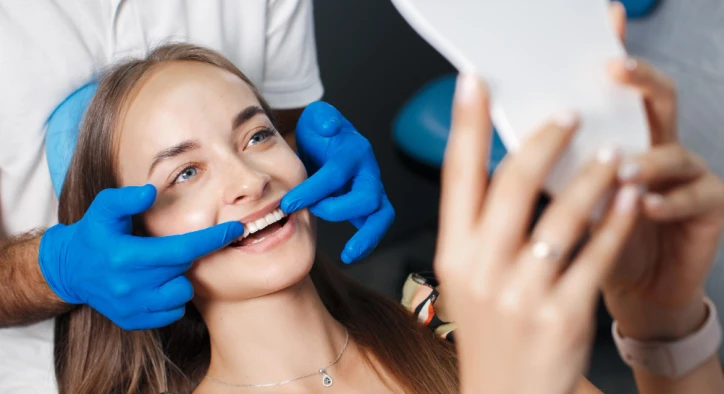



In the evolving field of restorative and cosmetic dentistry, achieving a seamless balance between robust structural integrity and flawless aesthetic appeal remains the highest clinical objective. Patients today require dental restorations that go beyond mere functionality; they expect results that are entirely indistinguishable from natural human dentition. This elevated standard has driven significant advancements in dental material sciences, placing e max at the very forefront of modern restorative protocols. For individuals suffering from severe tooth decay, structural trauma, or profound discoloration, an e max crown frequently emerges as the premier therapeutic solution. Understanding the underlying science, the clinical applications, and the distinct advantages of these restorations is essential for anyone evaluating their options for comprehensive dental rehabilitation.
Table Of Contents
- The Evolution of All-Ceramic Restorations
- What Exactly is a Lithium Disilicate Crown?
- Distinguishing Between Different Restorative Options
- The Craftsmanship and Customization
- Primary Clinical Advantages
- Indications and Potential Limitations
- The Step-by-Step Clinical Procedure
- Longevity and Ongoing Maintenance
The Evolution of All-Ceramic Restorations
Historically, the standard for repairing severely damaged teeth was the porcelain-fused-to-metal (PFM) crown. While PFM restorations offered commendable strength due to their underlying metal substructure, they consistently presented aesthetic limitations. The opaque metallic core prevented the natural transmission of light, often resulting in a dull, monochromatic appearance. Furthermore, as gingival (gum) tissue naturally recedes over time, the metal margin often becomes exposed, leaving an unsightly gray or black line at the base of the tooth.
The demand for a more biomimetic alternative led to the development of all-ceramic systems. Early ceramics possessed excellent optical properties but lacked the flexural strength required to withstand the immense occlusal (biting) forces exerted by the human jaw, particularly in the posterior regions. The introduction of lithium disilicate glass-ceramic revolutionized the industry, finally bridging the gap between exceptional durability and high-end cosmetic appeal.

What Exactly is a Lithium Disilicate Crown?
An e max dental crown is a state-of-the-art all-ceramic restoration crafted entirely from lithium disilicate. This specialized glass-ceramic is composed of quartz, lithium dioxide, phosphor oxide, alumina, and potassium oxide. When these raw elements are combined and processed under extreme heat, they form a dense, tightly interlocking crystalline structure. This specific microscopic architecture yields a flexural strength typically ranging between 400 and 500 megapascals (MPa), making the material significantly more resilient than conventional feldspathic porcelain.
Because an e max crown dental restoration contains absolutely no metal, it possesses unparalleled optical properties. Natural tooth enamel is partially translucent, allowing light to penetrate the surface and reflect off the underlying dentin. Lithium disilicate closely mimics this exact light-handling behavior. By scattering and absorbing light just like an organic tooth, e max dental crowns integrate seamlessly into the patient's smile, avoiding the dense, artificial look associated with older materials.
Distinguishing Between Different Restorative Options
Within the same material family, dental professionals utilize different restorative techniques depending on the patient's specific clinical needs. It is vital to understand the distinction between partial and full coverage. While a crown is designed to encase the entire visible portion of a compromised tooth down to the gingival margin, e max veneers are ultra-thin ceramic shells meticulously bonded only to the facial (front) surface of the teeth.
Both applications rely on the exact same high-strength lithium disilicate foundation. However, veneers are generally reserved for cosmetic enhancements—such as closing diastemas (gaps), correcting minor misalignments, or masking intrinsic stains on otherwise healthy teeth. Conversely, e max crowns are necessary when a tooth requires substantial structural reinforcement due to extensive carious lesions, root canal therapy, or traumatic fractures.
The Craftsmanship and Customization
The fabrication of these premium restorations extends far beyond standard clinical manufacturing; it is an intricate discipline requiring immense skill. The dental technician responsible for shaping and characterizing the restoration essentially acts as an artist, e max ceramic serving as their blank canvas. Every tooth in the human mouth features unique surface textures, subtle color gradients, and varying degrees of translucency at the incisal edges.
To ensure the final product blends perfectly with the adjacent dentition, a master e-max artist will carefully layer the ceramic or apply specialized external stains. They manipulate the chroma, value, and hue of the material to replicate the micro-anatomy of natural teeth. When a clinician wants to push the cosmetic boundaries to the absolute max, e max enables an unprecedented level of individualized customization, ensuring that no two restorations are ever mass-produced identically.
Primary Clinical Advantages
The widespread adoption of this material in contemporary dental practices is driven by a multitude of clinical benefits:
Unrivaled Aesthetics: As previously noted, the absence of a metallic core enables exceptional light transmission. The highly customizable nature of the ceramic ensures a perfect shade match with the patient's natural teeth.
Exceptional Durability: The tightly packed lithium disilicate crystals prevent crack propagation. When bonded correctly to the underlying tooth structure, these restorations can withstand significant masticatory forces, making them suitable for both anterior (front) and certain posterior (back) applications.
Biocompatibility: The material is highly biocompatible, meaning it is readily accepted by the human body. Patients with metal allergies or sensitivities can safely receive these restorations. Additionally, the smooth ceramic surface is highly resistant to plaque accumulation, promoting healthier gingival tissues.
Conservative Preparation: Because the material is inherently strong even in relatively thin sections, clinicians can often preserve more of the patient's natural, healthy tooth structure during preparation than with traditional PFM crowns.
Indications and Potential Limitations
While highly versatile, these specific restorations require a thorough assessment by a dental professional to determine their clinical appropriateness. They are universally considered the gold standard for anterior restorations, where aesthetics are the paramount concern. They are also highly effective for single-unit crowns on premolars and first molars.
However, there are specific scenarios where alternative materials, such as monolithic zirconia, might be indicated. For patients with severe bruxism (chronic teeth grinding or clenching), the extreme forces exerted on the posterior teeth may necessitate a stronger material. Furthermore, for long-span dental bridges located in the back of the mouth, zirconia's higher flexural strength (often exceeding 1000 MPa) may be required to prevent structural failure.
The Step-by-Step Clinical Procedure
The journey to restoring a tooth with this advanced ceramic typically involves several precise clinical steps. Initially, the dental professional conducts a comprehensive examination, often utilizing digital radiography, to assess the health of the tooth root and surrounding bone.
Once deemed a suitable candidate, the patient undergoes the preparation phase. The clinician administers local anesthesia and carefully removes any decayed or weakened tissue, reshaping the remaining tooth structure to create a stable abutment. Following preparation, highly accurate impressions are taken. In modern practices, this is frequently accomplished using an intraoral optical scanner, which creates a highly detailed 3D digital model of the patient's mouth.
This digital data is transmitted to a specialized dental laboratory. Using computer-aided design and computer-aided manufacturing (CAD/CAM) technology, the restoration is precisely milled from a solid block of lithium disilicate. Alternatively, the laboratory may use a traditional heat-pressing technique.
The final, and arguably most critical, step is delivery and bonding. The internal surface of the crown is etched with hydrofluoric acid and treated with a silane coupling agent. The natural tooth is also conditioned. A high-strength resin cement is then utilized, creating a powerful micromechanical and chemical bond between the ceramic and the dentin, essentially fusing the restoration to the tooth.
Longevity and Ongoing Maintenance
With meticulous oral hygiene and routine professional care, these restorations boast an impressive clinical lifespan. Studies indicate a highly favorable survival rate over ten to fifteen years, with many lasting significantly longer. Patients are advised to maintain standard brushing and flossing routines and to avoid using their teeth as tools to open packaging or to bite into excessively hard objects, such as ice or unpopped popcorn kernels. For individuals with mild nocturnal grinding, a custom-fitted occlusal guard may be prescribed to protect the ceramic surfaces from undue wear.
The decision to rehabilitate a compromised tooth involves a careful evaluation of material science, structural requirements, and aesthetic expectations. Lithium disilicate has fundamentally reshaped the landscape of restorative dentistry, providing a solution that does not require compromising between strength and beauty. By consulting with experienced specialists, patients can navigate their clinical options to achieve a highly functional, remarkably natural-looking outcome. For those seeking exact precision and expert care in their restorative journey, DentPrime offers the dedicated expertise required to bring every smile to its fullest potential.